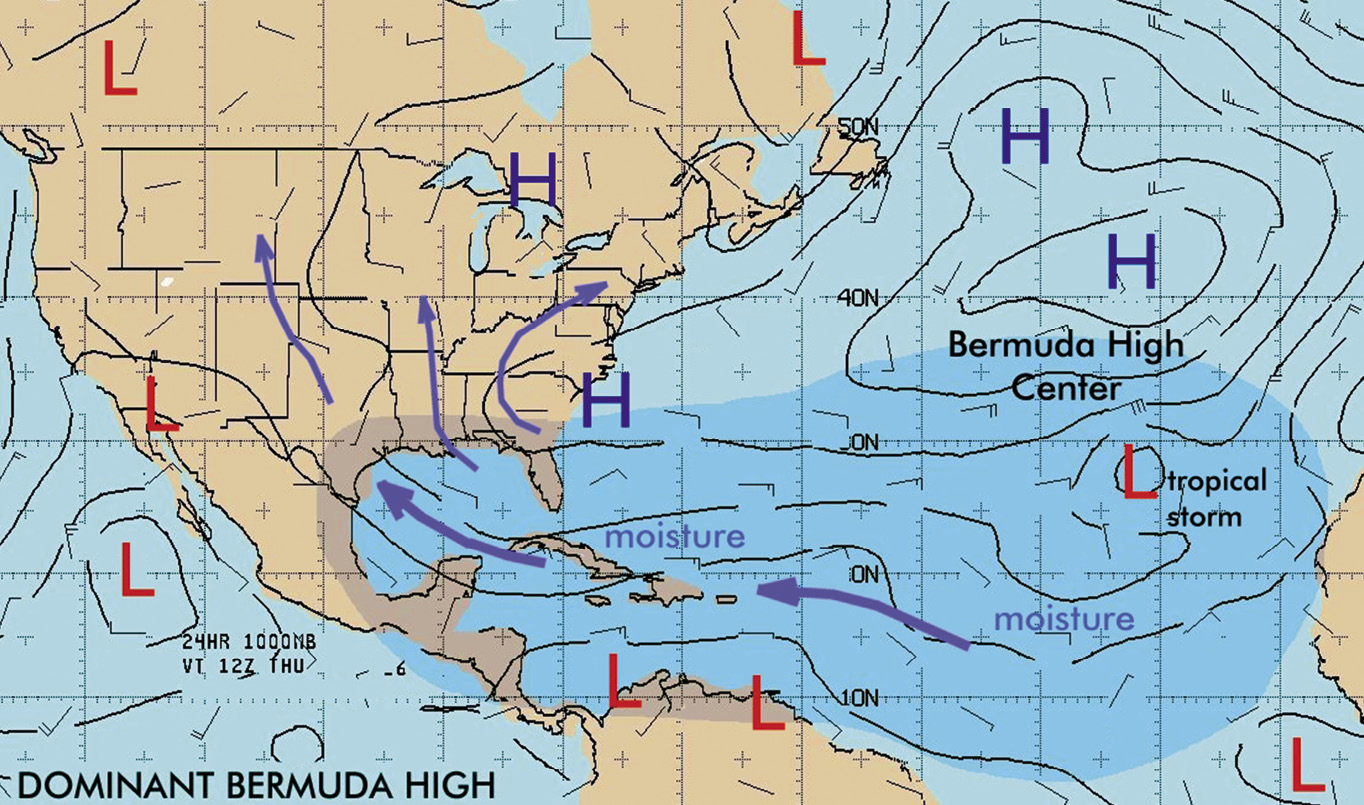
Most routes for moisture in the summer originate from the Gulf of Mexico and Atlantic. (Tim Vasquez)
Key Takeaways:
Summer weather presents distinct regional hazards for pilots, including active sea breezes, the moisture-driven Southwest Monsoon, and a shift of severe thunderstorms northward into the Great Plains and Midwest, bringing risks of microbursts and derechos.
Increased tropical moisture elevates the risk of widespread radiational and advection fog/stratus, particularly in coastal and inland regions.
Pilots must account for significantly higher density altitudes caused by hot temperatures, high terrain, and humidity, which degrade aircraft performance and necessitate thorough pre-flight calculations.
Hurricane season from late July through September poses a major threat to coastal areas, with remnants also capable of impacting inland regions with extensive hazardous weather.
Summer is the ideal time to take the plane out and visit fly-ins, see some old friends, and seek out the hundred-dollar hamburger. It’s easy to fall into the mindset that wintertime hazards are gone, the turbulent weather of spring is over, and winds are light and variable. Mostly true, but there are still problems to consider.
What Is Summer?
CREATE A FREE ACCOUNT
Sign up to keep reading
Create a free account to continue. Already a member? Sign in below.