













Register

Summer Patterns

Gemini Sparkle

Key Takeaways:

  • Summer weather across North America is largely driven by continental heating causing low pressure, oceanic high pressure, and the sun's northward shift, leading to diverse regional patterns for pilots to consider.
  • The Southwest and Rocky Mountain regions transition from dry, clear conditions in early summer to increased afternoon thunderstorms and monsoonal moisture from July through August, while the West Coast frequently experiences marine layer fog.
  • The Great Plains and Southeast are characterized by abundant Gulf moisture, resulting in frequent and often severe thunderstorms throughout the summer, with the Southeast also facing tropical weather influences later in the season.
  • Pilots flying in summer must be particularly vigilant for hazards such as density altitude, microbursts, dust storms, severe thunderstorms, and marine layer fog, which vary significantly by region and time of summer.
See a mistake? Contact us.

Summertime almost certainly means vacations, cookouts, and maybe some time on the beach. There are airshows, fly-ins, $100 hamburgers, and of course AirVenture at the end of July. Whatever the destination, there’s a good chance you’ll be putting in some flight hours in the coming months.

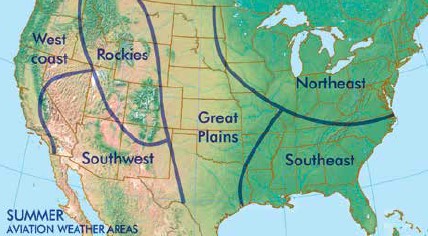
Flying outside your home area means unknown weather patterns that work differently from what you are accustomed. You can increase your safety margins by understanding how the weather varies between parts of the country and the kinds of common patterns. We’ll start with a top-down picture and then break things into regions.


Ready to Sell Your Aircraft?

List your airplane on AircraftForSale.com and reach qualified buyers.

List Your Aircraft
AircraftForSale Logo | FLYING Logo
Pilot in aircraft
Sign-up for newsletters & special offers!

Get the latest stories & special offers delivered directly to your inbox.

SUBSCRIBE