
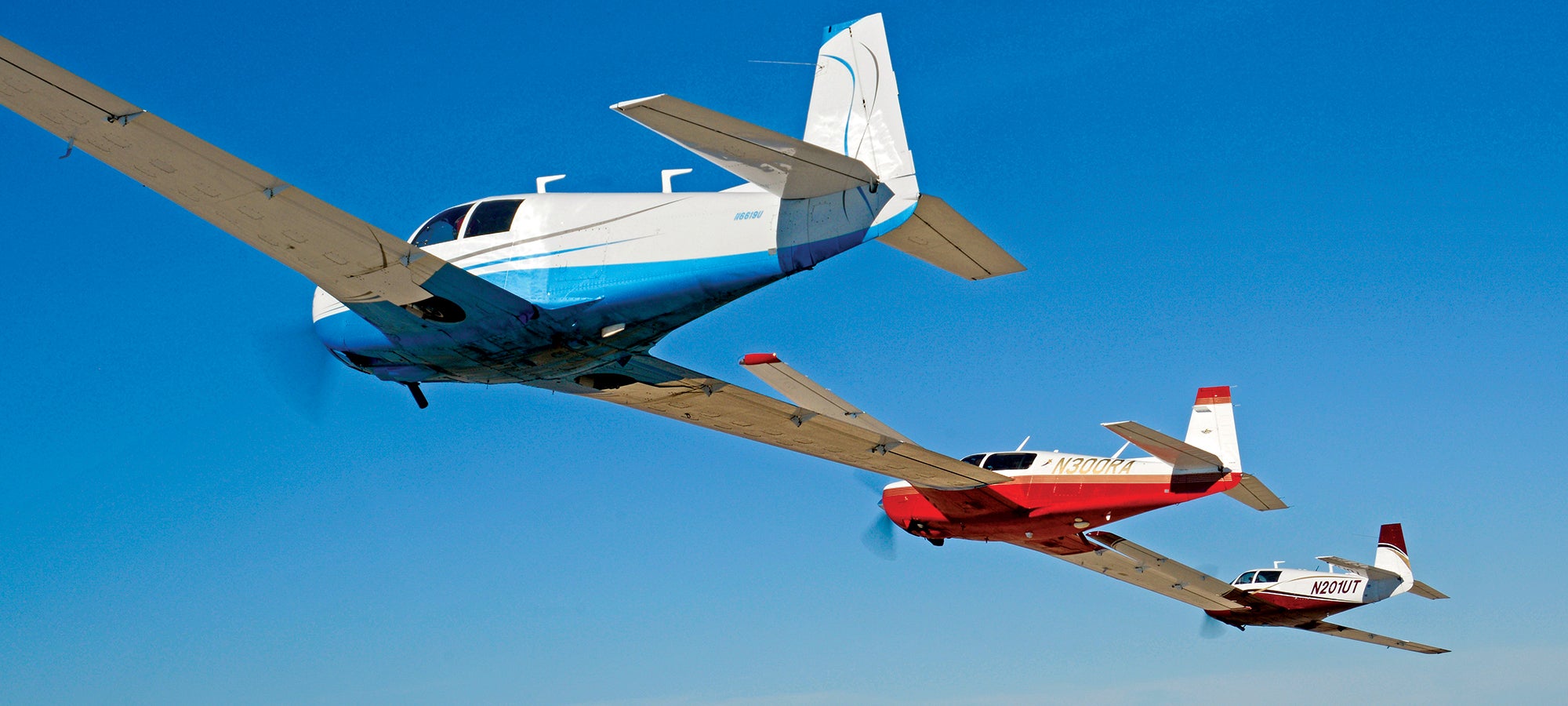
To those unfamiliar with formation flying, flight within a wingspan’s distance of another airplane looks eerily similar to an imminent collision. And collisions in airplanes generally don’t end well. But, in some cases, formation flying actually presents a lower risk than flying alone. And besides that, it is some of the most fun and rewarding flying a pilot will ever experience. Like all flying, formation flight was invented by birds. During a bird migration, these long-distance travelers generally form an organized pattern; I assume they do so for support and to protect each other from potential enemies, just as military pilots who fly in formation do. In studies of what motivates people to keep flying once they get their private pilot certificates, one of the biggest factors is a sense of community. There is no question that the bonds between pilots who participate in formation flying are very strong. It’s a great source of motivation for continuous improvement, and it’s an enjoyable way to hone your skills.
Learn to Fly Formation like the Pros

Key Takeaways:
- Formation flying is an organized activity involving multiple aircraft flying in close proximity, requiring extensive pre-flight briefings, strict adherence to procedures, and demanding precision for safety.
- Beyond being a fun and rewarding experience, it fosters a strong sense of community, teamwork, and continuously hones pilot skills and currency.
- While seemingly high-risk, organized formation flights, such as mass arrivals at events like AirVenture Oshkosh, can actually reduce risks through standardized procedures, known pilot proficiency, and coordinated airspace management.
- Pilots can gain proficiency and certification for formation flying through specialized clinics and organizations like the Mooney Caravan, Red Star Pilots Association, or FAA-accredited groups such as FAST or FFI for waivered airspace events.
Key takeaways sponsored by Aviator Pro | Start Your Training ->
See a mistake? Contact us.