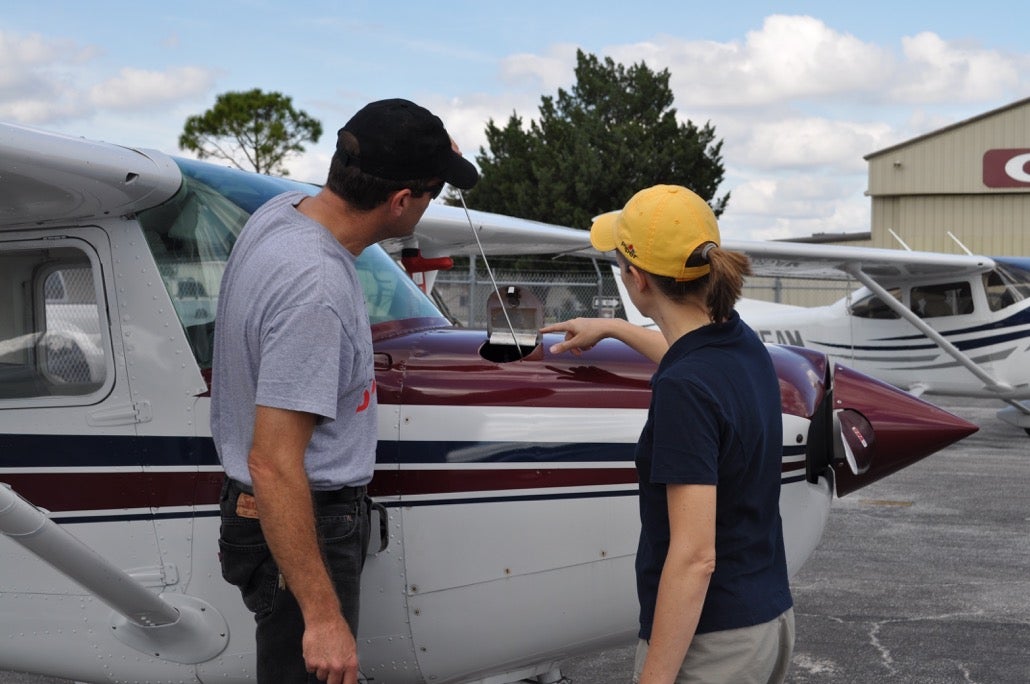
An instructor and a student preflight a Cessna 152 before a lesson. [Credit: Richard Steiger]
Key Takeaways:
Flight training heavily emphasizes ground preparation, including thorough preflight inspections, weather analysis, and structured pre- and post-flight briefings based on a syllabus.
Initial flights are intentionally kept short (around 30 minutes) to avoid fatigue and task saturation, with flight times increasing as endurance improves.
Instruction progresses methodically from basic control maneuvers and emergency procedures in an open practice area to higher-workload traffic pattern work and landings.
Mastery takes time and repetition, requiring student pilots to remain patient and recognize that making mistakes is a normal, safe part of the learning process.
There is something exciting and a little intimidating about flight training. You are (likely) working in a new environment for you as a student pilot, and often it may have been years since you did any organized learning.
Add to that the training is mental and physical, and that’s a bit of a challenge. Then there is that risk factor of leaving the ground.
CREATE A FREE ACCOUNT
Sign up to keep reading
Create a free account to continue. Already a member? Sign in below.
Meg Godlewski has been an aviation journalist for more than 24 years and a CFI for more than 20 years. If she is not flying or teaching aviation, she is writing about it. Meg is a founding member of the Pilot Proficiency Center at EAA AirVenture and excels at the application of simulation technology to flatten the learning curve. Follow Meg on Twitter @2Lewski.