














Register

And the Thunder Rolls: Convective Weather Season Is Upon Us

Flying high gives pilots the best opportunity for unlimited visibility and safe conditions.

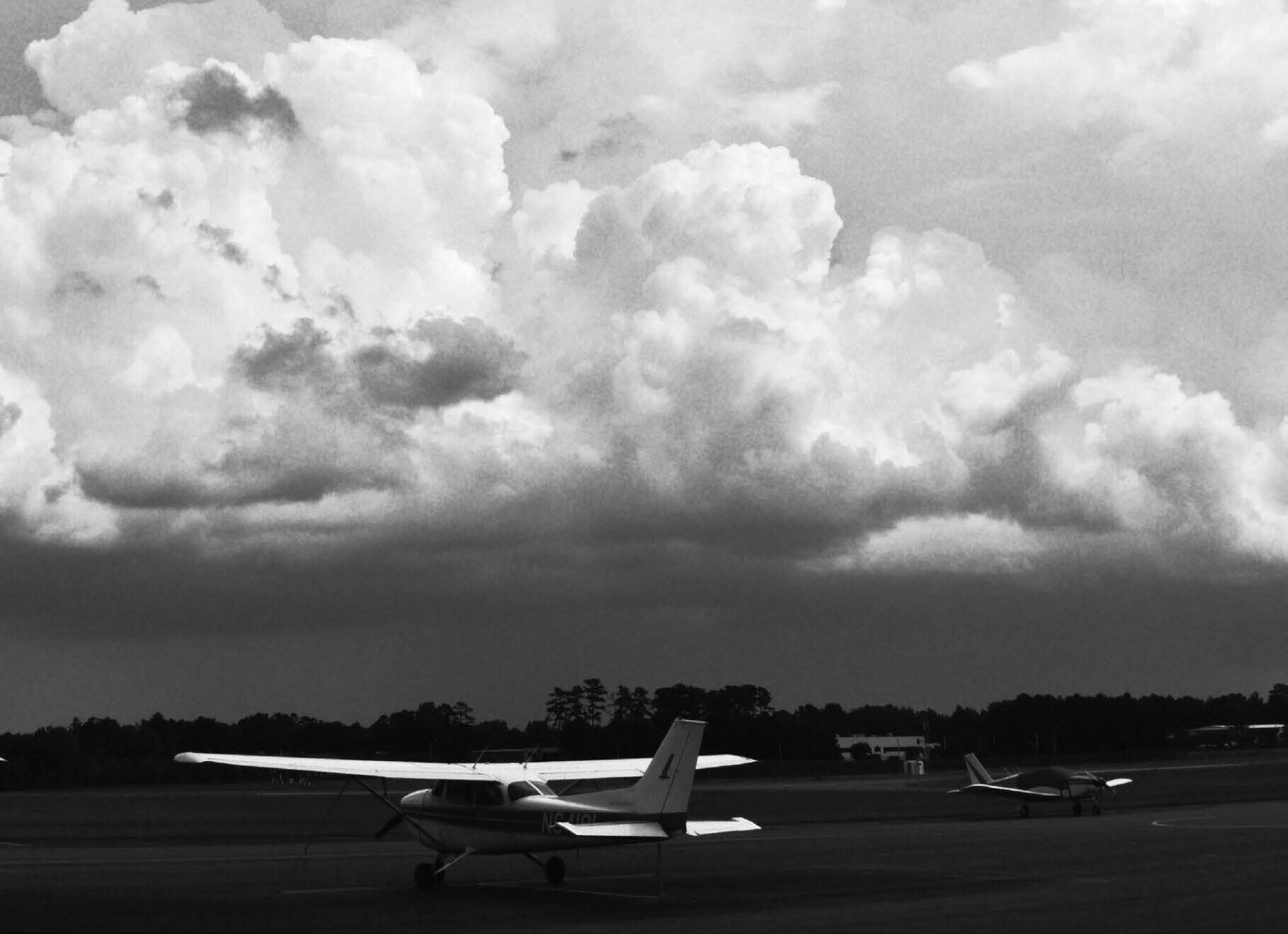
Pulse-type convection can develop quickly during the afternoon hours and be very scattered or isolated. It is usually easy to see and avoid. [Courtesy: Scott Dennstaedt]
Gemini Sparkle

Key Takeaways:

  • The article argues that rudimentary pilot knowledge of thunderstorms is insufficient, emphasizing the need to understand deep moist convection, which requires instability, moisture, and a lifting source, driven by critical vertical atmospheric motion.
  • Thunderstorms exhibit various organizational structures, including linear systems, nocturnal mesoscale convective complexes (MCSs) with distinct radar and satellite signatures, banding associated with tropical systems, and "pulse-type" convection, which is never truly random.
  • For safer flight, pilots are advised to fly high above haze layers for better visual awareness, utilize advanced weather avoidance equipment (onboard radar, datalink) to navigate around hazardous cells, and strategically plan flights for early morning hours to avoid peak convective activity.
See a mistake? Contact us.

Most people like to swallow the bad news first and then wash it down with the good news. The bad news is that most of what you might have learned about thunderstorms is probably worthless—not to mention all the useless banter you hear from your local TV weather personality or read on internet aviation forums. So, in my best British accent, it is often littered with bloody misconceptions, and in some cases, outright poppycock.

The good news is that I got your attention. It is very obvious that the FAA requires a pilot to have a rudimentary knowledge when thunderstorms are a flight risk. However, being able to regurgitate the three stages of the thunderstorm lifecycle, for example, is as useful as the Washington, D.C., Air Defense Identification Zone (ADIZ) is to a general aviation pilot. 

Scott Dennstaedt, Ph.D

Scott resides in Charlotte, North Carolina, and flies regularly throughout the Mid-Atlantic and Southeast U.S. He is a CFI and former NWS meteorologist. Scott is the author of "The Skew-T log (p) and Me: A Primer for Pilots" and the founder of EZWxBrief.

Ready to Sell Your Aircraft?

List your airplane on AircraftForSale.com and reach qualified buyers.

List Your Aircraft
AircraftForSale Logo | FLYING Logo
Pilot in aircraft
Sign-up for newsletters & special offers!

Get the latest stories & special offers delivered directly to your inbox.

SUBSCRIBE

