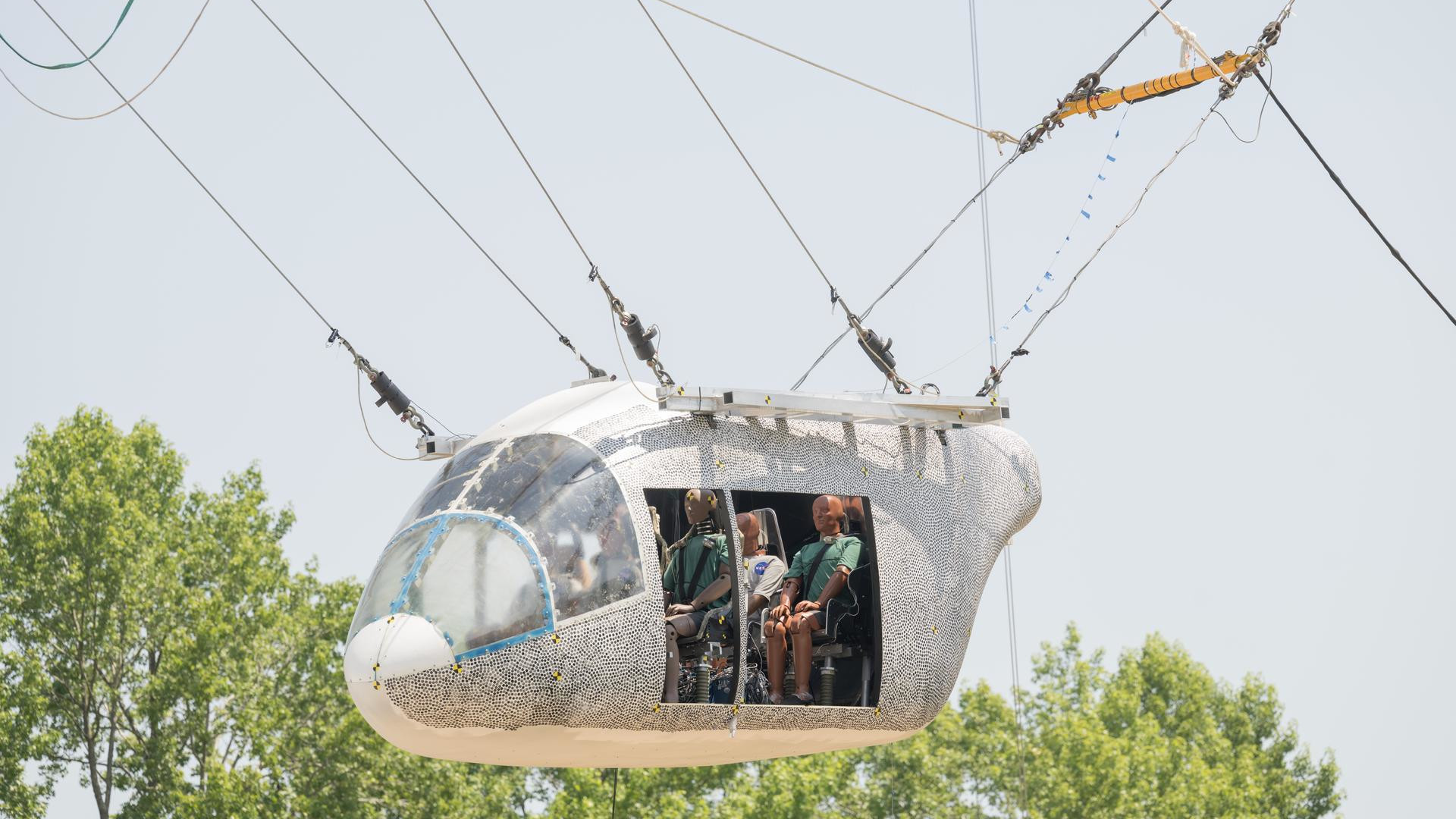
Researchers at NASA’s Langley Research Center in Virginia conduct a drop test of a full-scale aircraft body modeled after an electric air taxi. [Courtesy: NASA/Mark Knopp]
Key Takeaways:
NASA is performing crash simulations, including 35-foot drop tests of eVTOL air taxi models, to identify optimal energy-absorbing materials and inform safety regulations for the new aircraft generation.
The tests replicate FAA crashworthiness conditions, showing materials behaved as expected and providing data on impact absorption vital for designs incorporating heavy electric batteries.
NASA will share this data publicly to help eVTOL manufacturers like Archer, Joby, and Wisk enhance their designs, using materials such as carbon-fiber composites, and progress towards FAA certification.
NASA researchers are simulating crashes to study the optimal materials for a new generation of electric vertical takeoff and landing (eVTOL) air taxis.
Per a recent media release, the space agency in June dropped a full-scale aircraft body—modeled after an eVTOL air taxi—from a 35-foot gantry at its Langley Research Center in Virginia.
CREATE A FREE ACCOUNT
Sign up to keep reading
Create a free account to continue. Already a member? Sign in below.
Jack is a staff writer covering advanced air mobility, including everything from drones to unmanned aircraft systems to space travel—and a whole lot more. He spent close to two years reporting on drone delivery for FreightWaves, covering the biggest news and developments in the space and connecting with industry executives and experts. Jack is also a basketball aficionado, a frequent traveler and a lover of all things logistics.