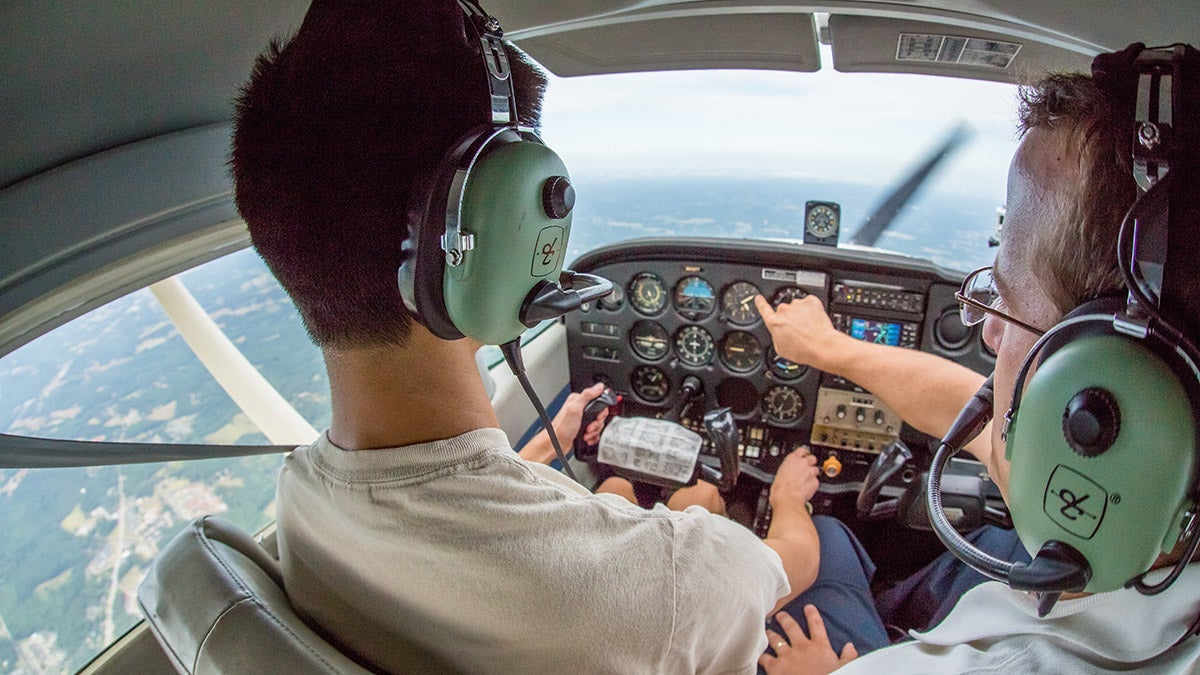
Flight training [Credit: FLYING Archive/Derek Eckenroth]
Key Takeaways:
Many student pilots drop out of flight training due to the overwhelming pace, particularly in rapid-acquisition Part 141 programs that may not suit all learners.
Effective flight instruction requires instructors to determine and adjust the pace to each student's individual needs, recognizing signs of fatigue and prioritizing a learner-centric approach.
The article advocates for flexible training methods, such as staggering new material with review lessons and previewing future topics, to enhance skill acquisition and retention, as employers value competence over the specific training path (Part 141 or Part 61).
There are a lot of student pilot dropouts who quit flight training because they were overwhelmed by the pace of it.
Often they were enrolled in Part 141 programs, which stress rapid skill and knowledge acquisition. While these programs do turn out pilots, they’re not for everyone.
CREATE A FREE ACCOUNT
Sign up to keep reading
Create a free account to continue. Already a member? Sign in below.
Meg Godlewski has been an aviation journalist for more than 24 years and a CFI for more than 20 years. If she is not flying or teaching aviation, she is writing about it. Meg is a founding member of the Pilot Proficiency Center at EAA AirVenture and excels at the application of simulation technology to flatten the learning curve. Follow Meg on Twitter @2Lewski.