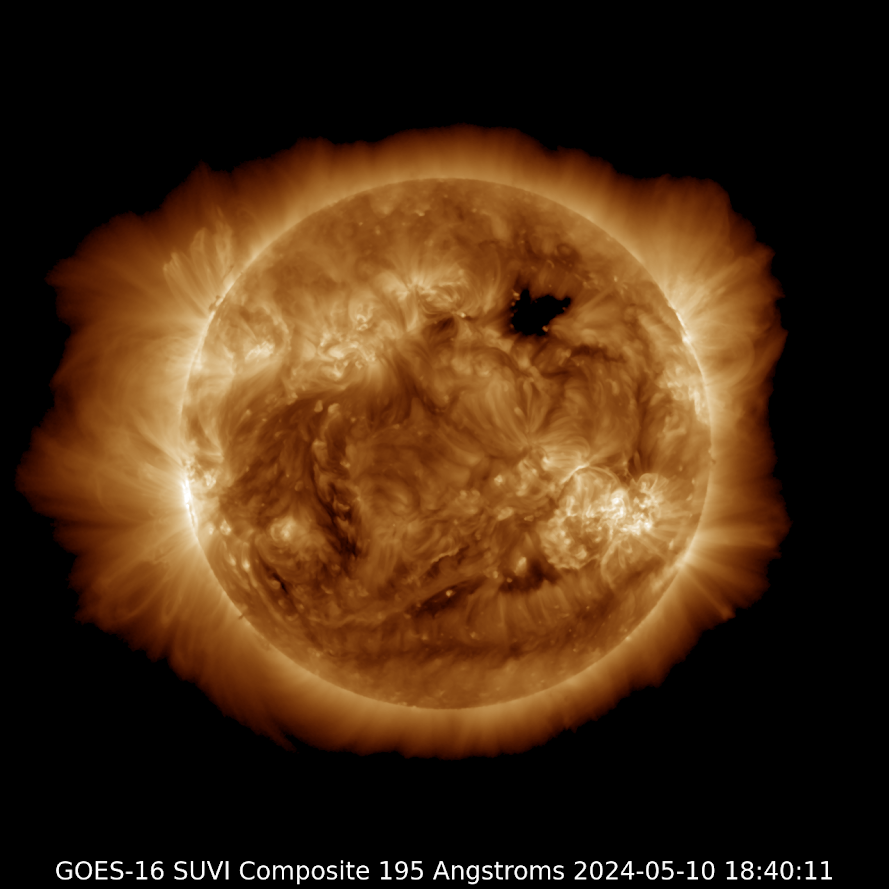
A composite image made by GOES-16 extreme ultraviolet (EUV) telescope, the Solar Ultraviolet Imager (SUVI).Observations of solar EUV emission aids in the early detection of solar flares, coronal mass ejections (CMEs), and other phenomena that impact the geospace environment. [Courtesy: NOAA]
Key Takeaways:
A Severe (G4) geomagnetic storm, caused by coronal mass ejections, is predicted to create "satellite disruptions" this weekend, potentially impacting GPS navigation and high-frequency radio.
The FAA has warned pilots to plan ahead for possible disruptions to navigational aids and high-frequency radio transmissions.
Described by NOAA as an "unusual and potentially historic event," the storm could also degrade communications, the electric power grid, and other satellite operations for hours.
As a visual phenomenon, these geomagnetic storms may make the aurora visible unusually far south, potentially reaching Alabama.
Pilots who rely on GPS, also known as “the magenta line,” for navigation may have a difficult time getting around this weekend as geomagnetic disruptions in the Earth’s atmosphere may create “satellite disruptions” that could impact GPS navigation among other things.
The prediction prompted a warning for pilots from the FAA.
CREATE A FREE ACCOUNT
Sign up to keep reading
Create a free account to continue. Already a member? Sign in below.
Meg Godlewski has been an aviation journalist for more than 24 years and a CFI for more than 20 years. If she is not flying or teaching aviation, she is writing about it. Meg is a founding member of the Pilot Proficiency Center at EAA AirVenture and excels at the application of simulation technology to flatten the learning curve. Follow Meg on Twitter @2Lewski.