














Register

Wartime Oddities: Luftwaffe’s Last Stand

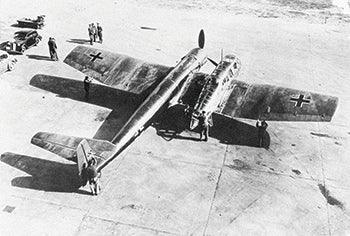
** The fertile brain of Richard Vogt produced many oddities. The BV 141 was the oddest of all.**
Gemini Sparkle

Key Takeaways:

  • Richard Vogt was an original and innovative German aircraft designer for Blohm & Voss, known for unique features like inverted gull wings and the dramatically asymmetrical BV 141 reconnaissance plane.
  • He specialized in large floatplanes and flying boats, including the successful BV 222 Viking and the record-setting BV 238, which often incorporated his signature tubular steel wing spar design.
  • Vogt's prolific career spanned diverse aircraft types, from early biplanes to increasingly bizarre and experimental designs towards the end of WWII, such as tailless flying wings and ramming interceptors.
  • Despite his significant contributions and later work in the U.S. aerospace industry, Vogt remains a largely forgotten figure in aviation history, highlighting the transient nature of engineering innovations.
See a mistake? Contact us.

The inverted gull wing, bent downward to keep the gear legs short and the huge prop clear of the ground, made the F4U Corsair instantly recognizable. Other airplanes, however, had used this feature before the Corsair, particularly during the era of fixed gears enveloped in voluminous fairings or “pants.” An early example was the Ha 137. Ha stands for Hamburger Flugzeugbau — Hamburg Airplane Factory — a subsidiary of the great German shipbuilding firm of Blohm & Voss. A dark horse in a Luftwaffe dive bomber competition, the sleek 137 lost out to the famous Junkers Stuka, which also had an inverted gull wing as well as its own built-in air-raid siren and the ability to dive perfectly vertically.

The designer of the Ha 137 was named Richard Vogt. A protégé of Claudius Dornier, whose designs were manufactured under license by Kawasaki, Vogt worked in Japan in the 1920s, then returned to Germany in 1933 to become head of aircraft design for Blohm & Voss. He remained there until the end of the war.

Peter Garrison

Peter Garrison taught himself to use a slide rule and tin snips, built an airplane in his backyard, and flew it to Japan. He began contributing to FLYING in 1968, and he continues to share his columns, ""Technicalities"" and ""Aftermath,"" with FLYING readers.

Ready to Sell Your Aircraft?

List your airplane on AircraftForSale.com and reach qualified buyers.

List Your Aircraft
AircraftForSale Logo | FLYING Logo
Pilot in aircraft
Sign-up for newsletters & special offers!

Get the latest stories & special offers delivered directly to your inbox.

SUBSCRIBE
