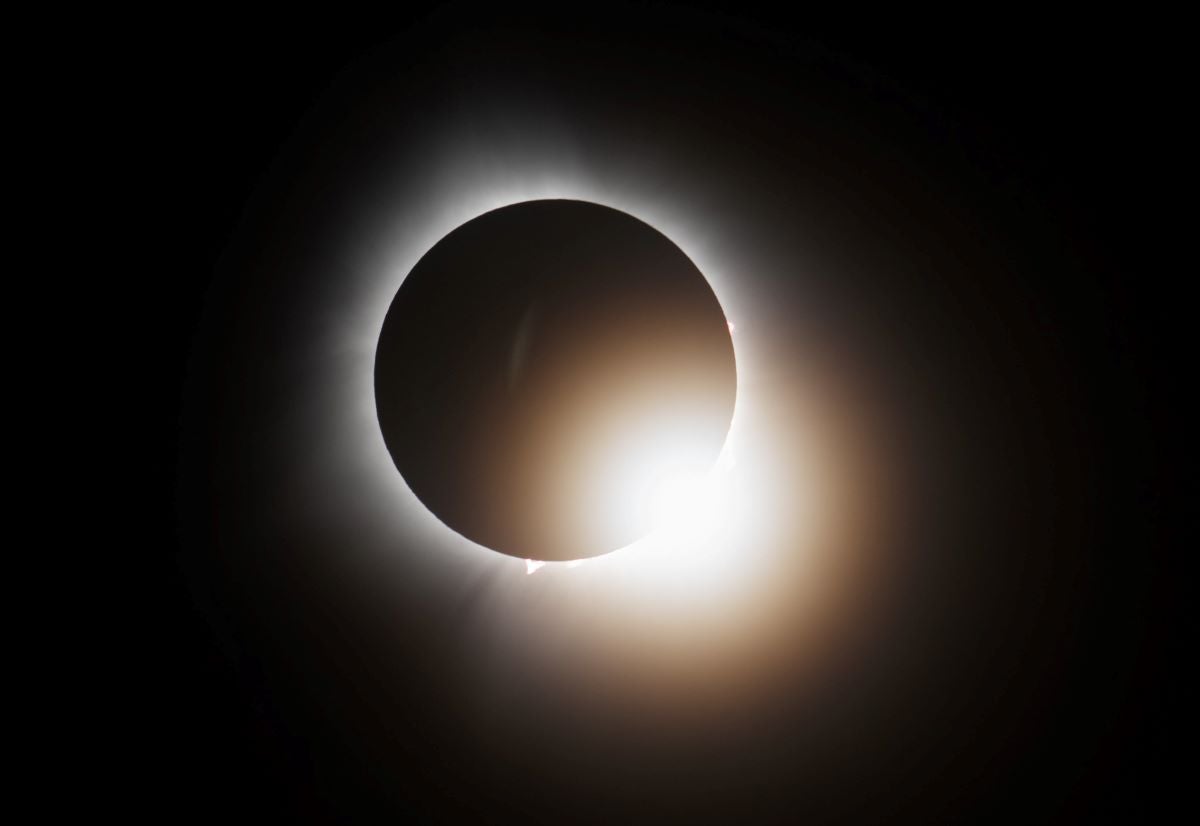
A total solar eclipse is seen from the Indianapolis Motor Speedway, Monday in Indianapolis, Indiana. [Courtesy: NASA/Joel Kowsky]
Key Takeaways:
General aviation traffic surged on April 8, 2024, as thousands of pilots flew to observe the solar eclipse, creating a noticeable cluster of aircraft along the path of totality.
One pilot, David Nelson, experienced a significant partial eclipse from 41,000 feet during a business flight, observing dimming daylight and cooler temperatures.
NASA also conducted scientific experiments during the eclipse, deploying WB-57 aircraft that flew at high altitudes to capture clearer images and extend observation time.
April 8 may go down in aviation history as the busiest day for GA, as thousands of pilots took to the air to watch the solar eclipse.
According to Flightradar24, a distinct line of aircraft clustered along the path of totality. The aircraft were shown as gold icons, and the clusters on that day were reminiscent of goldfish swarming for food.
CREATE A FREE ACCOUNT
Sign up to keep reading
Create a free account to continue. Already a member? Sign in below.
Meg Godlewski has been an aviation journalist for more than 24 years and a CFI for more than 20 years. If she is not flying or teaching aviation, she is writing about it. Meg is a founding member of the Pilot Proficiency Center at EAA AirVenture and excels at the application of simulation technology to flatten the learning curve. Follow Meg on Twitter @2Lewski.