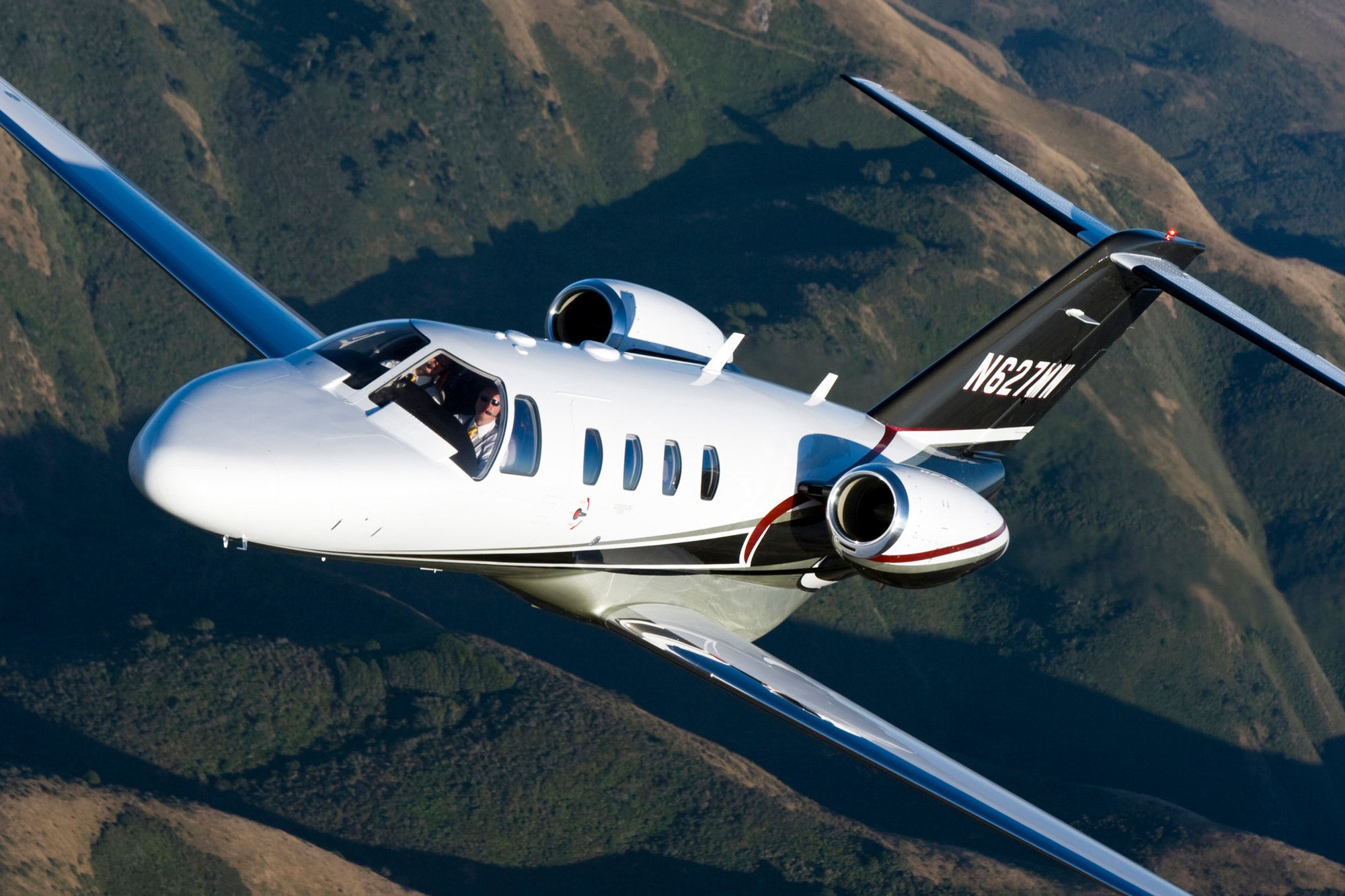
FLYING contributor Dick Karl says making the transition from a Cessna Citation CJ1 (above] to a Beechcraft P-Baron was an eye-opener. [Courtesy: Cessna]
Key Takeaways:
Transitioning from jets back to piston aircraft, a less discussed topic, presents distinct differences in both operational demands and training protocols.
Piston multi-engine aircraft, like the P-Baron, are significantly "busier" to fly than jets, requiring more intricate manual management of power settings, propeller RPM, and engine leaning during takeoff, cruise, and descent.
Emergency training differs, with jet pilots often practicing V1 engine cuts in simulators, while piston twin training involves VMC (minimum controllable airspeed) demonstrations at a safe altitude.
There is a lot written about transitioning from piston airplanes to jets, but not much about the reverse.
For this pilot, the transition from a Cessna Citation CJ1, 2+, and 3 to a Beechcraft P-Baron was an eye-opener. Training is different. Jet training includes engine failure during takeoff, the so-called V1 cut.
CREATE A FREE ACCOUNT
Sign up to keep reading
Create a free account to continue. Already a member? Sign in below.
Dick Karl is a cancer surgeon who appreciates the beauty and science involved in both surgery and flying. Dick’s monthly Gear Up celebrates the human side of flying. He writes about his enthusiasm for both the machines and the people who fly and maintain them.