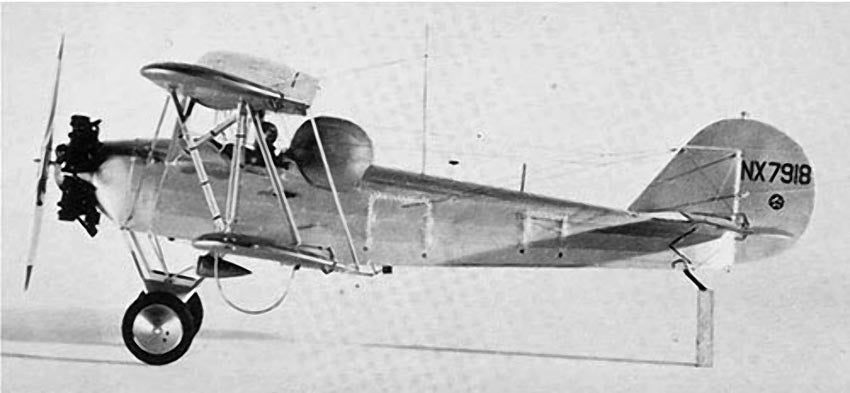
Jimmy Doolittle flew an Army Air Corps NY-2 Husky for the attempt. [Courtesy: Jimmy Doolittle's book - CC BY-SA 4.0 DEED/Wikimedia Commons]
Key Takeaways:
U.S. Army Air Corps pilot Jimmy Doolittle performed the first "blind" takeoff and landing on September 24, 1929.
Flying an NY-2 Husky with a fabric-covered cockpit, Doolittle relied entirely on instruments such as a directional gyro, artificial horizon, and radio navigation.
This 15-minute flight from Mitchel Field successfully demonstrated instrument flying and advanced instrument landing procedures.
Question: Who was the first to make a ‘blind’ takeoff and landing?
Answer: The first “blind” takeoff and landing—that is, flight without being able to see outside the airplane—was performed on September 24, 1929, by U.S. Army Air Corps pilot Jimmy Doolittle.
CREATE A FREE ACCOUNT
Sign up to keep reading
Create a free account to continue. Already a member? Sign in below.
Meg Godlewski has been an aviation journalist for more than 24 years and a CFI for more than 20 years. If she is not flying or teaching aviation, she is writing about it. Meg is a founding member of the Pilot Proficiency Center at EAA AirVenture and excels at the application of simulation technology to flatten the learning curve. Follow Meg on Twitter @2Lewski.