














Register

NTSB Cites Critical Flight Control Failure in Fatal Floatplane Accident

The National Transportation Safety Board (NTSB) reports that the failure of a single component of a critical flight control is to blame for the deadly crash of a floatplane near Seattle on September 4, 2022.

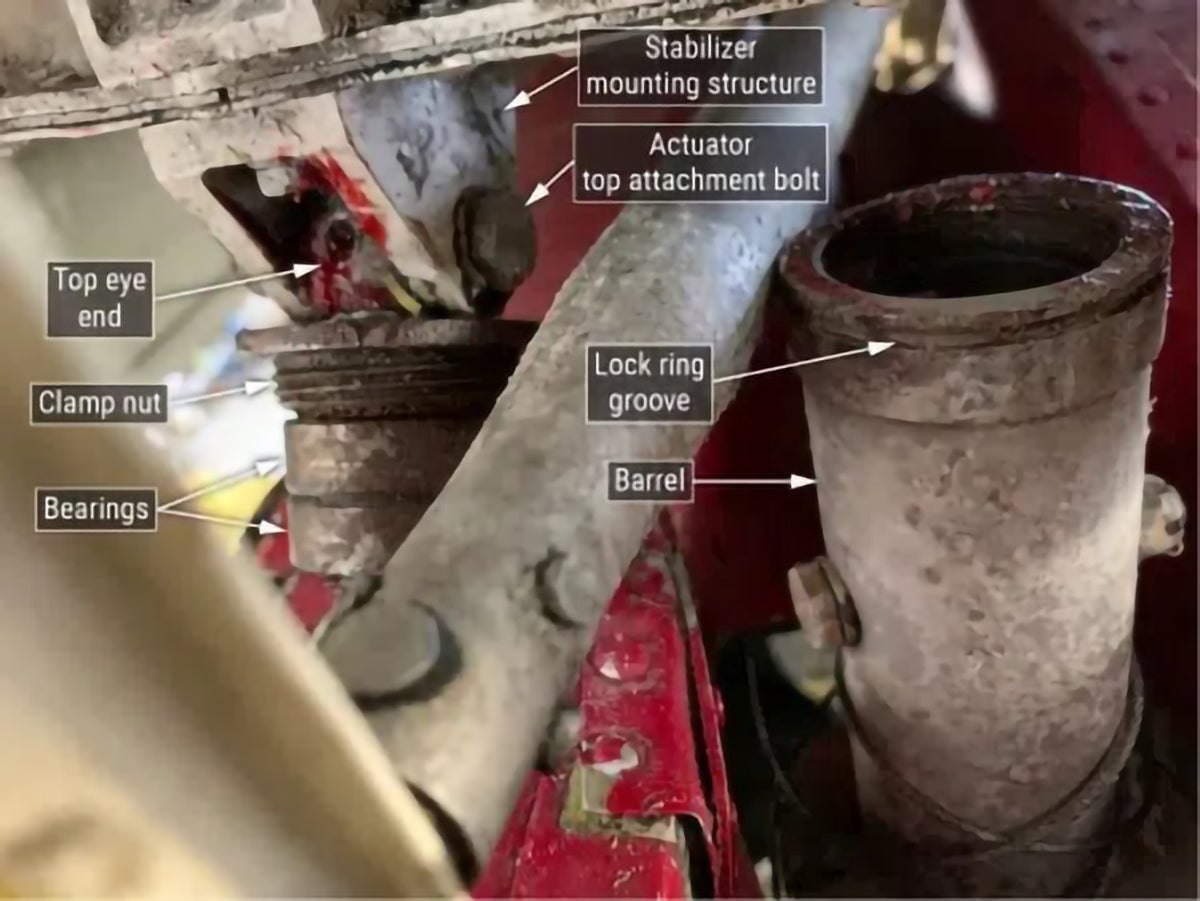
Clamp nut and barrel separation on accident airplane. [Credit: NTSB]
Gemini Sparkle

Key Takeaways:

  • The deadly 2022 Seattle floatplane crash, killing all 10 on board, was caused by the in-flight failure of a critical flight control component—specifically, the elevator actuator.
  • Investigators determined a missing lock ring allowed the clamp nut to unthread from the horizontal stabilizer trim actuator barrel, leading to an uncontrollable loss of the aircraft's pitch.
  • This single point of failure was possible because the 1967 de Havilland DHC-3 aircraft was not required to have a secondary locking device for flight control linkages, unlike modern aircraft designs.
  • The NTSB has recommended that the FAA and Transport Canada mandate immediate inspections and require all DHC-3 aircraft to be retrofitted with a secondary retention feature to prevent similar future accidents.
See a mistake? Contact us.

The National Transportation Safety Board (NTSB) reports that the failure of a single component of a critical flight control is to blame for the deadly crash of a floatplane near Seattle on September 4, 2022. The 1967 de Havilland DHC-3 Turbine Otter went down in Mutiny Bay near Freeland, Washington, killing all 10 on board.

The aircraft was owned by Northwest Seaplanes and the flight operated by West Isle Air, a Part 135 operation. The aircraft was en route between Friday Harbor Seaplane Base (W33) and Renton Municipal Airport (KRNT) at the time of the accident. It was the pilot’s second flight of the day, and the accident occurred approximately 18 minutes into it.


Meg Godlewski

Meg Godlewski has been an aviation journalist for more than 24 years and a CFI for more than 20 years. If she is not flying or teaching aviation, she is writing about it. Meg is a founding member of the Pilot Proficiency Center at EAA AirVenture and excels at the application of simulation technology to flatten the learning curve. Follow Meg on Twitter @2Lewski.

Ready to Sell Your Aircraft?

List your airplane on AircraftForSale.com and reach qualified buyers.

List Your Aircraft
AircraftForSale Logo | FLYING Logo
Pilot in aircraft
Sign-up for newsletters & special offers!

Get the latest stories & special offers delivered directly to your inbox.

SUBSCRIBE
