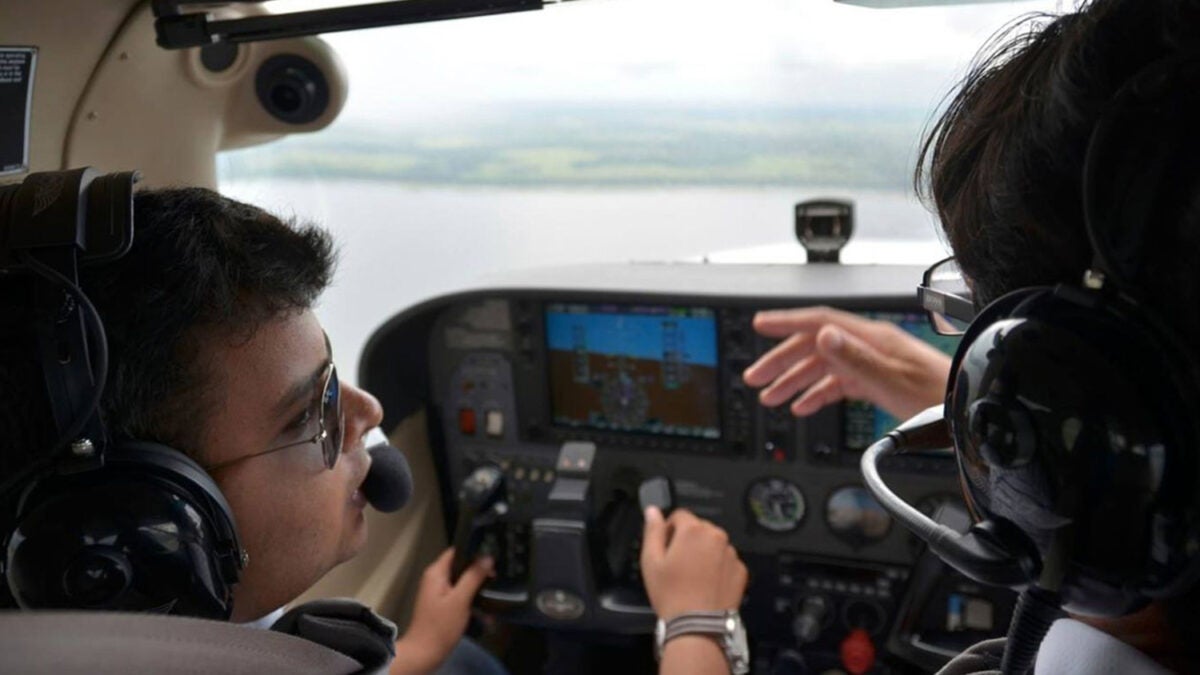
Training out of a towered airport and then heading to a non-towered facility can lead to apprehension for some learners. [Photo credit: Wayman Aviation]
Key Takeaways:
Flight training must comprehensively prepare pilots for operations at both towered and non-towered airports, covering distinct communication protocols and procedures for each environment.
Pilots need to understand the key operational differences, such as obtaining explicit permission from ATC at towered facilities versus using self-announcements on the Common Traffic Advisory Frequency (CTAF) at non-towered fields.
Flight instructors have a responsibility to teach operations for all airport types and controlled airspace (Class B, C, D), and must avoid letting personal biases negatively influence their teaching or a student's skill development.
Meg Godlewski has been an aviation journalist for more than 24 years and a CFI for more than 20 years. If she is not flying or teaching aviation, she is writing about it. Meg is a founding member of the Pilot Proficiency Center at EAA AirVenture and excels at the application of simulation technology to flatten the learning curve. Follow Meg on Twitter @2Lewski.