
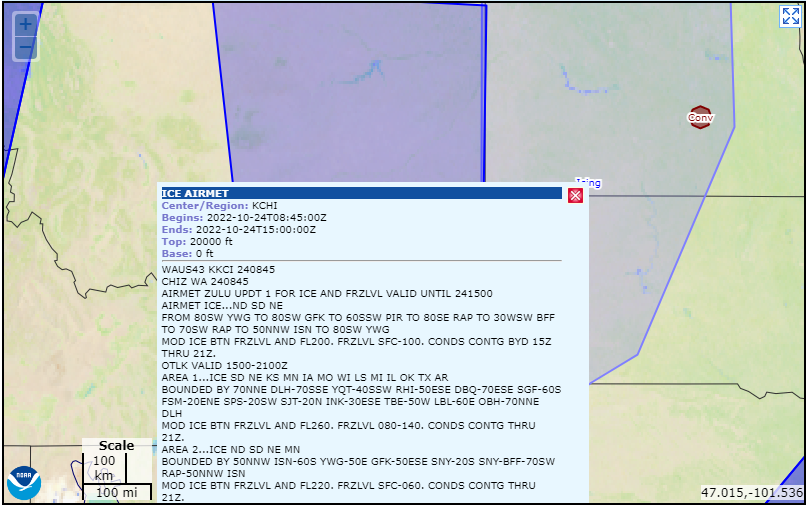


It has been well over a decade since the FAA decided to abandon the traditional alphanumeric code (TAC) airmen’s meteorological information (AIRMET) when forecasters at the Aviation Weather Center (AWC) began to generate the graphical AIRMET (G-AIRMET) on an operational basis on October 1, 2008. At that time, it was determined that the time-smeared TAC AIRMET, or more simply the “legacy AIRMET,” and its outlook was sorely outdated and needed a facelift with a new and improved advisory system that provides better spaciotemporal resolution of the weather hazards for aviation. The G-AIRMET was officially born on March 16, 2010, when it was announced that it could be used operationally by pilots with the legacy AIRMET being automatically generated as discussed in this article in FLYING last month.
But first, let’s take a step back in time. On November 28, 2006, the National Weather Service (NWS) began the process of moving away from a text-based system by standardizing the text that was used in the legacy AIRMETs. This standardization step was necessary to pave the way for the AIRMET to be automatically generated from the operational G-AIRMETs that were being proposed at that time. This was also wrapped up in the plan to retire the aviation area forecast (FA) and officially replace it with the graphical forecasts for aviation (GFA). The retirement of the FA occurred on October 10, 2017. During this standardization stepping stone, the NWS removed specific things from the legacy AIRMET that included, in part: