














Register

Everything You Wanted To Know About the FAR/AIM but Were Afraid To Ask

The Federal Aviation Regulations/Aeronautical Information Manual (FAR/AIM) is a reference tool. It's intimidating to look at, but the good news is that you don't have to commit each individual entry to memory.

FAR/AIM
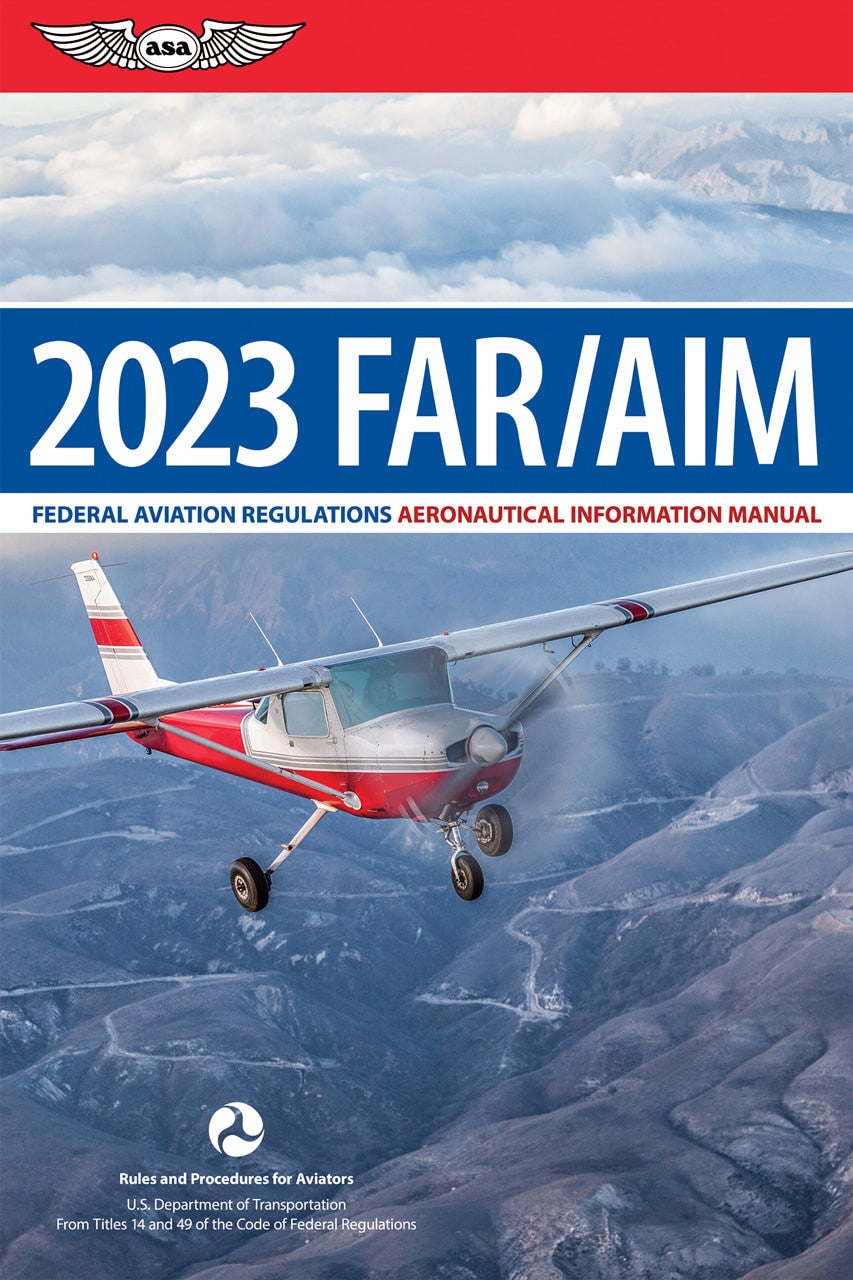
The 2023 FAR/AIM [Courtesy: asa2fly.com]
Gemini Sparkle

Key Takeaways:

  • The FAR/AIM is a vital reference tool for pilots, where the ability to efficiently *use* it to locate information is paramount for success, rather than its physical appearance.
  • Pilots should familiarize themselves with the FAR/AIM's structure (parts, chapters, sections) and utilize tabbing to quickly find pertinent regulations and operational guidance.
  • Key sections of the FARs (e.g., Part 61 for certification, Part 91 for flight rules) and AIM chapters (e.g., Airspace, Emergency Procedures) are essential for pilots to understand and navigate.
See a mistake? Contact us.

While going through the checklist for items the applicant needed to bring for the check ride, the CFI noted that the learner’s FAR/AIM was two years out of date. The CFI was the “finish up, polish up” CFI, and they had been using the electronic version, E-FAR/AIM, on his tablet. It was agreed that for the check ride the applicant needed to have a copy of his own. The applicant promptly bought one from the FBO, removed the plastic wrap, then took the book outside and proceeded to rub the book on the ground, making the new book look worn and well-used. When asked why he intentionally damaged the book, the applicant replied that he’d seen a video where an online ground school instructor claimed if the applicant’s FAR/AIM looked old and used the designated pilot examiner would be impressed. There was an awkward silence. No, Virginia, it’s not the look of the FAR/AIM that will impress the DPE—it is your ability to use it.

An instructor and a student preflight a Cessna 152 before a lesson. [Credit: Richard Steiger]

The FAR/AIM for the Private Pilot

The Federal Aviation Regulations/Aeronautical Information Manual (FAR/AIM) is a reference tool. It’s intimidating to look at, but the good news is that you don’t have to commit each individual entry to memory. You do, however, need to have a basic knowledge of the pertinent regulations and more importantly, know where and how to look things up just to be sure you have the correct information. This process begins with knowing what the chapters, parts, and sections hold.


Meg Godlewski

Meg Godlewski has been an aviation journalist for more than 24 years and a CFI for more than 20 years. If she is not flying or teaching aviation, she is writing about it. Meg is a founding member of the Pilot Proficiency Center at EAA AirVenture and excels at the application of simulation technology to flatten the learning curve. Follow Meg on Twitter @2Lewski.

Ready to Sell Your Aircraft?

List your airplane on AircraftForSale.com and reach qualified buyers.

List Your Aircraft
AircraftForSale Logo | FLYING Logo
Pilot in aircraft
Sign-up for newsletters & special offers!

Get the latest stories & special offers delivered directly to your inbox.

SUBSCRIBE
