













Register

B-29 Superfortress Pulled the Trigger on World War II in the Pacific

The most sophisticated propeller-driven bomber of the war fulfilled critical missions.

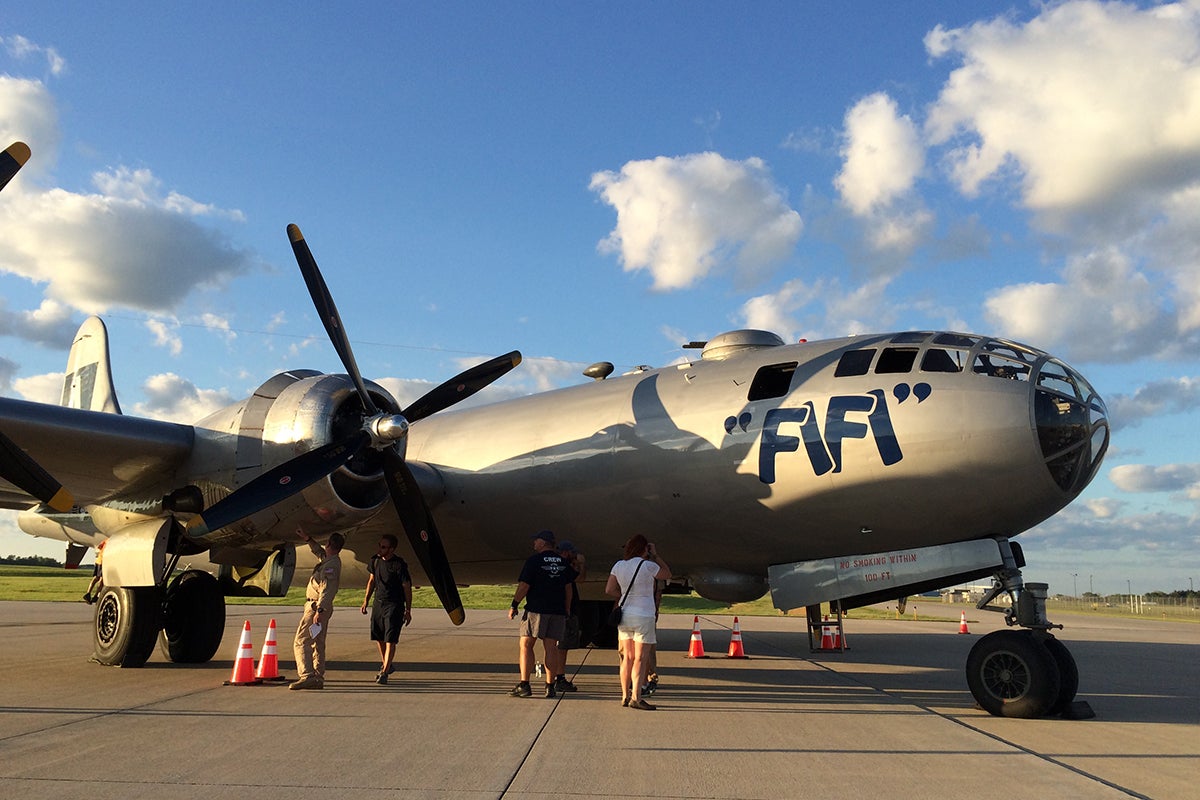
The Commemorative Air Force acquired and restored its B-29, dubbed FIFI, in the 1970s when it was discovered at the U.S. Navy Proving Ground at China Lake, California, being used as a missile target. [Photo: Thom Patterson]
Gemini Sparkle

Key Takeaways:

  • The Boeing B-29 Superfortress was a highly advanced and costly propeller-driven bomber for World War II, featuring innovations like pressurized cabins and remote gun control, but initially suffered from significant mechanical flaws.
  • Despite early struggles with high-altitude precision bombing, a tactical shift to devastating low-altitude incendiary raids proved highly effective against Japanese cities.
  • The B-29 played a decisive role in ending World War II by delivering the atomic bombs on Hiroshima and Nagasaki, and continued to serve in various roles, including the Korean War.
See a mistake? Contact us.

Boeing’s B-29 Superfortress was the most sophisticated propeller-driven bomber of World War II. Advanced armament, propulsion, and avionics systems were all critical to the bomber’s success in the war in the Pacific. 

Capt. Robert Rodenhouse, a B-29 pilot, recalled, “It just blew my mind. First of all its size, and then its capabilities. And to think that they could take an airplane, a bomber, and pressurize it so that we could feel the same at sea level as we did at 30,000 feet. And when I knew the range it was capable of, and the bomb load, I couldn’t wait to get behind the wheel.”


Ready to Sell Your Aircraft?

List your airplane on AircraftForSale.com and reach qualified buyers.

List Your Aircraft
AircraftForSale Logo | FLYING Logo
Pilot in aircraft
Sign-up for newsletters & special offers!

Get the latest stories & special offers delivered directly to your inbox.

SUBSCRIBE