














Register

Army’s Solar-Powered Drone Crashes After 64 Days in the Air

The Airbus Zephyr’s ‘unexpected termination’ comes after it surpassed all known uncrewed aircraft endurance records.

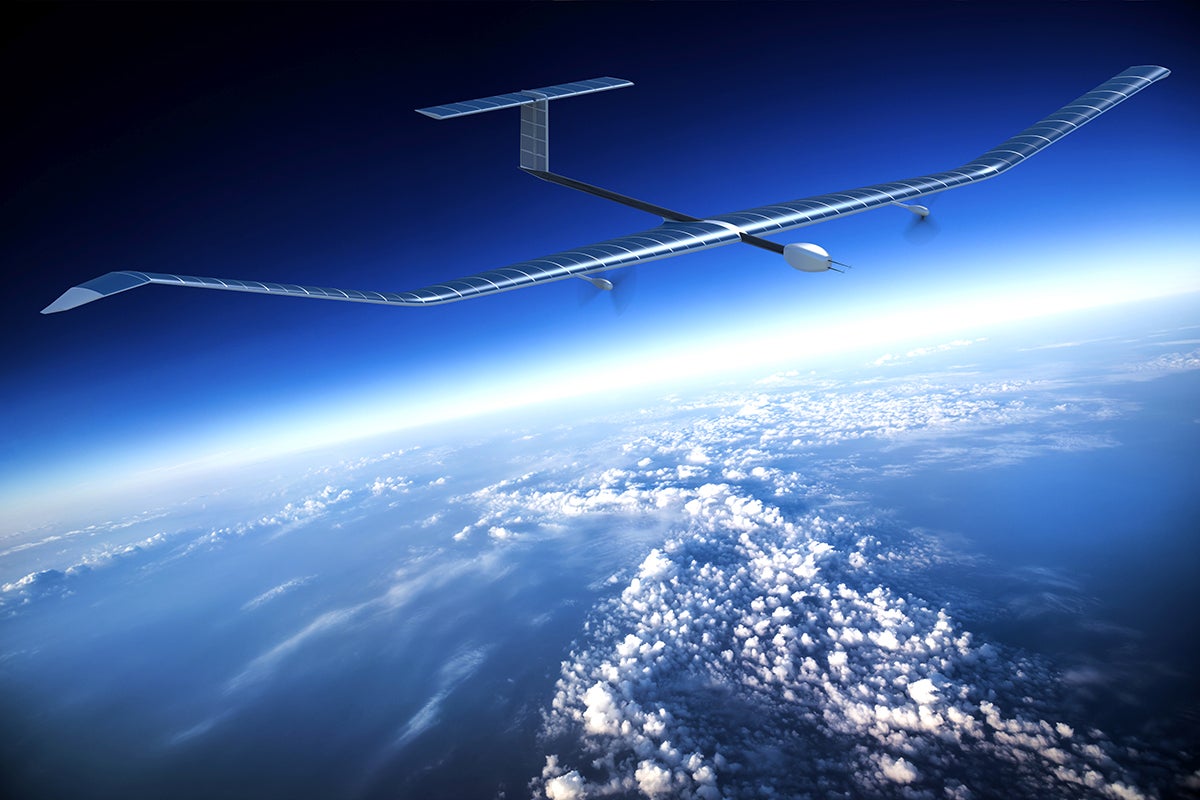
During the 64-day trial, the drone ascended to more than 60,000 feet before it flew a course over the southern U.S., the Gulf of Mexico, and South America before returning to Yuma airspace. [Courtesy: Airbus Defence]
Gemini Sparkle

Key Takeaways:

  • A U.S. Army flight test of its solar-powered Airbus Zephyr UAS ended abruptly with a crash after a record-setting 64-day flight.
  • The test aimed to evaluate the UAS's energy storage, battery longevity, and solar panel efficiency for intelligence, surveillance, and reconnaissance capabilities.
  • Despite the crash, the Zephyr set new unmanned aircraft endurance records, accumulating 1,500 flight hours and more than doubling the previous record.
  • The cause of the crash is under investigation, but officials deem the data gathered invaluable for advancing high-altitude stratospheric capabilities.
See a mistake? Contact us.

A U.S. Army flight test of its solar-powered Airbus Defence Zephyr ultra-long endurance stratospheric unmanned air system (UAS) has abruptly ended with a crash, after more than two months in air.

Army Future Command’s Assured Positioning, Navigation and Timing/Space (APNT/Space) Cross-Functional Team (CFT) launched the Zephyr 8 UAS on June 15 at Yuma Proving Ground in Arizona to test the UAS’s energy storage capacity, battery longevity, station-keeping abilities, and solar panel efficiency as a means to boost intelligence, surveillance, and reconnaissance capabilities.


Ready to Sell Your Aircraft?

List your airplane on AircraftForSale.com and reach qualified buyers.

List Your Aircraft
AircraftForSale Logo | FLYING Logo
Pilot in aircraft
Sign-up for newsletters & special offers!

Get the latest stories & special offers delivered directly to your inbox.

SUBSCRIBE
