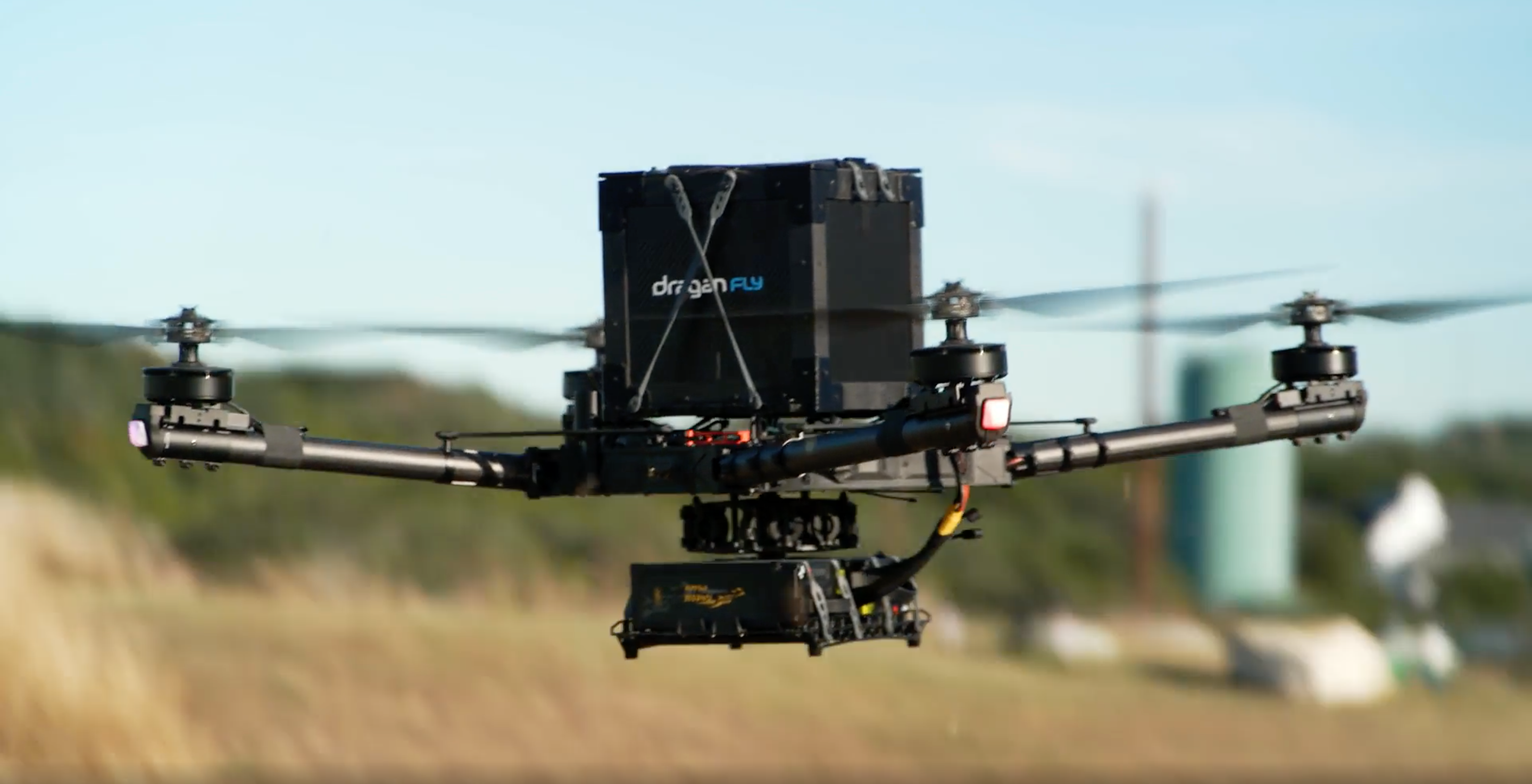
The medical response drones are outfitted with a temperature-managed payload box capable of transporting up to 35 pounds of medical supplies, such as blood, insulin, syringes, and wound dressings. [Courtesy: DraganFly]
Key Takeaways:
Draganfly drones are being deployed in Ukraine for humanitarian purposes, including transporting medical supplies via medical response drones and aiding search-and-rescue efforts.
Operating in a war zone necessitated significant upgrades and lessons learned, such as developing a quick-release payload system for safety, increasing drone range, enhancing communications with anti-jamming and encryption, and improving logistics for battery supply.
Drones are emerging as a "game-changing" technology and a "big equalizer" in modern conflict, demonstrating transformative potential not only for military applications but especially for humanitarian aid, search and rescue, and reconstruction efforts with reduced risk to human life.
In a war zone, no one wants to walk up to a drone that lands without warning.
That’s one of several lessons the makers of Draganfly (NYSE: DPRO) drones have learned on the fly while operating in Ukraine, according to company CEO and co-founder Cameron Chell.
CREATE A FREE ACCOUNT
Sign up to keep reading
Create a free account to continue. Already a member? Sign in below.