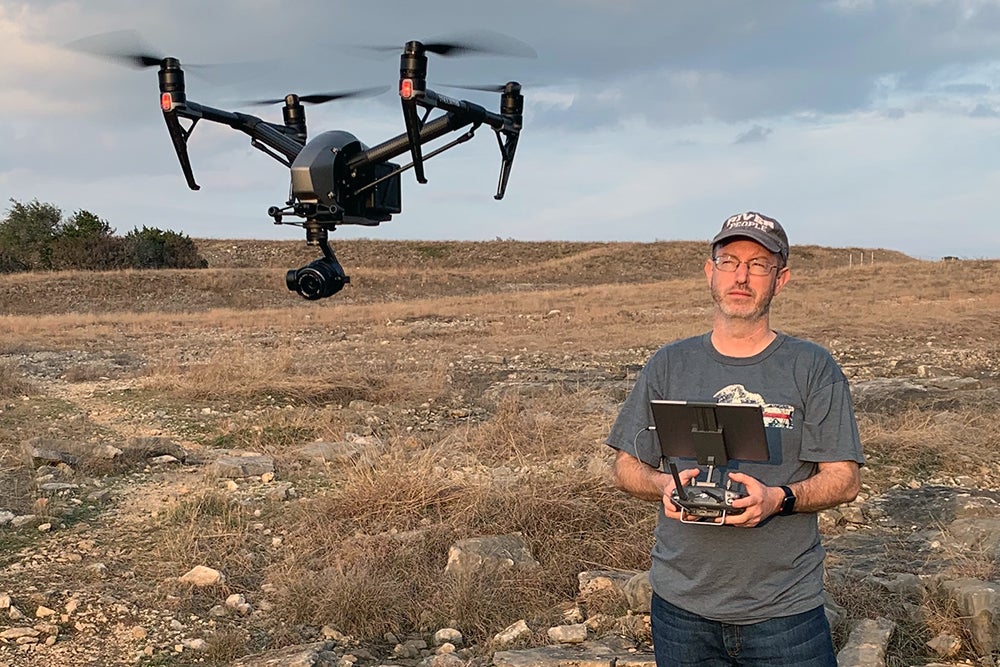
Justin Moore, owner/chief pilot, Airborne Aerial Photography in Texas, gets ready for an assignment. [Courtesy: Jason Moore]
Key Takeaways:
Drones have rapidly evolved from perceived toys in 2016 into indispensable professional tools, providing unique aerial perspectives and access to areas inaccessible by traditional means.
Their utility spans numerous sectors, including real estate marketing, wildfire reforestation, wildlife studies, construction site monitoring, public safety operations (SWAT, accident reconstruction), and media production.
Commercial drone pilots face challenges such as securing clients, navigating complex regulations, dealing with technical issues (e.g., geo-fences), and managing public misunderstandings regarding drone legality and use.
In 2016, ground schools started popping up for small unmanned aircraft systems (sUAS), commonly referred to as “drones.”
Most of the learners would show up to these because they planned to use drones for their businesses, and it was understood that soon the FAA would be requiring a pilot certificate beyond the Section 333 Authorization for commercial operations.
CREATE A FREE ACCOUNT
Sign up to keep reading
Create a free account to continue. Already a member? Sign in below.
Meg Godlewski has been an aviation journalist for more than 24 years and a CFI for more than 20 years. If she is not flying or teaching aviation, she is writing about it. Meg is a founding member of the Pilot Proficiency Center at EAA AirVenture and excels at the application of simulation technology to flatten the learning curve. Follow Meg on Twitter @2Lewski.