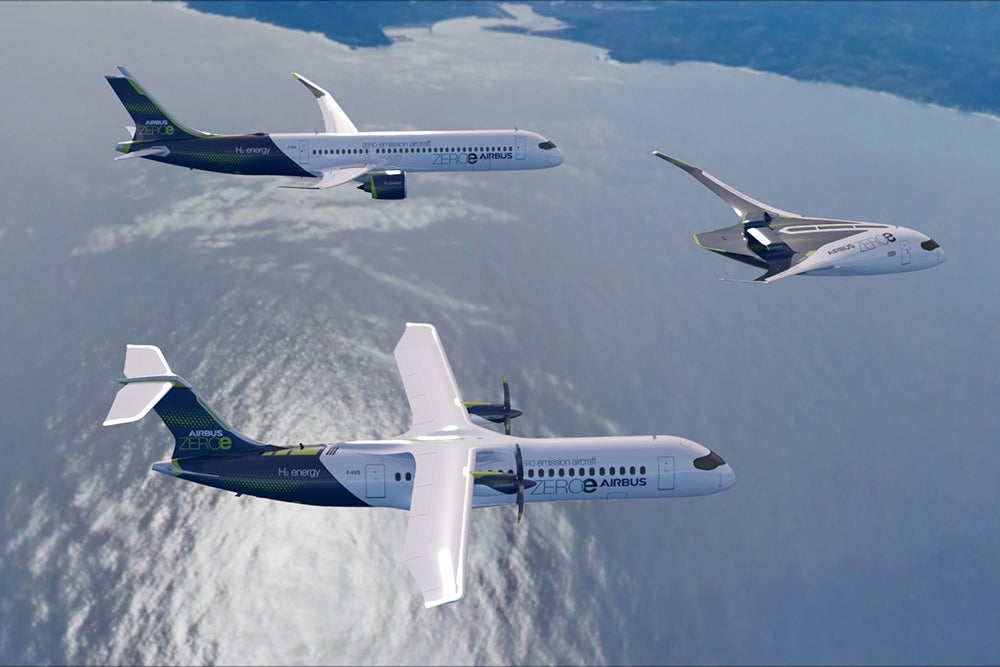
In 2020, Airbus unveiled three ZEROe concept airliner designs: a turbofan, a turboprop and a blended-wing body. Credit: Airbus
Key Takeaways:
Major aircraft manufacturers like Airbus and Embraer are actively pursuing hydrogen-powered aircraft, with Airbus targeting 2035 for entry into service, while Boeing is more cautious, expecting feasibility closer to 2050.
Significant technical and infrastructural challenges remain, including efficient liquid hydrogen storage on aircraft and the development of a vast "green" hydrogen production and distribution ecosystem using renewable energy.
The success of hydrogen aviation depends on extensive collaboration among aircraft manufacturers, airlines, airports, energy suppliers, and governments to overcome these hurdles and make green hydrogen cost-competitive with traditional jet fuel.
At least two major aircraft manufacturers are considering new concept designs for transport category airplanes powered by hydrogen, but as aviation tries to shift to sustainable, zero-emission fuels, skeptics have a few questions.
First, how likely are hydrogen-powered airliners in the near future?
CREATE A FREE ACCOUNT
Sign up to keep reading
Create a free account to continue. Already a member? Sign in below.
Thom is a former senior editor for FLYING. Previously, his freelance reporting appeared in aviation industry magazines. Thom also spent three decades as a TV and digital journalist at CNN’s bureaus in Washington and Atlanta, eventually specializing in aviation. He has reported from air shows in Oshkosh, Farnborough and Paris. Follow Thom on Twitter @thompatterson.