











Which One of Us Is the Pilot in Command?

There’s an art to learning to fly with another aviator.

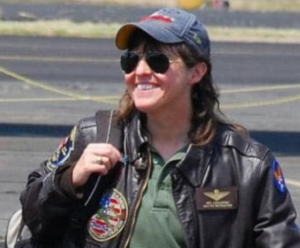
The first time you exercise your pilot in command (PIC) privileges flying with a pilot who is not your flight instructor or a Designated Pilot Examiner (DPE) it can be an eye-opener. [Courtesy: Meg Godlewski]
Gemini Sparkle

Key Takeaways:

  • When flying with another pilot, establish explicit pre-flight briefings to define the mission, roles (including PIC), and emergency procedures, ensuring clear communication and shared understanding.
  • Both pilots are responsible for thorough pre-flight planning, including checking NOTAMs, routes, and frequencies, rather than assuming the other pilot has completed these checks.
  • It is crucial for the non-flying pilot to be empowered and willing to speak up immediately if they observe any unsafe condition or question a decision, prioritizing safety over ego.
See a mistake? Contact us.

Two general aviation pilots get into an airplane… It sounds like the opening to a joke, but it’s not—and you shouldn’t treat it like one. Sharing time in an aircraft with another pilot is much more complicated than jumping in the car for a short hop.

The first time you exercise your pilot in command (PIC) privileges flying with a pilot who is not your flight instructor or a Designated Pilot Examiner (DPE) it can be an eye-opener—especially when the person you are flying with is a certificated pilot of equal or more experience.

This Article First Appeared in FLYING Magazine

If you're not already a subscriber, what are you waiting for? Subscribe today to get the issue as soon as it is released in either Print or Digital formats.

Subscribe Now

This may be your first experience with that crew structure. Are you comfortable asking the other pilot to do things like return a radio call or challenge and respond with a checklist? Would you be comfortable with them correcting an error you made? 

And the big question—would you be comfortable speaking up when you feel something is not right?

The Mission

Begin by briefing the mission. What is the purpose of the flight? Are you trying to build hours? Increase your proficiency? Practice a certain skill set that you haven’t used in a while—like tracking a VOR?

Be clear and establish expectations. If you are trying to build PIC time, make sure you are acting as PIC, as in “sole manipulator of the controls,” and plan for a power setting (55 to 60 percent) that allows for time building.

If the plan is to fly to another airport more than 50 nm away straight-line distance to build cross-country time, review the proposed route and double-check the distance. The details matter here.

Are there airspace concerns? Will you ask for a clearance to fly through the Class D or C, or request a clearance through the Class B if appropriate, or will you take a zigzag route to avoid this? If the purpose is to build hours, the zigzag route is often used because it takes longer. Make sure to discuss the appropriate altitudes to be flown along with the route. 

Do Your Homework

Note the runways at the destination and if there are services, such as fuel. Both pilots should double-check the NOTAMs. It’s a bad day when both pilots thought the other one was going to do the planning.

It is often a good idea to write down the radio frequencies you will utilize for the flight in the order they will be used. Many pilots also record the weather and communication frequencies for the airports they will be passing by, just in case a divert is necessary. Having the frequencies at your fingertips means you won’t have to fumble with sectional charts or swipe and cycle through screens to find what you need.

Verbalize the Roles 

Before engine start, determine who will be PIC for the first leg of the flight. This includes the preflight inspection. One of you should be handling the checklist and referring to the items as listed. If you are the non-PIC and you wish to assist with the preflight inspection, make sure you get the permission of the PIC. You don’t want to be a distraction or disrupt their flow.

Use metrics when asked about fuel and oil level. “We have enough” is a useless phrase—how many quarts/gallons is enough?

The PIC should administer the safety briefing. It’s a bit disheartening to hear that some pilots skip this because they are “flying with a buddy”, and they “know each other so well.” Think of it as a time to review the plan, including who will operate the radios, manage the flight plan and navigation, and who will be pilot flying if you encounter an emergency situation—especially during takeoff or shortly thereafter when there isn’t much time (read that altitude) to react.

The pretakeoff briefing is one of the most important a pilot does, but in the general aviation world it is often overlooked. It goes like this: What if there is a loss of control or engine power during the takeoff?

If I am flying with a client of less experience, I advise that if we have lifted off and we are out of usable runway and the engine loses power, I will take the controls. If we are below 800 feet agl, there’s a good chance we’ll be going straight ahead of no more than 30 degrees off the extended centerline as I aim for something soft, inexpensive, and unpopulated. If we are at 1,000 feet and it is possible to turn back to the runway and airport environment, the briefing concludes by advising the learner their job will be to back me up on the radios. 

Speaking Up for Safety

You may know someone who survived an aircraft accident and, in hindsight, realizes they should have spoken up when the pilot flying voiced a questionable decision.

A friend who is a retired airline pilot tells a story of flying as a passenger in a Cessna 185. The flight controls were removed from the right seat, he recalled. The PIC was a good friend with good piloting skills and who he had flown with many times in a DC-3, and he had complete confidence in him.

The accident happened when the PIC was attempting to land on a soft dirt road near his home. The road, according to the National Transportation Board (NTSB) report, was 462 feet in length, and the pilot landed 74 feet in. It quickly became apparent they could not stop in time to miss the trees, a house, and a motor home at the end of the road.

The PIC initiated a go-around, but it was too little, too late. The pilot died of his injuries—the friend telling the story had minor injuries. When he shared this tale years later, he said he had his concerns when the PIC said he was going to attempt to land on the road, noting in particular how short it was, but he didn’t speak up.

“It taught me to be more assertive as the pilot not flying, or now referred to as the pilot monitoring,” he said.

Amy Hoover, a professor of aviation at Central Washington University, said it’s all about pilots learning safety culture from the get-go.

“Everyone is responsible for safety, but it can be really hard for a low-time pilot to speak up if they see someone doing something unsafe,” said Hoover, who is also an author, backcountry pilot, and the 2022 CFI of the Year.

According to Hoover, when a school or business establishes a culture that encourages pilots to speak up when they see someone doing something unsafe, it can help thwart the normalization of deviance.

“When someone gets away with something, like forgetting the postflight check, they’re more inclined to skip it again,” Hoover said. “It can happen when pilots are fatigued or distracted. They lose their procedural discipline. If you realize you’ve skipped something, like part of a checklist, go back to the beginning. Don’t start in the middle.”

One of the dangers of flying with another pilot or a group of pilots is that they can begin flying by committee, and the PIC can do something against their better judgment—like continuing VFR into deteriorating weather to “get along” or protect their ego.

“Take your ego out of it,” said Hoover. “Speak up. The more conservative approach is often the best course of action.”

Right Seat Ready

On the other side of the spectrum are the friends and often family members who want to fly with you and help in the cockpit but are a little intimidated.

Courses like Jan Maxwell and Jolie Lucas’ “Right Seat Ready!” have been helping nonpilots become more comfortable in the cockpit since 2010. Sometimes the person sitting next to you isn’t a pilot, but they still want to help out during the flight.

According to Lucas, an aviation writer, commercial pilot, psychotherapist, and educator, “Right Seat Ready!” is an interactive seminar that combines lecture and discussion with a training session in a Redbird AATD. The participants become familiarized with the cockpit instruments and aircraft controls and learn how to utilize them to some extent.

“Our audience is any right-seat or back-seat nonpilot companion. I believe the youngest attendee was 12 years old, and the oldest was in their late 70s,” said Lucas.

She said that the mission of the seminar helps the participants understand more about the airplane and be able to get an airplane safely on the ground in an emergency situation. A secondary goal would be to be able to assist the PIC with some of the “mental load” aspects when necessary, such as tuning radios/instruments, etc., and to be prepared to help the pilot in the event of an emergency.

The goal is not to make pilots out of them (although it can spark their interest), according to Lucas, but to give them a better understanding of what to expect during the flight.

“It is so completely fabulous to take an anxious class of right-seaters and turn them into a confident, connected, calm, and competent group of companions,” she said. “Plus watching them land like a boss on the centerline in a Redbird simulator is the icing on the cake. We have made six [to] seven pilots and aircraft owners out of our attendees from the past.”


This column first appeared in the September Issue 962 of the FLYING print edition.

Meg Godlewski

Meg Godlewski has been an aviation journalist for more than 24 years and a CFI for more than 20 years. If she is not flying or teaching aviation, she is writing about it. Meg is a founding member of the Pilot Proficiency Center at EAA AirVenture and excels at the application of simulation technology to flatten the learning curve. Follow Meg on Twitter @2Lewski.
Pilot in aircraft
Sign-up for newsletters & special offers!

Get the latest stories & special offers delivered directly to your inbox.

SUBSCRIBE


