











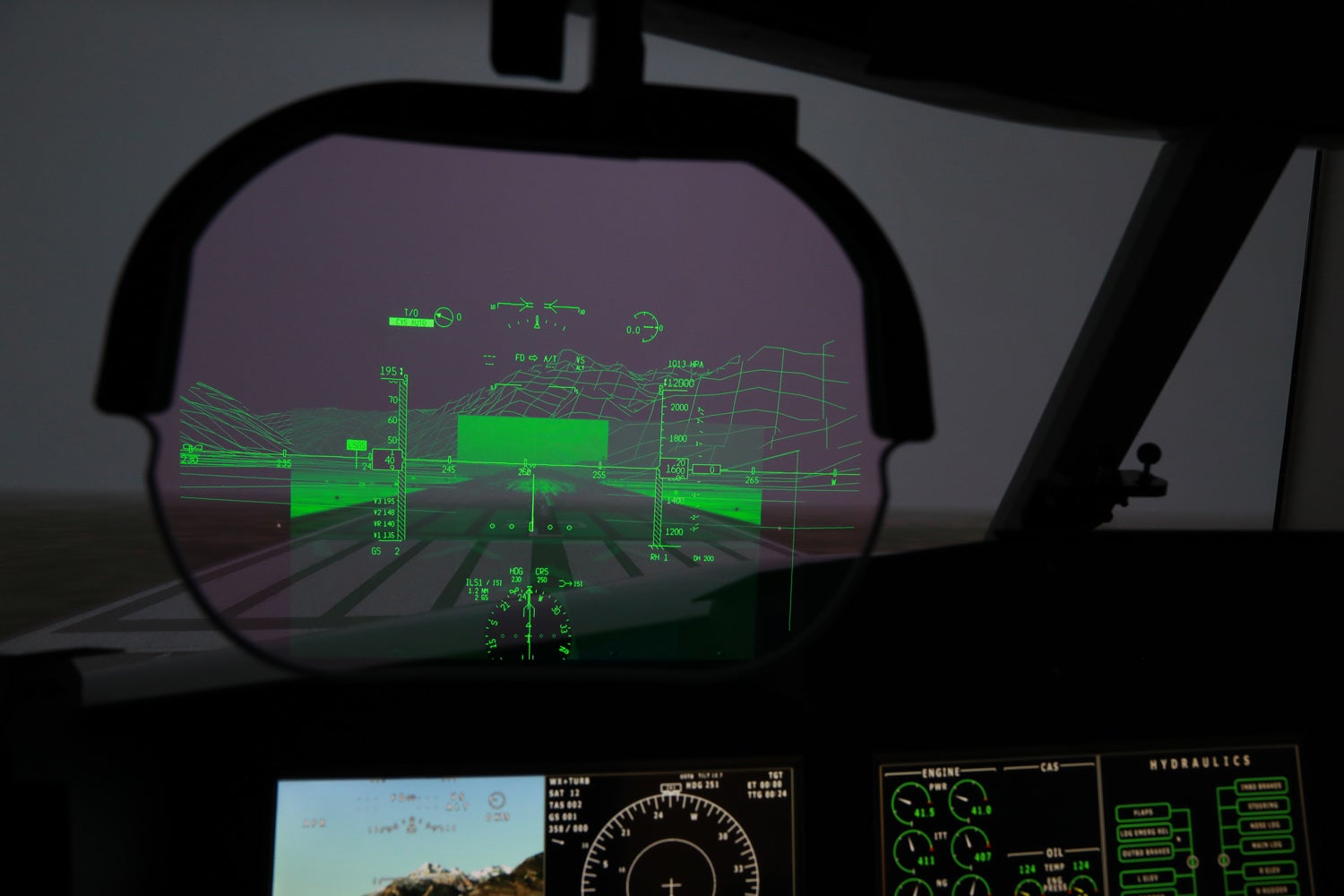
Instrument flying changed forever yesterday when Vū Systems launched the world’s first passive millimeter wave sensor (PMMS) for aviation called the Vu Cube. At first glance, the 29-pound sensor looks like a retro black-and-white TV from the 1950s, but the sensor’s ability to see through heavy clouds, thick fog and even snow make it far more valuable. When the Cube’s output is projected on a heads-up display, pilots can see as far as two miles ahead of the airplane making reliable takeoffs and landings in poor weather possible, right down to the flare, touchdown and rollout. Aircraft fitted with PMMW technology will no longer need to rely on ground-based equipment, which means landing at airports otherwise inaccessible during severe weather conditions.
Vū Systems’ New Cube Will Change Instrument Approach Flying Forever

Key Takeaways:
- Vū Systems launched the Vū Cube, the first passive millimeter wave sensor (PMMS) for aviation, allowing pilots to see through heavy clouds, fog, and snow up to two miles ahead.
- This breakthrough technology enables safe takeoffs and landings in near-zero visibility conditions, eliminating the reliance on ground-based equipment and traditional approach minimums.
- The Vū Cube offers significant economic benefits by reducing weather-related delays and improving flight safety, while also simplifying pilot training and aircraft maintenance compared to existing Category II/III systems.
Key takeaways sponsored by Aviator Pro | Start Your Training ->
See a mistake? Contact us.

