

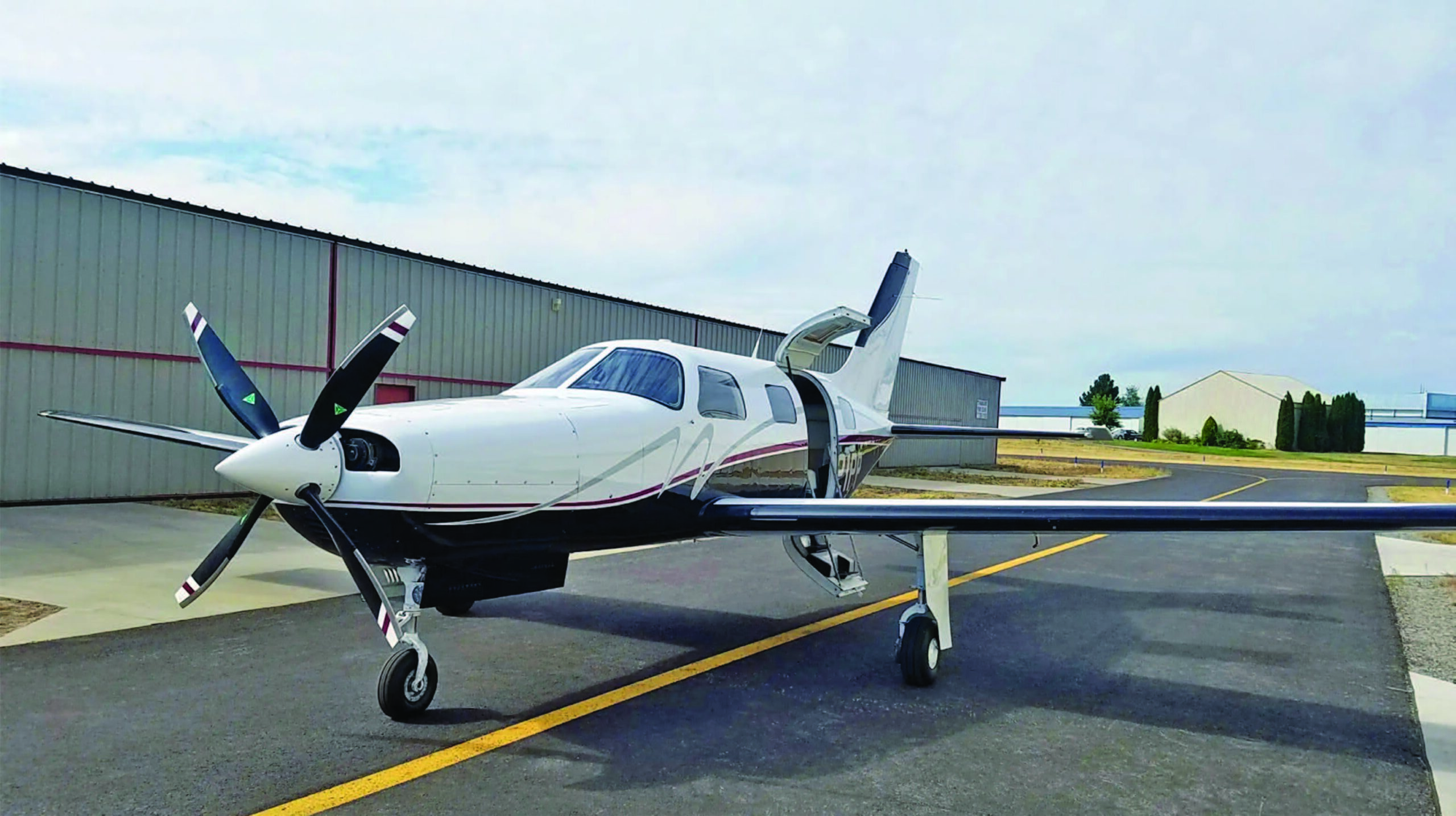


When it first appeared in the mid-1980s, the PA-46 Malibu was a head turner. Aside from its ramp appeal, pilots were intrigued with its high-flying pressurized cabin, 200-knot cruise speed, and impressive range. There was nothing quite like it, and Piper soon found a loyal market for its new flagship product, mostly among well-to-do owners who could afford to sink a half-million bucks into a new single and flew the kind of missions where the Malibu shined.
Pressurizing a single isn’t easy—Mooney’s Mustang was a bust. Cessna pulled it off using a proven airframe in the P210, but it had its growing pains. Piper’s execution left something to be desired. Although owners generally raved—and still do—about the Malibu’s impressive capabilities, it gained a reputation as a problem airplane. The engine and systems were finicky to operate, and dispatch reliability ranged from barely acceptable to just awful for some years.
If you're not already a subscriber, what are you waiting for? Subscribe today to get the issue as soon as it is released in either Print or Digital formats.
Subscribe Now
As the model evolved and became the Mirage, its reputation didn’t improve. Indeed, some owners believe that with the Mirage, Piper jumped from the pan into the fire, especially with regard to engine longevity—or lack of it.
Yet, with time and the application of money, most of the problems got sorted out, and the fact remains, nothing quite does what a piston-powered PA-46 does. As one owner put it, “It’s expensive to operate for a piston single, but cheap for what it does.” We think that fairly sums up the Malibu.
Anyone contemplating buying one should be ready to pay what we consider to be substantial maintenance bills, with the reward being fast cruise speeds above the weather in pressurized comfort and with reasonable payload. For more simplicity, there’s also the unpressurized Matrix.
Clean Sheet
The PA-46 is the last from-the-ground-up new airframe Piper has produced, except for the PA-47 PiperJet Altaire, but that didn’t make it. The turbine-powered Meridian and later M-series turboprops use the same basic airframe the Malibu pioneered but with substantial modifications. The Malibu prototype emerged from the Vero Beach, Florida, plant in late 1982, amid much fanfare and excitement because no one had seen anything quite like it. It had a long, rakish snoot housing a 6-cylinder Continental TSIO-520BE rated at 310 hp and with two turbochargers, providing enough bleed air to keep the cabin comfortably inflated at FL 250.
With its 43-foot wingspan, the Malibu looked as much like a glider as a powered aircraft. As one owner said, the thing looked like it was going 200 knots sitting on the ground. The base price was an eye-watering $275,000, but with accessories the typical invoice swelled to more than $320,000, or around $1.1 million in 2025 dollars.
Ironically, Piper launched the Malibu in 1984 into what was an overall GA slump. Yet Piper prospered with the Malibu because of its capabilities and unusual luxury. Although the company succeeded, it was haunted by engineering decisions made early in the program.
As is often the case, the production airplane was heavier than intended, but this was offset by a boost in takeoff weight. Useful load worked out to be 80 pounds less than planned—not a deal breaker but a weight equivalent to fuel for IFR reserves.
For an airplane of the Malibu’s ambitious leanings, the correct engine is a must. Piper never seemed able to find the right powerplant, however. From the beginning, buyers favored a Lycoming because of a perceived reputation for reliability and robustness.
The would-be owners turned out to be correct, at least initially. The Continental package evolved into such a nightmare—piston pins and crankshaft bearings in particular—that in 1987, Piper asked owners to ground their airplanes voluntarily until the problems could be worked out.
Many owners maintain that the Continental was and is a superior engine for the Malibu, but in 1989 Piper introduced the Malibu Mirage with a Lycoming engine. It was essentially the same airplane with a Lycoming TIO-540-AE2A of 350 hp. The new engine weighed 113 pounds more, but the maximum takeoff weight was boosted by 200 pounds. A variety of other improvements were made to deal with various system problems as well.
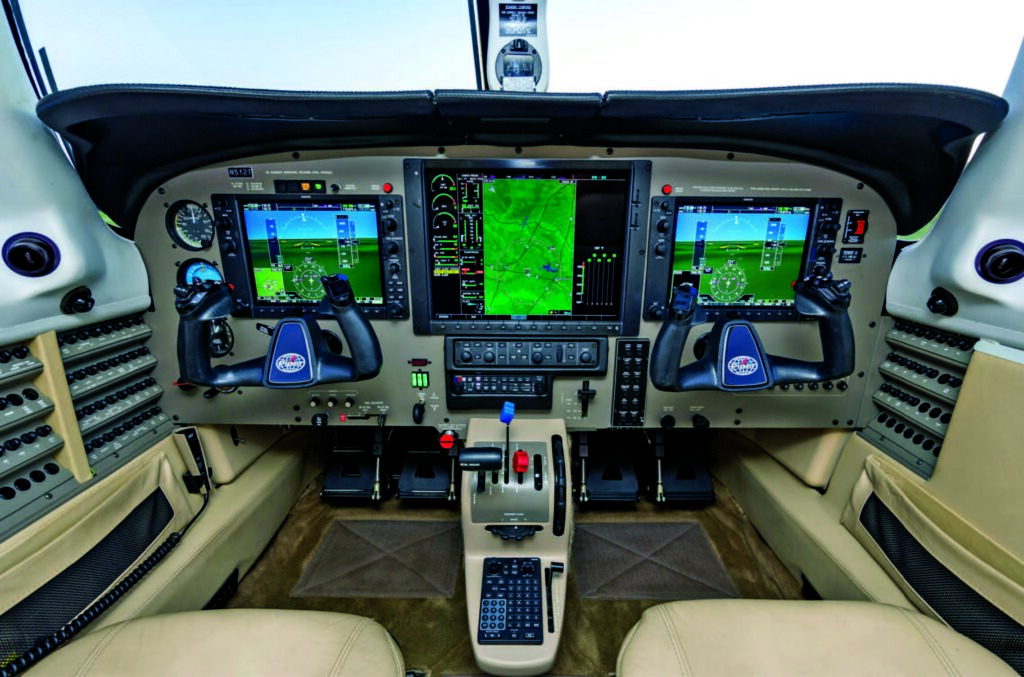
Later models offer the Garmin G1000 with the favored GFC700 autopilot. [Courtesy: Piper Aircraft]
More Than Engine Woes
The Malibu’s Continental powerplant got lots of attention early—little of it favorable—but some of the airplane’s other systems didn’t distinguish themselves, either. The complex nose gear, which rotates 90 degrees to fit into its bay, proved delicate. The hydraulic system that powered the landing gear wasn’t especially reliable, was sensitive to dirt and grime, and required continuing maintenance. The hydraulics also ran the flaps on early models.
To make the airplane appealing to what Piper thought was its core market, the company called for exceptional range well beyond the fuel specifics of most 6-cylinder engines. Continental thus specified operating requirements for the engine that were unusual at the time, specifically lean-of-peak exhaust gas temperature (EGT) operation.
To beat down the fuel flow, Continental required pilots to lean the engine to 50 degrees lean of peak for all operations below 80 percent power, which is the maximum recommended cruise setting. That went against what most pilots had been taught before the current understanding of lean-of-peak ops—and a fair number ignored the instructions and ran rich of peak.
Whoever was to blame for Malibu engine problems, squabbles between owners, Piper, and Teledyne Continental Motors grew heated and ugly at times. The irony is that the fixes applied to the Continental made it as good as the Lycoming installation. Both are sensitive to proper operating technique. The lack of cowl flaps doesn’t help matters with the engine packed tightly in the cowling.
Shop Owner’s Dream
Substituting one engine for another didn’t solve all the Malibu’s problems, and it brought some of its own, not the least of which is higher fuel consumption. Owners suffered through Lycoming’s massive crankshaft recall of 2002 and 2003 and weeks to months of downtime. The perceived reliability of the Mirage got so bad among some owners that a class-action lawsuit was filed in 2000 against Piper and Lycoming. The suit was settled after the court failed to certify the class.
Engine reliability wasn’t great, although the airplane is such a good glider that many events didn’t become a National Transportation Safety Board (NTSB) report because the pilot was able to land safely on an airport. The Aviation Consumer’s survey of NTSB accident reports for the PA-46 have shown that a high percentage of them were engine related. It’s a lesson in how any owner should approach upkeep.
- READ MORE: Used Aircraft Guide Live: Wrecks Revisited
Maintenance is, as more one owner has told us, a “serious activity” for PA-46 owners, regardless of the powerplant type. Alternators, vacuum pumps, and the exhaust system are all items mentioned by our survey respondents and matched the service difficulty reports reported to the FAA.
What we did see is that things have improved over the years. Well over 10 years ago, an owner reported that the maintenance expenses for the first two years of ownership of his Mirage came to well over $46,000, and you can bet that hasn’t become cheaper in current years. While we have received reports of squawk lists on annuals reaching 25 percent of the value of the airplane, most owners say that they recognize it’s expensive to maintain a pressurized single, and if they stay ahead of the game, the price is not outrageous.
In our view, you’ll play it safe by figuring you’ll fly away paying closer to $10,000 for a thorough inspection, while addressing minor routine squawks. The PA-46 nose gear is tender and the hydraulic system continues to pose problems. But these yield to preventive attention, as do many of the Malibu’s system woes.
Even ardent supporters of the airplane admit that it requires frequent and ongoing maintenance. Owners emphasize the value of having a knowledgeable maintenance shop doing routine and ongoing work on the airplane. The PA-46 is not an airplane that just any shop can fix, and we would especially be selective about who does a pre-purchase inspection.
And after caring for our share of models, it doesn’t matter which vintage of PA-46 you choose—Malibu, Mirage, or Matrix—simply budget a pile of cash for annual maintenance and fix stuff as it breaks. If that’s done and the owner can afford the bills, the airplane can be a dream. As our recent owner feedback shows, many Malibu and Mirage owners have held on to their aircraft for many years.
Improvements
With the introduction of the Mirage, some of the quirky systems were addressed. The hydraulic system was improved, the engine cooling system was redesigned, the cabin door was improved, the seats were strengthened, and the flaps were changed from hydraulic to electric operation. (Actually, some of the later Malibu models got the electric flaps and improved hydraulics for the gear.)
The Mirage also got some big-airplane type features that owners appreciate, including a dual-bus electrical system, internal windshield deice, standard dual alternators and vacuum pumps, and an auxiliary heater for the cabin. It needed it. It’s cold back there in the flight levels, even during the summer. Again, some of these mods appeared on later Malibus.
Any potential buyer should look carefully at the avionics because there are a wide variety of equipage standards—from planes that still support original King avionics, federated panels with a mix of retrofit equipment, Avidyne Entegra glass, and later models with the Garmin G1000. Many attest that the S-TEC 55X rate-based autopilot found in many models isn’t a great match for the airframe. In our estimation, Garmin’s G1000-embedded GFC700 is the best choice for performance and features. No matter which system, pay close attention to its operation on shakedown flights.
Small-Cabin Luxury
Piper’s marketing efforts rightfully talked up the PA-46’s so-called cabin-class comfort, and with the clamshell cabin door and airframe standing tall on the ramp, it holds its own parked around bigger corporate rides. Climbing aboard and starting up front, however, the cockpit isn’t exactly cavernous.
Getting into the seats requires minor contortions through a narrow aisle between bulkheads walling off the rear cabin. Larger pilots might be cramped and, worse, the seats don’t slide back as far as they do in a Mooney or Cessna. Other than the overhead switch panel that we think leaves front-seaters vulnerable in a crash, the cockpit is well designed in both models with well-placed gauges and plenty of room for all the avionics you could ever want.
But the main cabin is passenger friendly, and with club-style seating, the rear cabin is comfortable if a little tight at times. Rear-seat passengers complain about too little heat—fixed with the aux heater—but the air conditioning/pressurization system is quite good, when it isn’t broken. Some owners tell us they’ve had trouble with both systems while others complain more about the AC. Put it at the top of the list during a pre-purchase inspection. Especially when upgraded with luxurious interiors, the cabin and cockpit noise are on the low side as GA airplanes go.
The Continental in the Malibu noticeably vibrates less than the Lycoming in the Mirage, Matrix, and M models, based on the ones we have flown. Like most airplanes, the Malibu is not a fill-the-seats-and-tanks six-seater. But it will comfortably carry four people and baggage with full tanks, yielding a nonstop range of about 1,400 miles for the Malibu and 1,000-1,200 miles for the Mirage. Typical useful loads are 1,400 pounds and 1,300 pounds, respectively.
These airplanes are good for loading and going—baggage space is generous, with two bays, one just aft of the engine compartment and the other behind the rear seats, making loading within limits easier. Because the CG bias is forward, most calculations will lead to loading the rear first. The Mirage and Matrix Lycoming engine is larger and the accessory layout is different, so the forward baggage bay in the Mirage is a bit smaller than in the Malibu.
Flying Them
How about handling? Does it match the airplane’s sexy looks? More than one Malibu and Matrix owner agrees with our experience in that these planes are delightful at any altitude, although we’ve found the control forces somewhat heavy.
Arguably, the PA-46 is an autopilot airplane. Still, for hand-flying, we’re not talking Bonanza handling here, but the controls are responsive, with pitch the lightest and roll the heaviest. The PA-46’s long, high-aspect-ratio wing is good for climb and high-altitude performance, but along with it comes a low maneuvering speed in the mid-130s kias at gross, decreasing as the airplane gets lighter. The long wings produce another undesirable trait: The roll rate at slow speeds is somewhat ponderous compared to other singles. Sharp stick-and-rudder work in crosswinds is a must.
Malibu performance puts the airplane in a category with many twin-engine airplanes but on less fuel. Malibu pilots report cruise speeds of 205 knots TAS at FL 220 at 67 percent power and 210 knots true at FL 250 at 75 percent. Mirage pilots pay more at the gas pumps, but in exchange, they go a little faster, with speeds typically of 220 knots at FL 230-250 at 75 percent power burning 18.8 gph.
On trips of any length, most owners climb rapidly into at least the high teens, but the airplane is perfectly at home up to FL 250. One place it’s not at home is taking off from short runways. Initial acceleration is sluggish, although the airplane will get in and out of 3,000-foot strips at sea level with relative ease. We would be sure to be on the game while operating out of 2,500 feet or less.
Sit up straight during descents because it’s easy to get above maneuvering speed or even redline if you’re not paying attention, although speedbrakes help. This, along with the autopilot and weather factors, was implicated in a string of in-flight breakups that led to a great deal of consternation (and an AD-mandated restriction on operations) back in 1991. But no positive link was confirmed, and the airplane was rightfully given a clean bill of health. There was a lesson. Speed control is a must. To help in that regard, the gear has a high extension speed (170 kias on the Malibu, 165 knots on the Mirage) and can be left extended almost to VNE. We’ve done it in a rapid descent—and admit to some tension.
The first notch of flaps can be extended at the same time as the gear. Pilots report that the gear makes an effective speedbrake. Retraction speed is much lower, at 130 knots (Malibu) and 126 knots (Mirage), respectively. Around the runway, the PA-46 can sting the pilot who doesn’t bring their A game.
There isn’t anything particularly difficult about landing a PA-46, but the long wing encourages floating and when lightly loaded, the CG is forward. These two characteristics sometimes lead to abuse of the relatively delicate nose gear. Hold the weight off with some back pressure during rollout and high-speed taxi.
Owner Comments
As owners consistently report in our PA-46 surveys, the airplane is well supported by one of the best owner groups in general aviation, the Piper M-Class Owners & Pilots Association (www.mmopa.com). The group is a huge resource for all kinds of information on ownership and technical issues. Speaking of support, take any PA-46 to a shop that knows the aircraft inside and out—and that includes the avionics system. This is even more important for pressurized models.
“My Malibu is maintained by the book at a shop dedicated exclusively to Malibu, Mirage, Meridian, and DLX JetPROP conversions,” said one owner. “Other than oil changes, it generally does not require additional maintenance between annual inspections. These inspections average $10,000 to $12,000 per year, with a low of $4,500 and a high of $20,000.”
His biggest gripe about this aircraft is that it came from the factory with a Plexiglas windshield, which interferes with visibility and the heating element. The cost to upgrade to a glass windshield is painful—plan on roughly $35,000.
“As for making the transition to flying a Malibu, having experience in complex airplanes is mandatory if you want a good safety record,” another owner said. “Based on my experience, the PA-46—when properly flown—is in a class by itself when it comes to capabilities and comfort.”
Market
In mid-2025, the market had plenty of PA-46 models for sale. A quick scan of the respected controller.com online marketplace had plenty of Malibu Mirage models at multiple price points. Early 1980s-vintage Malibus are listed for around $200,000. depending on upgrades and engine time, while 2014-19 Mirages are around $800,0000 to $900,000. But as with all high-performance complex machines, it isn’t just about purchase price.
Older pilots are feeling the pinch of a hardened insurance market that’s targeting seniors in retrac and pressurized models. Get a quote before making any deal, and expect to comply with strict training demands and high premiums if you don’t have a lot of time in type.
Last, The Aviation Consumer suggests buying a PA-46 from specialty dealers who know the good ones from the bad. You’ll pay a premium for ones with low time, fresh avionics, and a low-time engine, but the money spent on the front end might pay back with more reliable dispatch reliability and easier annual inspection.

This feature first appeared in the June Ultimate Issue 959 of the FLYING print edition.