














Register

A Case of Unstabilized Approach

The accident report highlights the ­culture of omertà among professional pilots that keeps them from blowing the whistle on incompetent or unsafe colleagues.

The cockpit voice recorder transcript for the fatal flight revealed a surprising lack of professionalism. bomberpilot/Wikipedia
Gemini Sparkle

Key Takeaways:

  • The Learjet crash resulted from the severe incompetence and unprofessionalism of both pilots, who displayed a consistent lack of situational awareness, disregard for procedures, and had histories of poor performance in training and in the cockpit.
  • During a complex "circle to land" approach, the crew committed multiple critical navigational and procedural errors, failing to maintain awareness, missing key turns, and not initiating a missed approach despite being in an unstabilized condition at low altitude.
  • The final aerodynamic stall occurred when the captain, fixated on visual alignment during a critical low-altitude turn, ignored the first officer's airspeed warnings and the aircraft's stall indications, leading to an unrecoverable crash.
  • The accident investigation exposed systemic issues, including a significant gap between official operating procedures and actual conduct, limitations in FAA oversight, and a "culture of omertà" among professional pilots preventing the reporting of incompetent colleagues.
See a mistake? Contact us.

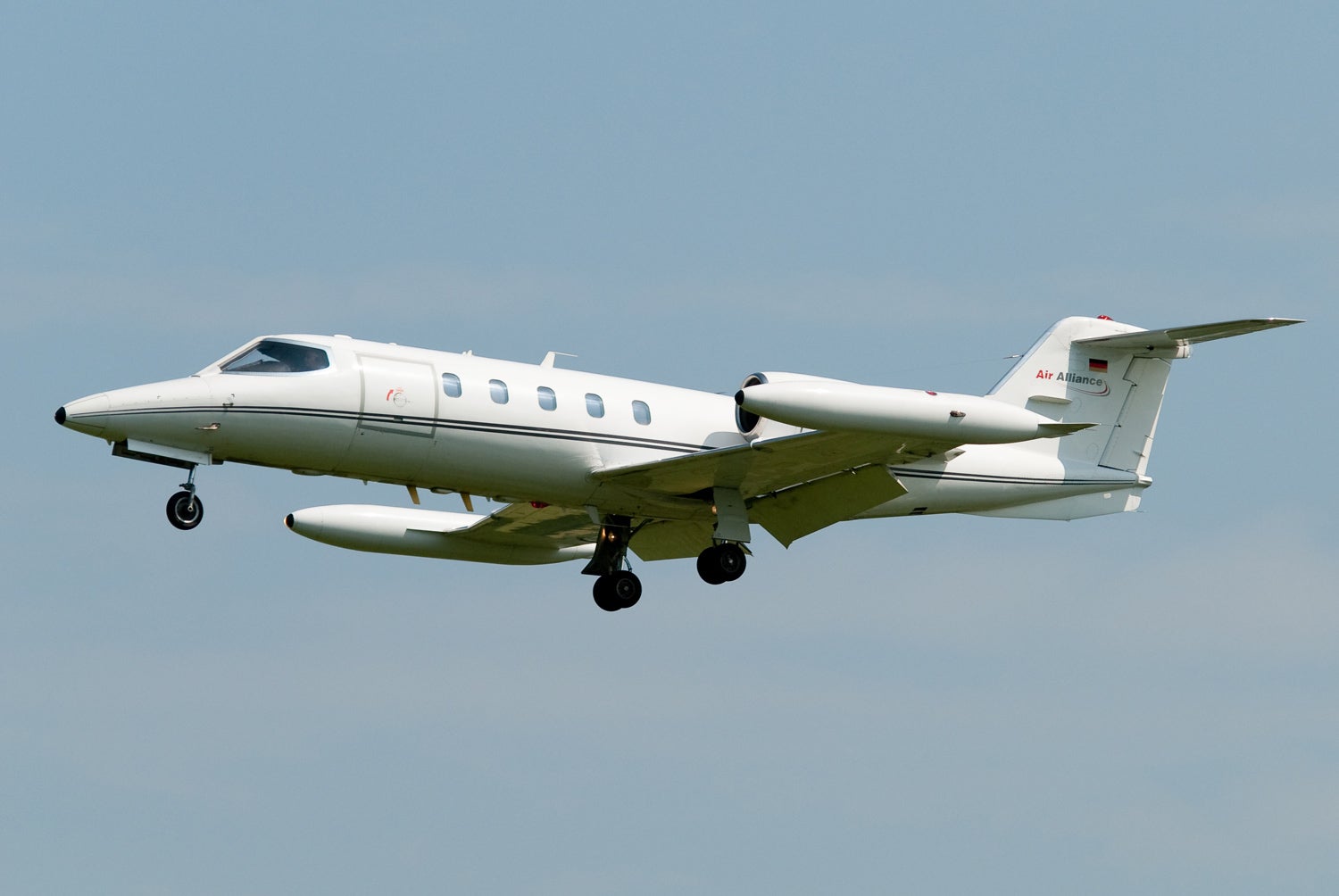
On a sunny afternoon in May 2017, a Learjet 35A on a Part 91 positioning flight from Philadelphia to Teterboro, New Jersey, crashed in an industrial area half a mile from the approach end of Teterboro’s Runway 1, killing both pilots.

It was a day of scattered clouds, good visibility and gusty northwest winds. A high probability of moderate low-level turbulence and wind shear had been forecast, and pilots were reporting 20-knot speed losses at nearby airports. Teterboro Tower issued warnings of gusts to 32 knots. The weather was consistent with the forecast, and though the Learjet pilots had not—as far as investigators could ascertain—obtained more recent weather information after their first briefing at 6:30 a.m., they knew what they needed to know.

Peter Garrison

Peter Garrison taught himself to use a slide rule and tin snips, built an airplane in his backyard, and flew it to Japan. He began contributing to FLYING in 1968, and he continues to share his columns, ""Technicalities"" and ""Aftermath,"" with FLYING readers.

Ready to Sell Your Aircraft?

List your airplane on AircraftForSale.com and reach qualified buyers.

List Your Aircraft
AircraftForSale Logo | FLYING Logo
Pilot in aircraft
Sign-up for newsletters & special offers!

Get the latest stories & special offers delivered directly to your inbox.

SUBSCRIBE
