











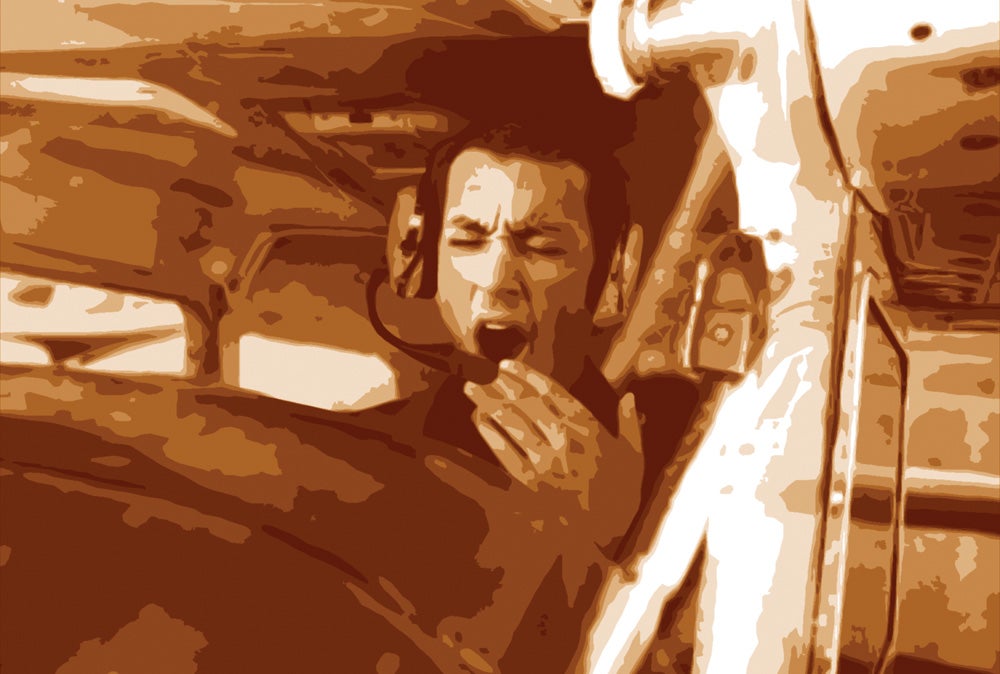


(February 2011) — Last month in “Deadly Fatigue,” I established that a pilot cannot win the fight against fatigue. Sooner or later fatigue will win and the pilot will fall asleep or make a mistake that he or she would never have made when well rested. However, even though we can never win this battle, there are practical ways a pilot can manage fatigue and reduce the chances of falling asleep at the controls or making a mistake that results in damage, injury or death.
It is generally well-known that the average person needs around eight hours of sleep every night to be well-rested. It turns out that most people don’t get that much sleep, with the average person in the United States sleeping about 6½ hours per night. That means that many people are getting less than that, and by the end of the week they are more than a full night behind in their sleep. Although the impact is not as severe as if they had stayed up an entire night, studies show that lack of sleep has a very negative impact on judgment, memory, attention and mood. It also leads to an increase in “microsleeps,” brief episodes of sleep that can occur without warning and without people being aware of what is happening until they wake up.

