













Register

The Yellow Arc

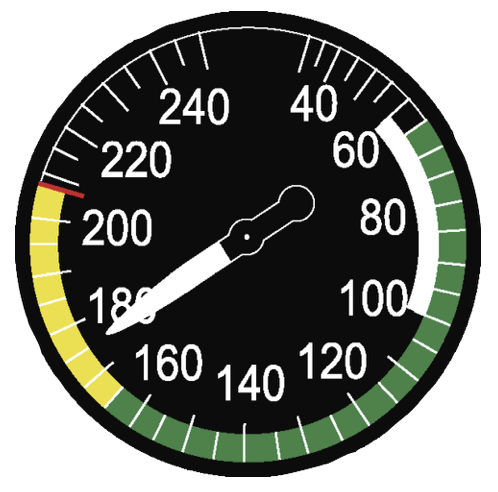
The two main airspeed presentations found in piston-powered airplanes are shown: a generic “round-dial” airspeed indicator with a prominent yellow arc and a zoomed-in image of a Garmin G1000’s airspeed tape.
Gemini Sparkle

Key Takeaways:

  • The yellow arc on a piston-powered airspeed indicator denotes a "caution range" where the aircraft's structural protection against overstress is significantly reduced compared to the green arc.
  • Within this caution range, the airframe is only certified to withstand half the gust intensity (15 fps) as in the normal operating range, making it highly susceptible to structural damage from turbulence or abrupt control inputs.
  • Consequently, operating in the yellow arc is only considered safe in exceptionally smooth air with minimal control deflections, as the aircraft can be overstressed before the wing stalls.
See a mistake? Contact us.

Look at an airspeed indicator or vertical speed tape, as below, in a piston-powered airplane and you’ll see a yellow range of indicated speeds. This is called the “caution range.” Since typical piston airplanes can’t cruise in this speed range under most circumstances, we often don’t spend a lot of time learning how very different the airframe overstress protection scheme is when operating in the yellow arc instead of the green one. It’s not like the FAA decided to spice up airspeed indicators with a splash of color: There is a very real reason for the caution range of the airspeed indicator.

THE YELLOW TRAPEZOID

Ready to Sell Your Aircraft?

List your airplane on AircraftForSale.com and reach qualified buyers.

List Your Aircraft
AircraftForSale Logo | FLYING Logo
Pilot in aircraft
Sign-up for newsletters & special offers!

Get the latest stories & special offers delivered directly to your inbox.

SUBSCRIBE

