











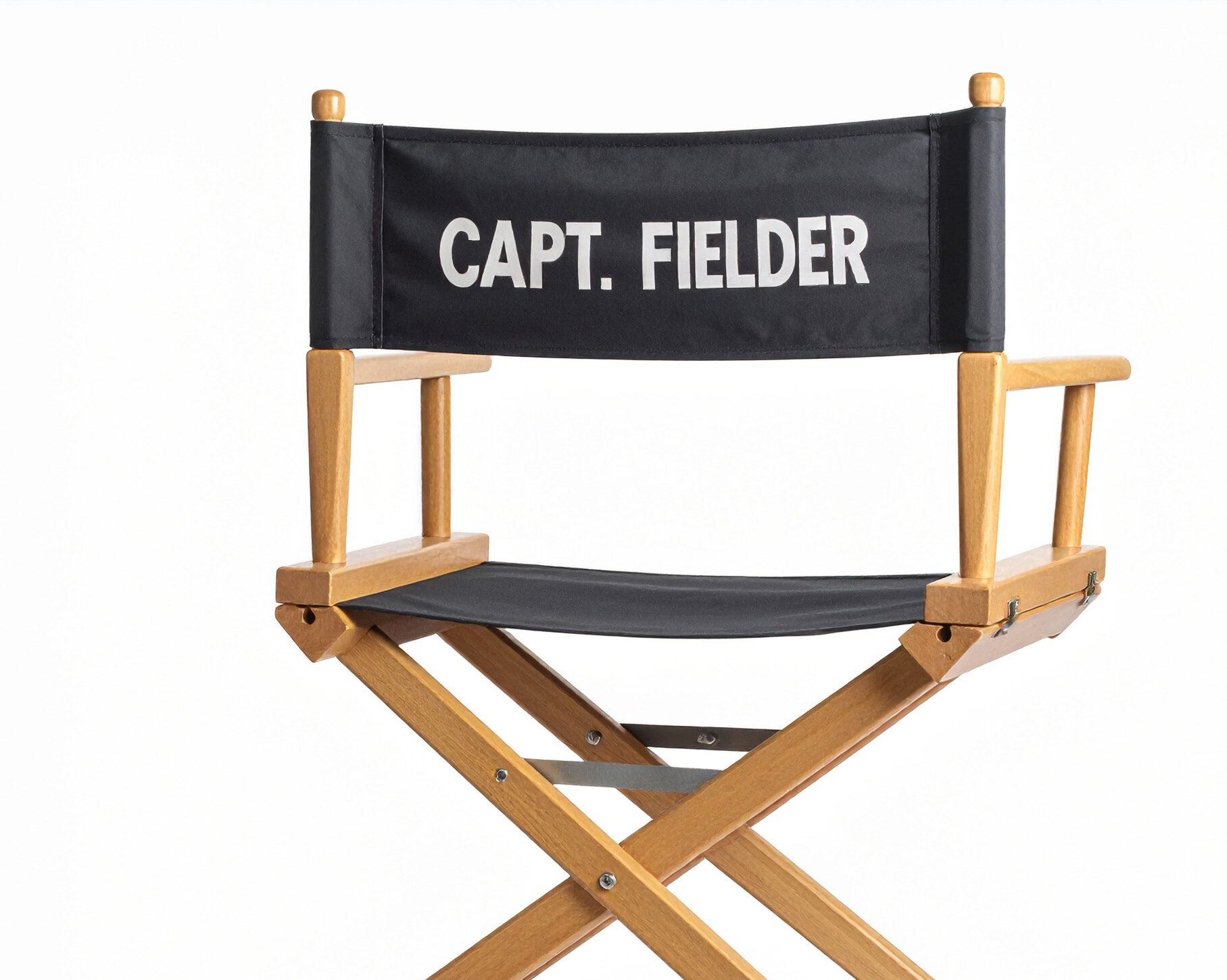


Somehow I had gotten to 2025 without having heard of a comedian named Nathan Fielder, but my ignorance was not destined to last. “You have to watch The Rehearsal,” one person after another said to me. “It’s about aviation!”
Finally someone sat me down to watch the first couple of episodes of the HBO docu-comedy series, and a week later someone else invited me to see the seventh and final episode. So, to be clear, I did not see the whole season, just three-sevenths of it. Still, I got the drift, and frankly Fielder’s shtick gets a little wearing, like Sacha Baron Cohen’s and Larry David’s, and after a while I need some fresh air. So maybe three-sevenths was about the right amount.
If you're not already a subscriber, what are you waiting for? Subscribe today to get the issue as soon as it is released in either Print or Digital formats.
Subscribe NowThe premise of the show is that Fielder has learned faulty crew communication has been blamed for many airline accidents. Ignoring the 50-year history of CRM training and literature, he sets out to construct elaborate experiments—rehearsals—in order to understand why this is.
Why, for example, do first officers not more often mutinously seize control of the airplane when they disagree with what the captain is doing? Fielder presents himself as a person to whom the inner lives of others are a closed book. He approaches the question with about as much insight as might be expected of a recent arrival from another solar system—this is a big part of the joke—and the scale of his experiments, which include things like a full-scale replica of an airline terminal, is monstrously out of proportion to the mysteries he is trying to unravel.
The first episode begins with reenactments of several crashes involving a first officer’s reluctance to offend a captain or a captain ignoring warnings from a first officer. One of these is the famous 14th Street Bridge crash of a 737 taking off from Washington National (KDCA).
Certain deicing services had not been actuated, with the result that the engine pressure ratios, according to which the crew sets takeoff power, were inaccurate, and so the engines were developing less thrust than the crew believed they were. The first officer sensed that something was not right—presumably, he did not feel the expected acceleration—and repeatedly said so. But the captain ignored him. Just why the captain did so can perhaps be guessed from the complete cockpit voice recording. But The Rehearsal doesn’t get that granular. And, of course, it needn’t, because its purpose is not to inform, but to amuse.
And the lengths Fielder goes to! He sets up a singing contest where the ulterior purpose is to study the dynamics of delivering unwelcome news. He enlists pilots to act as judges who must inform real competitors that they have not made the grade. The disappointed, and in some cases heartbroken, rejects are then asked to rate their judge. A pilot/judge who gets particularly high ratings is identified, and Fielder, becoming a judge himself, attempts to mimic her behavior. He receives a mediocre rating.
- READ MORE: Pilotless: This Is Your Robot Speaking
One of the four episodes I missed attempted to vivisect Chesley Sullenberger’s miracle by reenacting the Hudson River hero’s entire life, to the extent of an ostensibly newborn Fielder suckling at the breast of an enormous puppet intended to represent Sullenberger’s mother. I can only wonder what the real Sullenberger made of all this.
But I jumped ahead to Episode 7.
In it, Fielder conceives the biggest rehearsal of all. He himself will fly an airliner full of people in order to find out what it’s actually like in the cockpit. This seems like quite a tall order, but HBO apparently has unlimited funds and Fielder has a lot of time on his hands.
He throws himself into flight training under the pitiless stare of multiple cameras. He turns out to be uniquely unsuited to be a pilot. His trainers note that he has taken longer—120 hours—to solo than any other student, perhaps in all human history.
But then something odd happens. He is advised to try “chair flying”—sitting in a chair, imagining every step of a flight, and freeing his mind of anxieties and hang-ups. He does this, and, strangely, it works. He goes on to earn his private, instrument, and commercial certificates. He noodles around in the sky alone and talks about how good it feels.
Now, for the first time, we—you and I, at least, pilots ourselves—feel like we’re getting to know Nathan Fielder.
It only gets stranger. He goes to school for a Boeing 737 type rating. We are treated to pages of incomprehensible diagrams in the airplane handbook and glimpses of dense tangles of hydraulic lines and wiring. Fielder exudes bafflement, but he is in reality (an elusive concept here) a very smart guy, and he gets the rating. He then shops around for a 737 in which to conduct his flight. In a memorable scene a salesman who resembles the old prospector character in a black-and-white western movie tries to sell him a boneyard airplane complete with birds’ nests and loose pieces.
He assembles 150 or so actors to be his passengers, and, always deadpan, provides them with lines like, “I’d like cranberry juice, please.” (There’s an inside-Hollywood joke here about actors so desperate for any kind of work that they’ll risk their lives for the most inconsequential of parts.)
He engages a real 737 pilot—of course, at this point Fielder is a real 737 pilot too, but extremely low-time—to be his first officer. They take off on a two-hour flight over the Mojave Desert, and the first officer apprehensively watches as an Aerostar camera plane swoops around the 737 like a mockingbird chasing away a crow. Fielder probes his taciturn fellow pilot for expressions of any sort of feeling or misgiving, but nothing is forthcoming. They land. Rather well, actually.
The show is winding up. Fielder muses on his big experiment and concludes that “no one is allowed in the cockpit if there’s something wrong with them, so if you’re here, you must be fine.” This statement, ambiguously satirical and ironic, seemingly undercuts the premise of the show on two levels—airline crews must actually be OK, and Fielder himself must be too.
In a sort of epilogue, we learn that Fielder has been moonlighting as a ferry pilot, delivering empty 737s to places like Namibia. Someone edits his Wikipedia page to add “pilot” to the list of his professions.
I may be reading too much into the contrast between the apparent sincerity of the ending and the dizzying hall-of-mirrors interplay of real and fake that went before. But I felt that Fielder had a road to Damascus moment. He had gone hunting for something ridiculous and had come back with something real. He seriously liked flying. Rehearsals ended; performances began.
But then again, did any of this really happen?
This column first appeared in the August Issue 961 of the FLYING print edition.

