













Register

The Old Conundrum: Time vs. Money

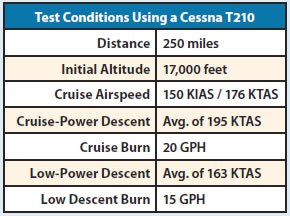
When comparing a high-speed, cruise-power descent against a cruise-speed, reduced-power descent, there are a surprisingly large number of variables in the equation, all pulling in different directions.

Gemini Sparkle

Key Takeaways:

  • A mathematical model was developed to compare the efficiency of high-speed, cruise-power descents against cruise-speed, reduced-power descents, considering variables like airspeed and fuel burn.
  • A cruise-power descent with a shallow rate (around 300 FPM) generally provides the shortest flight time, but at the expense of slightly higher fuel consumption; a middling descent rate offers a good balance of time and minimal fuel cost.
  • Optimizing descent profiles yields negligible savings if the descent starts below 8,000 feet or if the aircraft has less than a 30-knot airspeed difference between the two descent types.
See a mistake? Contact us.

When comparing a high-speed, cruise-power descent against a cruise-speed, reduced-power descent, there are a surprisingly large number of variables in the equation, all pulling in different directions.

On the one hand, descending at cruise power will guarantee a higher airspeed, but on the other hand it comes at the cost of a higher fuel burn. However, a higher airspeed will reduce the amount of time in the air, and thus overall fuel cost, right? What about true airspeed? True airspeeds are highest at cruise altitudes, and decrease approximately two-percent per thousand feet during the descent, which throws in an another dimension. So which method is truly more efficient?


Ready to Sell Your Aircraft?

List your airplane on AircraftForSale.com and reach qualified buyers.

List Your Aircraft
AircraftForSale Logo | FLYING Logo
Pilot in aircraft
Sign-up for newsletters & special offers!

Get the latest stories & special offers delivered directly to your inbox.

SUBSCRIBE