











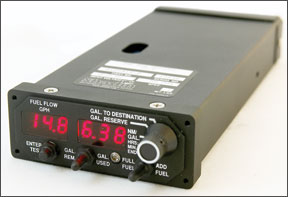
Regarding your article about fuel totalizers, we should not assume they are always precise without periodically verifying their accuracy. On every other fill-up, I write down what my Shadin indicates as the number of gallons used and compare it to the number of gallons required to fill up the tanks. I have found my totalizer indicates about two percent more fuel in the tanks than actually exist, and therefore will have to have the Shadin adjusted accordingly. 288
Technology In The Cockpit
Regarding your article about fuel totalizers, we should not assume they are always precise without periodically verifying their accuracy. On every other fill-up, I write down what my Shadin indicates as the number of gallons used and compare it to the number of gallons required to fill up the tanks. I have found my totalizer indicates about two percent more fuel in the tanks than actually exist, and therefore will have to have the Shadin adjusted accordingly.

Key Takeaways:
- Pilots should periodically verify fuel totalizer accuracy, as devices can show discrepancies, and may adjust their use of noise-cancelling headsets to ensure critical engine sounds are audible during takeoff.
- Correctly understanding the physics of g-loading and stall speed in turns is critical; while a managed descent can maintain 1g, misapplication can lead to hazards like accelerated stalls or spiral dives.
- Aircraft-specific techniques, such as slipping in a Mooney, are valid for altitude management under certain conditions (e.g., high approaches or challenging ATC instructions), provided pilots adhere to POH limitations and are prepared to go around.
Key takeaways sponsored by Aviator Pro | Start Your Training ->
See a mistake? Contact us.

