













Register

Technicalities: Hypoxia at Your Fingertips

Gemini Sparkle

Key Takeaways:

  • Hypoxia's effects are highly variable among individuals and can cause subtle impairments in judgment, memory, and visual sensitivity at altitudes well below those causing unconsciousness, making it challenging to detect and distinguish from other contributing factors in accidents.
  • Current FAA Part 91 regulations regarding supplemental oxygen use are considered too liberal by some medical experts, who recommend using oxygen at significantly lower altitudes (e.g., 5,000 feet at night, 8,000 feet during the day) than legally mandated.
  • Self-assessment of hypoxia is unreliable due to a common feeling of euphoria and unawareness of impairment; objective tools like fingertip oximeters are valuable for monitoring blood oxygen saturation, despite the complexity of correlating saturation levels with actual performance impairment.
See a mistake? Contact us.

In last month’s Aftermath, which concerned fatal accidents that the NTSB had linked to hypoxia, I was puzzled by a few that involved experienced pilots who had been flying, in one case for a rather short time, in the 12,000- to 18,000-foot altitude range without supplemental oxygen. If scrambled fighters find a maskless pilot slumped in his seat, clearly unconscious, as his airplane cruises past its destination at 25,000 feet, it’s reasonable to suspect an oxygen problem. On the other hand, if a pilot with minimal instrument experience gets tangled up in clouds at night at 15,000 feet, is hypoxia to blame? You can’t really tell, since plenty of pilots get tangled up in clouds at night at 5,000 feet with the same outcome.

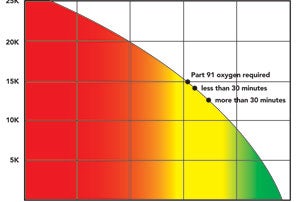
Part 91 allows you, the pilot, to fly between 12,500 and 14,000 feet without supplemental oxygen for no more than 30 minutes. Pilots are required to use oxygen above 14,000 feet at all times. Passengers are permitted to gasp for breath indefinitely below 15,000 feet; above 15,000, everybody in the airplane must be provided with supplemental oxygen.

Peter Garrison

Peter Garrison taught himself to use a slide rule and tin snips, built an airplane in his backyard, and flew it to Japan. He began contributing to FLYING in 1968, and he continues to share his columns, ""Technicalities"" and ""Aftermath,"" with FLYING readers.

Ready to Sell Your Aircraft?

List your airplane on AircraftForSale.com and reach qualified buyers.

List Your Aircraft
AircraftForSale Logo | FLYING Logo
Pilot in aircraft
Sign-up for newsletters & special offers!

Get the latest stories & special offers delivered directly to your inbox.

SUBSCRIBE
