














Register

Study: SAF Reduces Aircraft Contrails, Soot Particle Emissions

When compared to jet-A-1 fuel, SAF significantly reduces the climate-warming effect of condensation trails, according to the findings.

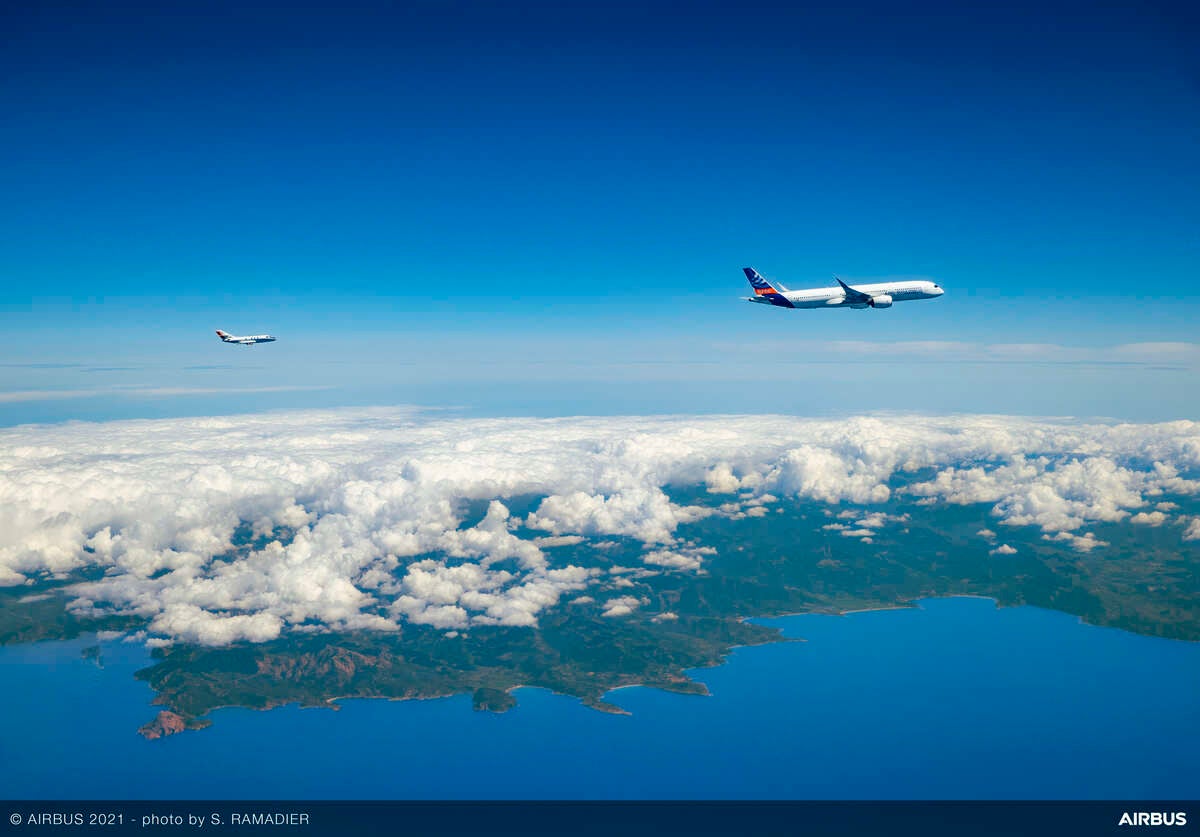
A350 flight test aircraft followed by DLR chase plane during ECLIF3 flight campaign. [Courtesy: Airbus]
Gemini Sparkle

Key Takeaways:

  • A new study, ECLIF3, suggests that using 100 percent Sustainable Aviation Fuel (SAF) can significantly reduce the climate-warming effect of contrails, in addition to lowering carbon emissions.
  • Test flights demonstrated that pure SAF led to a 56 percent reduction in contrail ice crystals compared to conventional jet fuel, by emitting fewer soot particles.
  • This finding is crucial as contrails, formed by these ice crystals, are a significant non-carbon dioxide contributor to aviation's overall climate impact.
See a mistake? Contact us.

The use of 100 percent sustainable aviation fuel (SAF) in commercial airliners may reduce the impact of contrails in addition to reducing the aircraft’s carbon footprint, according to a new study.

The “Emission and Climate Impact of Alternative Fuels,” or ECLIF3 study, was conducted through a collaboration with Airbus, Rolls-Royce, the German Aerospace Center (DLR), and SAF producer Neste. 

Meg Godlewski

Meg Godlewski has been an aviation journalist for more than 24 years and a CFI for more than 20 years. If she is not flying or teaching aviation, she is writing about it. Meg is a founding member of the Pilot Proficiency Center at EAA AirVenture and excels at the application of simulation technology to flatten the learning curve. Follow Meg on Twitter @2Lewski.

Ready to Sell Your Aircraft?

List your airplane on AircraftForSale.com and reach qualified buyers.

List Your Aircraft
AircraftForSale Logo | FLYING Logo
Pilot in aircraft
Sign-up for newsletters & special offers!

Get the latest stories & special offers delivered directly to your inbox.

SUBSCRIBE

