











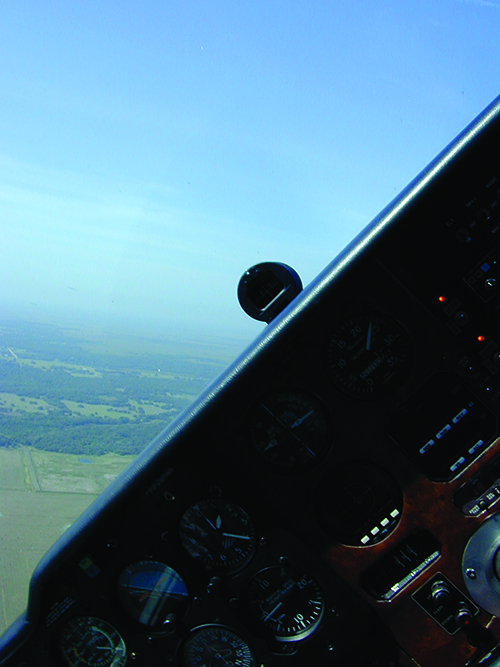


Most of us spend our time aloft droning along in straight-and-level flight. For the typical pilot, turns are reserved for the traffic pattern or flying an approach, and occasionally for entering a holding pattern or performing a course reversal. And we rarely exceed 30 degrees of bank. On one hand, that’s okay, since our relative lack of experience with turns—at least when compared with the time we spend straight and level—means we probably don’t perform them well, with altitude excursions, poor rudder technique and failure to roll out on the desired heading among common mistakes.
On the other hand, practicing turns can teach us a lot about how and why the airplane flies as it does, and how well or poorly we both anticipate what it wants to do and manage its tendencies. Steep turns, in fact, are a great way to refresh some basic skills. They’re a required task for a private certificate and, if we want to maintain our skills to at least those of a private pilot, we should be able to nail them. But before you head out to practice them, let’s talk a bit about what’s going on in steep turns, including the aerodynamics and how the airplane’s design can work against us, with an idea to at least sharpen up our skills with the more mundane, 30-degree-or-less banked turns.

