
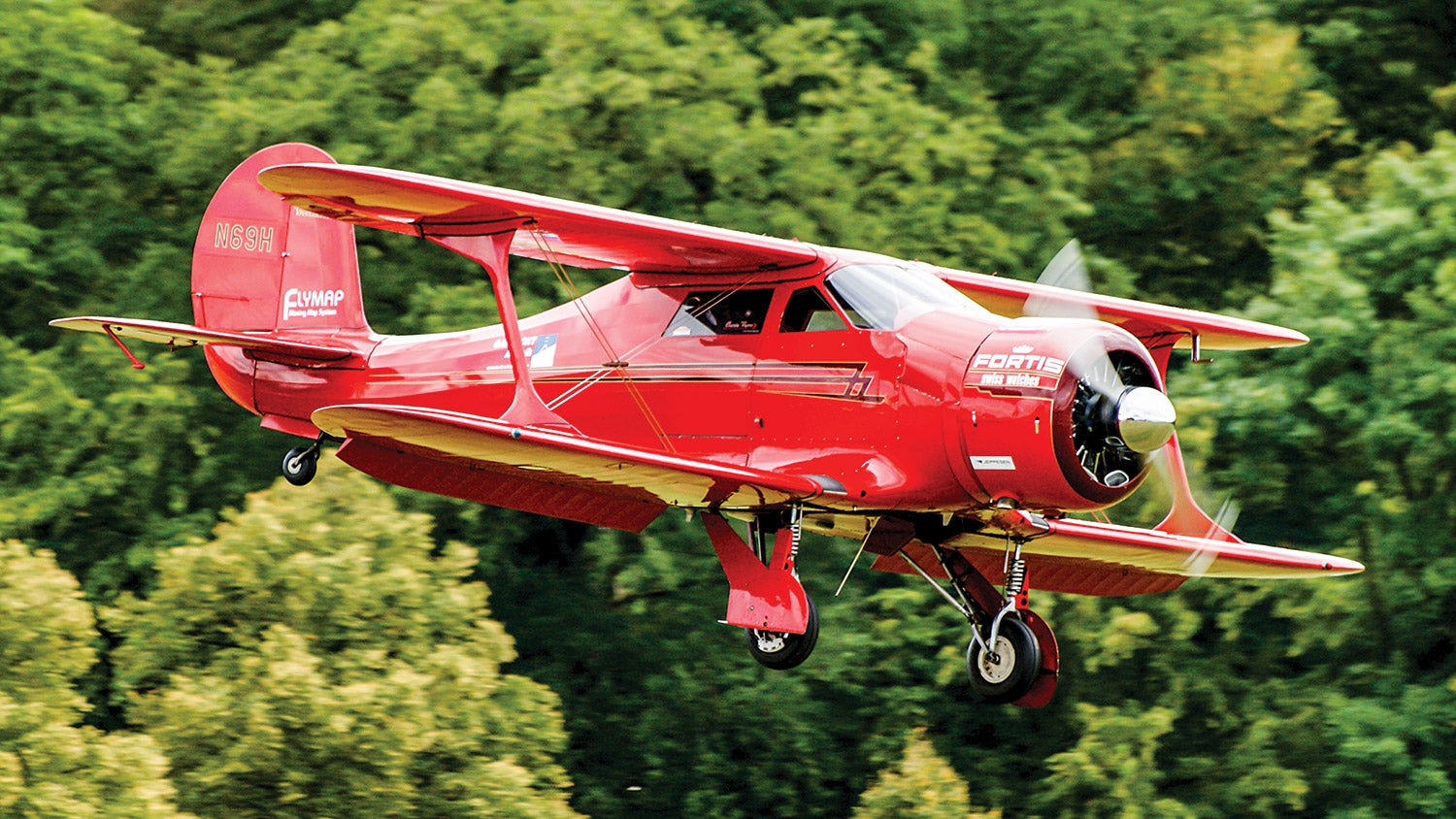
Late in 1932, the newborn Beech Aircraft Co. flew its first product, a five-seat biplane with a 420 hp radial engine and fixed landing gear enclosed in huge fairings. Walter Beech gave it model number 17, since the last model built by the Travel Air company, which he had founded in 1925 with an all-star cast of Clyde Cessna and Lloyd Stearman and sold in 1929 to Curtiss-Wright, had been its 16th.
The Staggerwing was the Climax, and the End, of an Era

Key Takeaways:
- The Beechcraft Model 17, or "Staggerwing," launched in 1932, was a distinctive biplane named for its unique negative wing stagger, with the lower wing positioned ahead of the upper.
- Designed by Ted Wells, the negative stagger served practical purposes, including enhanced pilot visibility and accommodating the retractable landing gear, allowing it to achieve both reasonable landing speeds and high cruising speeds.
- The aircraft achieved exceptional low drag for its time through advanced aerodynamic research, incorporating a NACA-designed round engine cowling and a GALCIT-developed wing root fairing.
- Despite being a biplane during the rise of metal monoplanes, the Staggerwing was produced until 1948 and is celebrated as a stylish, high-performance "inimitable jewel" of aviation history.
Key takeaways sponsored by Aviator Pro | Start Your Training ->
See a mistake? Contact us.