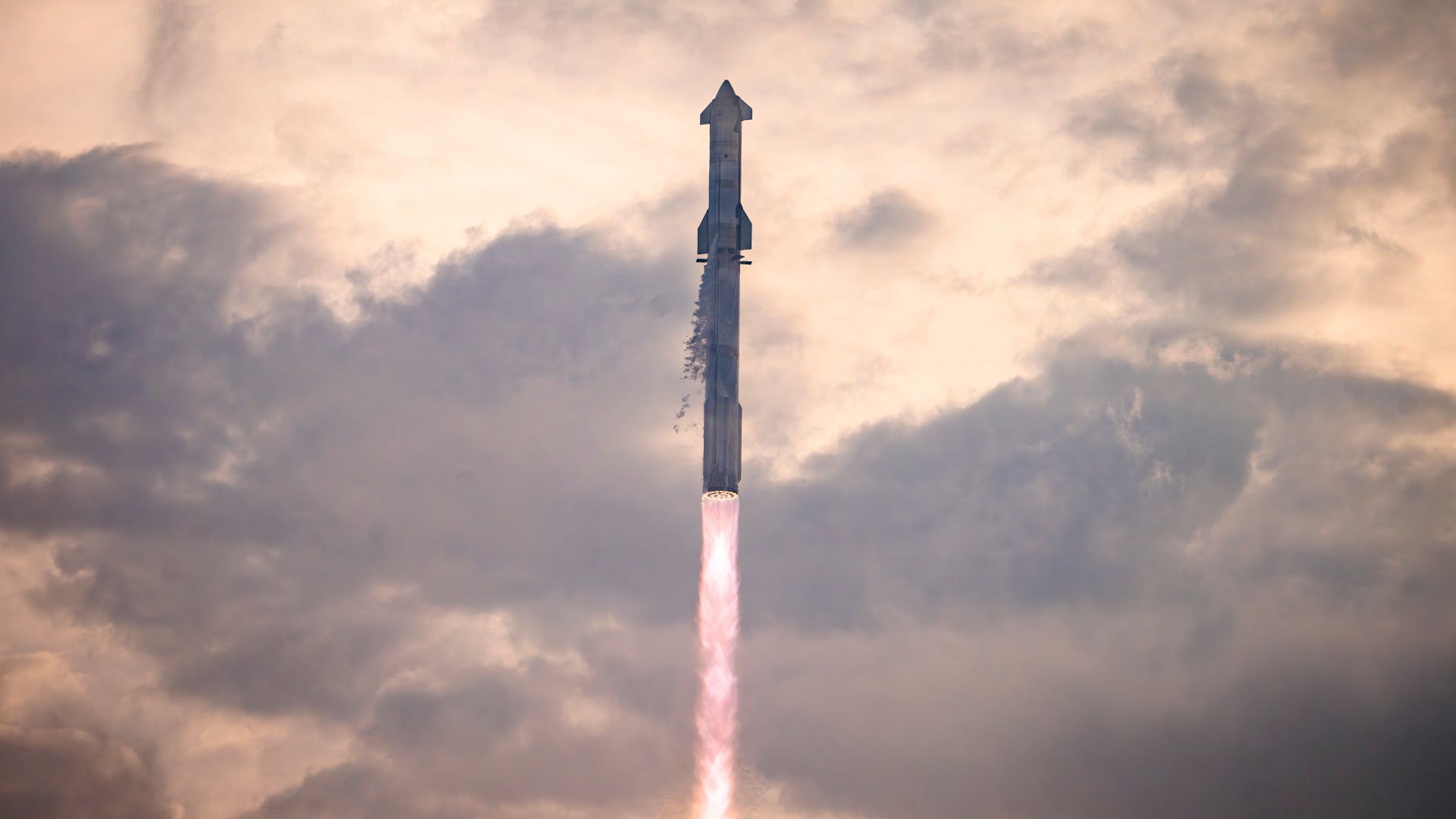
SpaceX’s Starship rocket and Super Heavy booster lift off from the launch pad in Boca Chica, Texas, on Thursday. [Courtesy: SpaceX]
Key Takeaways:
SpaceX's Starship completed its third orbital test flight, which ended with the loss of the spacecraft and booster during reentry, prompting an FAA mishap investigation and grounding the rocket.
Despite the loss, this flight marked significant progress, successfully reaching space, achieving orbital speeds, opening its payload door, and performing an in-flight liquid oxygen transfer.
Starship's development and the FAA investigations are critical for its role in NASA's Artemis moon missions, with potential delays impacting the timeline for returning humans to the lunar surface.
In what feels increasingly like a bout of déjà vu, SpaceX’s Starship—the largest and most powerful rocket ever flown—has been grounded again.
The FAA on Thursday initiated its third mishap investigation into Starship after the 400-foot-tall spacecraft and booster were lost during its third orbital test flight. Both components are intended to be reusable.
CREATE A FREE ACCOUNT
Sign up to keep reading
Create a free account to continue. Already a member? Sign in below.
Jack is a staff writer covering advanced air mobility, including everything from drones to unmanned aircraft systems to space travel—and a whole lot more. He spent close to two years reporting on drone delivery for FreightWaves, covering the biggest news and developments in the space and connecting with industry executives and experts. Jack is also a basketball aficionado, a frequent traveler and a lover of all things logistics.