














Space Force Awards Early Golden Dome Contracts

Initial recipients will serve as a steppingstone for contractors to compete for larger agreements that could be worth billions.

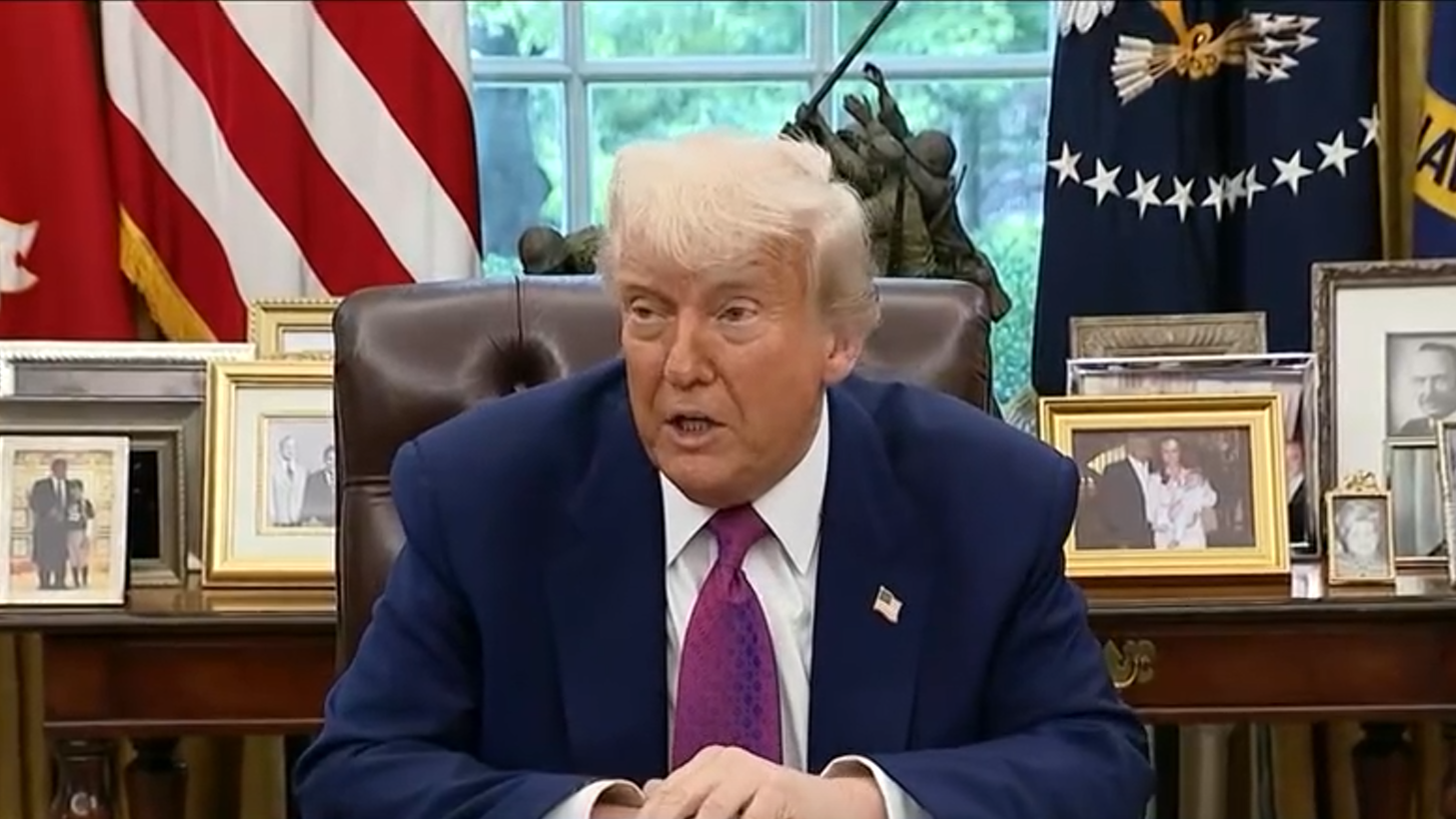
President Donald Trump in the White House
U.S. President Donald Trump announces the Golden Dome missile defense project in May. [Credit: C-SPAN]
Gemini Sparkle

Key Takeaways:

  • The U.S. Space Force has awarded initial prototype contracts to private firms, including Lockheed Martin, Northrop Grumman, Anduril, and True Anomaly, for space-based interceptors (SBIs) as part of the "Golden Dome" missile defense system, aimed at destroying enemy missiles in their boost phase.
  • Despite modest initial funding, successful companies will compete through testing phases for prize money and significantly larger post-2028 production contracts potentially worth billions annually, though the development model relies heavily on private investment.
  • The project is shrouded in enhanced security and faces significant cost uncertainties, with projections for the multi-billion dollar "Golden Dome" ranging from $175 billion to potentially trillions over two decades.
See a mistake? Contact us.

The U.S. Space Force has reportedly selected a handful of private firms to build and test missile defense prototypes for the Pentagon and President Donald Trump’s Golden Dome effort.

Two sources told Reuters that Lockheed Martin, Northrop Grumman, Anduril, and startup True Anomaly are among the recipients of initial funding to develop space-based interceptors (SBIs) that are intended to destroy enemy missiles minutes after launch, during the boost phase. The funding will also cover control stations required to help the SBIs track and hit their targets. Both are key components of Golden Dome, which the Pentagon hopes will come online within three years.


According to a July Pentagon presentation viewed by Reuters, the boost-phase SBI contracts are only worth about $120,000 each. But the companies that successfully demonstrate prototypes will compete for more robust, post-2028 production contracts. Per the presentation, they could be worth $1.8 billion to $3.4 billion annually.

Shrouded in Secrecy

The Golden Dome effort marks a departure from ground-based missile defense systems, utilizing assets that can be stationed on and deployed from orbit

The Space Force confirmed the initial awards but declined to name who received them, telling Reuters it does not need to disclose contracts valued under $9 million. However, the July Pentagon presentation seems to contradict that point, listing $10 million contract awards for Northrop Grumman and Anduril.

A Space Force spokesperson told Air & Space Forces Magazine and Breaking Defense that the companies are being kept secret due to “enhanced security measures” and the use of competitive Other Transaction Agreements (OTAs).

One source told the latter that the Pentagon is using classified sole-source contracts to speed the development of SBIs and other Golden Dome systems.

Awardees will use the boost-phase SBI funding to build and test their SBIs. They will compete for pools of prize money in different phases—a ground test, two flight tests, and final intercept test. The second flight test has a pool of $340 million, with the top performer eligible to win up to $125 million. Up to $150 million is available for winners of the ground test phase.

However, much of the work will be self-funded. Some space and defense firms told Breaking Defense that the award structure is “insane” due to its reliance on private resources.

What It Means for Golden Dome

The boost-phase SBI awards are a positive step in bringing the multi-billion Golden Dome project to fruition. But questions remain about the effort’s cost and timeline.

Trump in an executive order announcing Golden Dome called a missile attack the “most catastrophic threat facing the United States.” In May, the president estimated the effort would cost about $175 billion. Congress has allocated about $25 billion to the project over the next decade, with $5.6 billion intended specifically for the development of SBIs.

However, a report by the American Enterprise Institute projected that Golden Dome could require “potentially trillions of dollars over the next 20 years,” with SBIs expected to drive up the cost. That could complicate the Pentagon’s negotiations with Congress.

Per Reuters, SpaceX, which is reportedly working with Anduril and Palantir on a pitch for the project’s “custody layer” of satellites, preliminary engineering and design work for that phase alone could cost up to $10 billion. Sources said the companies could launch between 400 and 1,000 satellites to detect and track missiles, complementing them with a fleet of about 200 “attack satellites.”

The involvement of SpaceX could be a boon, since the company could repurpose many of the satellites it has launched in recent years for Golden Dome, sources told Reuters. However, the company is reportedly pitching a subscription model, wherein the government pays for access to the technology rather than owning it outright. The proposal is unusual and according to Reuters has raised some red flags within the Pentagon.

Jack Daleo

Jack is a staff writer covering advanced air mobility, including everything from drones to unmanned aircraft systems to space travel—and a whole lot more. He spent close to two years reporting on drone delivery for FreightWaves, covering the biggest news and developments in the space and connecting with industry executives and experts. Jack is also a basketball aficionado, a frequent traveler and a lover of all things logistics.

Ready to Sell Your Aircraft?

List your airplane on AircraftForSale.com and reach qualified buyers.

List Your Aircraft
AircraftForSale Logo | FLYING Logo
Pilot in aircraft
Sign-up for newsletters & special offers!

Get the latest stories & special offers delivered directly to your inbox.

SUBSCRIBE
