










So, Your New Ride is Smaller

Shrinking size, horsepower and number of engines requires big adjustments as you ease into the life of a light-airplane pilot. But smaller and simpler still requires proper transition training.

Gemini Sparkle

Key Takeaways:

  • Transitioning to smaller, simpler light aircraft still requires proper, personalized training with an instructor familiar with the specific new airplane's systems and characteristics.
  • Advisory Circular 90-109 offers valuable guidance for learning new aircraft systems and understanding flight characteristics, though IFR-specific transition training needs separate attention.
  • Pilots must approach training professionally, respecting the unique behavior of their new aircraft, particularly concerning flight characteristics during takeoffs and landings, and in gusty conditions.
See a mistake? Contact us.

Shrinking size, horsepower and number of engines requires big adjustments as you ease into the life of a light-airplane pilot. But smaller and simpler still requires proper transition training.

There’s no one-size-fits-all transition program; yours depends on the details of your airframe, engine, avionics and systems. Thus, you should devise your own transition plan with an instructor familiar with your new airplane.

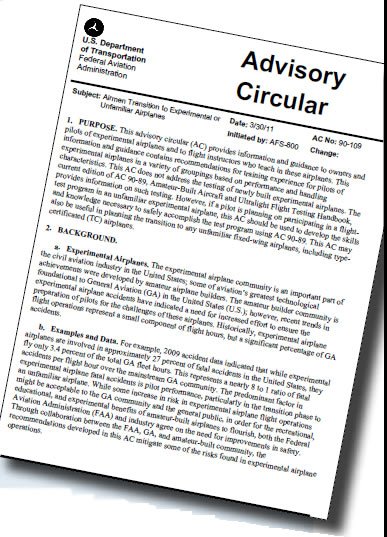
There’s good guidance in Advisory Circular 90-109. Its main angle is transitioning to experimental aircraft, but there’s also good material for any pilot and any transition. For example, the part on “transitioning to a new airplane” reminds us of details like fuel-balance limitations and hydraulic systems. It also emphasizes an “organized methodology” to learn systems, using flows and checklists.

But, it doesn’t get into IFR-transition training, so use the standard IPC to test yourself with the new aircraft and, if necessary, to prepare for a flight review or test for a category/class rating.

The AC also discusses “high inertia/low drag” or “low intertia/high drag” flight characteristics. Takeoffs and landings, particularly in gusty crosswinds, require pilots to be familiar with their airplane’s behavior. And even the most sturdy four-seat single has far lower wing loads than the smallest cabin-class twin. So treat your smaller aircraft with the respect it deserves and approach the ground and flight training like the professional pilot you are. —EK

Ready to Sell Your Aircraft?

List your airplane on AircraftForSale.com and reach qualified buyers.

List Your Aircraft
AircraftForSale Logo | FLYING Logo
Pilot in aircraft
Sign-up for newsletters & special offers!

Get the latest stories & special offers delivered directly to your inbox.

SUBSCRIBE

