









Thirsting for Fuel
Fuel system contaminated by drilled-out rivet heads grounds experimental


Fuel system contaminated by drilled-out rivet heads grounds experimental
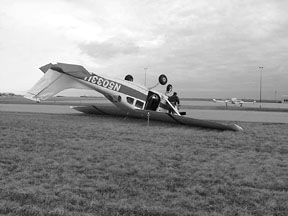
Crosswinds plague even experienced pilots. The secrets to success: consistent patterns, proper procedure and a modicum of skill
The following briefs were selected from the 117 preliminary reports filed with the NTSB in November 2002. Statements in quotes were taken directly from the NTSB documents. The information is subject to change as the investigations are completed. Click here to view “Accident Totals, November.”
———-
November 01, New Braunfels, Texas
Rockwell Turbo Commander
At approximately 1550 central time, a Rockwell 690B suffered the loss of the top portion of its rudder while in cruise flight at 16,000 feet near New Braunfels. The flight landed without further incident and none of the three aboard was injured. The plot reported that…
The following briefs were selected from the 192 preliminary reports filed with the NTSB in August 2002. Statements in quotes were taken directly from the NTSB documents. The information is subject to change as the investigations are completed. Click here to view “Accident Totals, August.”
———-
August 01, Gypsum, Colo.
Piper Cherokee 180
At approximately 0855 mountain time, a Piper PA-28-180 crashed while maneuvering near Gypsum, killing one passenger and leaving the other three occupants seriously injured. A flight instructor departing behind the accident flight said the airplane used about 5,000 feet to become airbor…
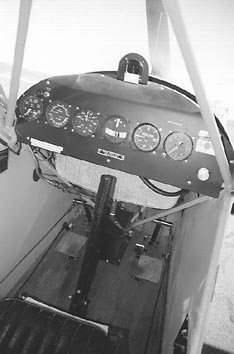
When used airplanes turn into vintage airplanes, theyre easier on the budget but harder to own
The following information is derived from the FAAs Service Difficulty Reports and Aviation Maintenance Alerts. Click here to view “Airworthiness Directives.”
———-
Textron Lycoming engines have come under scrutiny again, this time for crankshaft counterweight pilot holes that were out of round, resulting in the possible failure of the crankshaft counterweight bushings or counterweight ears.
The FAA has issued a Special Airworthiness Information Bulletin to help operators identify abnormal crankshafts and prevent premature engine failure.
Lycoming manufactured an unknown number of nonconforming crankshafts, and five have failed in t…
With all too chilling regularity, pilots who fly close to the ground wind up on the losing side of the battle against wires, towers and other obstructions.
There are many reasons pilots fly too close to obstructions, and some of them are legitimate. Forced landings are what they are. Approaches to and takeoffs from small airports carry risks that may be unavoidable. Buzzing, enjoying the scenery down low and pressing on into lowering ceilings, however, open the aircraft to extraordinary risk from stationary objects.
Agricultural pilots, by the very nature of their jobs, operate in an airspace filled with obstacles of every description. Avoiding electric transmission cables, towers of v…
The following briefs were selected from the 105 preliminary reports filed with the NTSB in November 1999. Statements in quotes were taken directly from the NTSB documents. The information is subject to change as the investigations are completed. Click here to view “Accident Totals, November.”
———-
Nov. 2, Stites, Idaho
Hiller UH-12
At approximately 11:18 PST, a Hiller UH-12E suffered an inflight separation of a control rotor, after which the helicopter struck power lines and crashed. The pilot and one passenger were seriously injured; a third occupant was not injured. The pilot said he was on a fish-spotting mission at…
Pilots in the traffic pattern worry enough about looking for other airplanes that many ignore helicopters, even when tower controllers call out the traffic. The reasoning may be something like: They dont fly patterns that interfere with airplanes, so theyre not a collision threat, and theyre so much smaller than an airliner, how bad could a wake vortex really be?
The risk of collision is something only the pilot in the pattern can assess, but the threat of wake vortices from helicopters is actually much more ominous than most pilots realize.
Real-world research into the effect of helicopter rotor vortices on general aviation aircraft shows that some of the characteristics are the sa…
Some of the following information is derived from the FAAs Service Difficulty Reports. Click here to view “Airworthiness Directives.”
———-
After the air combat simulation accident involving a Beech T-34, the FAA issued an AD limiting the airplanes aerobatic flight. As part of the investigation into the accident, the FAA has determined that a number of T-34s have been imported into the United States that have been sufficiently modified so that they no longer meet the original type design.
Over the years since the aircraft was originally produced, many of them have been exported and used by foreign governments for military missions or…

Get the latest stories & special offers delivered directly to your inbox.
SUBSCRIBE