Search Results for: Cessna 172
Does the Medical Matter?
Each month, Flying answers questions about the new Sport Pilot/Light Sport Aircraft rule with assistance from the Experimental Aircraft Association (EAA), the authority on the opportunities available within the category commonly known as “Sport Pilot”. I have great interest in flying as a sport pilot someday, since there will come a time when the flying […]
NTSB Preliminary Reports
December 1, 2005, Raymond, Miss.
Piper PA-30
At 1357 Central time, the airplane was destroyed on impact with terrain following a loss of control during takeoff from Runway 30 at the William John Bell Airport, (M16). The Instrument-rated Commercial pilot and his two passengers were fatally injured. The flight was intended as a ferry flight to have required maintenance performed. Visual conditions prevailed. All aircraft components of the 1964-vintage airplane were original equipment on the aircraft since new and showed a total time according to the logbooks of 5123 hours. Several witnesses reported hearing abnormal engine sounds during the takeoff. At approximately 100 feet…
Squawk Box: 02/06
The following information is derived from the FAAs Service Difficulty Reports and Aviation Maintenance Alerts.
———-
Aeronca 7AC
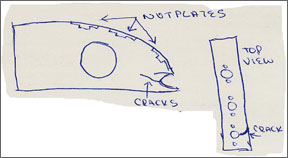
Cracked Wing Spar
A submitter states, The aft righthand spar has a longitudinal crack on the lower end. The crack is located at the strut attach point. (This) spar also shows signs of rotting-inboard of the crack area. No description of this crack or dimensions was provided, nor was there an included part number for the spar.Part Total Time: 4138.1 hours.
Beechcraft Model A-36 Bonanza
Imploded Tip Tank
The airplane was fitted with Osborne Inc. auxiliary fuel tip tanks. The righthand tank (p/n 55000-105) imploded, prob…
Turnbacks Reconsidered
If an engine quits on takeoff, where you go is less important than how you arrive. A straight-ahead landing remains the best low-risk option.
Top Five IFR Errors
The NTSBs improper IFR category covers a host of pilot errors. Heres our top five list of common IFR mistakes and how you can avoid making them.
NTSB Preliminary Reports
October 1, 2005, Greenwater, Wash.
Cessna 150D
The airplane was destroyed and its sole occupant, a non-Instrument-rated Private pilot, received minor injuries on impacting terrain at approximately 1900 Pacific time. Visual conditions prevailed; the flight was originating at the time of the accident. The pilot later said he inadvertently entered a fog bank shortly after takeoff and he attempted a climbing right turn to return to the clear air over the departure runway. He said that his airspeed dropped and the aircraft stalled, impacted trees and descended vertically to the mountain side. The airplane came to rest inverted.
October 1, 2005, Arlington, Wash.
Beech…
Flying: It isn’t always easy.
The 90°F June sun is beating down on me, and beads of sweat are running down the sides of my face as I strain to pull my Cheetah back up the taxiway. What was I thinking, buying an airplane that was so flippin’ heavy? I stop for a break, wiping the sweat out of my […]
Squawk Box: 11/05
The following information is derived from the FAAs Service Difficulty Reports and Aviation Maintenance Alerts.
———-
Beechcraft G33
Nose Gear Steering Rod-End
A mechanic describes finding the rod-end (p/n 35-820045) loose on the nose gear steering push-pull tube (p/n 35-825044-6). This connecting terminal slides into the tubes end and is mechanically fastened by two 5/32-inch solid rivets clocked at 90 degrees. (The) rivets were not properly driven due to (compression) inside the hollow portion of the tube, instead of (compressing) at the shop head, allowing the rod-end to come loose. Separation would cause loss of nose steering control. I recommend replacement o…
Deaf And Dumb?
Losing the ability to communicate while IFR might mean youre deaf, but there are smart ways to deal with the problem.