













Readback—June 2024

Gemini Sparkle

Key Takeaways:

  • Pilots must distinguish between being current and truly proficient, especially in actual instrument meteorological conditions, with simulators playing a crucial role in maintaining instrument competence.
  • Aircraft owners face a complex financial and logistical dilemma regarding major maintenance like engine replacement, with decisions often hinging on long-term ownership plans versus immediate costs and resale value.
  • Knowing critical emergency procedures, such as the exact location of the electric trim circuit breaker and the immediate action to pull it during a trim runaway, is paramount for pilot safety.
  • Post-9/11 security enhancements at General Aviation airports, like extensive fencing, are criticized as "security theater" for being largely ineffective in deterring determined individuals while inconveniencing honest pilots.
See a mistake? Contact us.

ADM and Proficiency

I found “Improve Your ADM” in the February issue by Douglas Boyd, Ph.D. to be an excellent article (although I particularly like statistics). Regarding instrument-rated pilots launching VFR into MVFR, a number of instrument-rated pilots I know aren’t comfortable going up into actual. One might wonder if the underlying cause of both those accidents and the reluctance is pilots who might be current but aren’t truly proficient.

We’ve seen multiple rotorcraft instrument flights end unfavorably, probably due to a lack of proficiency—which could be quite difficult to obtain in VMC in a helicopter considering the multiple views to the outside.


Carrying that thinking further, I would argue that even airplane currency obtained solely by using view-limiting devices does not come close to representing flight into actual IMC. The reason is that, while vision restrictions can be effective, the psychological difference is significant. Being in thick soup presents different mental challenges than simply obscuring one’s view of the world outside.

—Sam Ferguson, Ocala, Florida

We are in violent agreement, Sam. That’s one of the many reasons we urge that a simulator should play an integral part in any instrument proficiency. It’s not the only tool, but should be one of the elements of a complete program to maintain instrument competence.

Engine Thoughts

Your February Remarks about facing engine replacement in your twin resonated with me. Ever since I became an airplane owner in the early 70’s I have wrestled with the engine replacement dilemma.

I was advised to put money away every hour, so at TBO I could write a check for new engine(s). I flew for pleasure and business but never owned an airplane more than a few years. So, I disregarded that advice.

Now my 340A has passed TBO on both engines. They run strong without making metal. Perhaps now is the time to move up to my next airplane. But I’ve found that nobody wants an airplane with run-out engines. On the other hand, nobody is interested in an airplane with new engines—it’s too expensive.

Between the cost and lead time, commercial overhauls weren’t appealing. I considered a field overhaul, but when I priced the components, the cost is nearly that of the engine shops, but without their pedigree and market viability.

So, I’m doing what you did—maintain, and repair on condition.

All of this boils down to how long you’re going to keep your plane. Do you want to sell it soon for that next shiny bird? If so, you can either put in “bargain” or used engines and still take a financial hit. Or, if not, you keep flying her and keep maintaining her. But eventually you’ll need replacement engines and you’ll have come full circle, but probably spent (wasted?) more maintenance money in the meantime.

Yep, as you said in May, “Flying Is Expensive.”

—Jabe Luttrell, Key West, Florida

Thanks for your note sharing your thoughts, Jabe. There’s certainly no easy answer, is there? It really all boils down to that old saying, “Pay me now or pay me later.”

Where’s That Breaker?

I enjoyed your “Trim Runaway” article in the March issue, and the detail. However, unless I missed it, you left out one very important point.

Before flying any aircraft with electric trim:

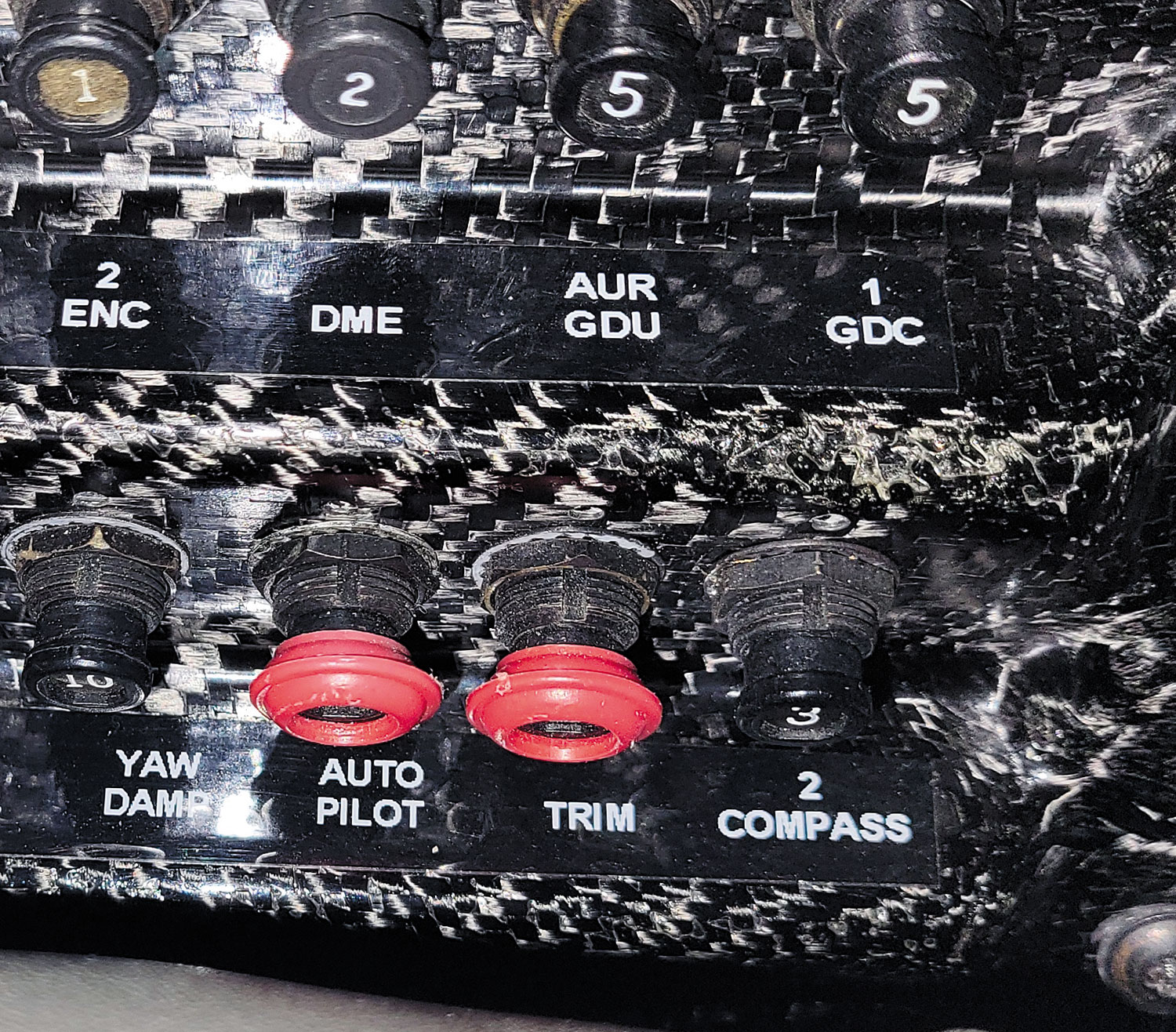
Know where the circuit breaker is located for the electric trim. It’s a good idea to inform your right-seater of this as well.

Use/pull the circuit breaker at the first indication of trim runaway whether it’s unusual control force or observation of trim wheel significant movement.

Re-trim the aircraft manually with the trim wheel.

Fly the aircraft.

Do not troubleshoot by resetting the circuit breaker in the air.

As a CFI/CFII who has transitioned numerous pilots to more complex aircraft with various electric trim systems, this is high on the list of my ground instruction in the aircraft before commencing engine start.

—Henry Wearsch, Littleton, Colorado

Henry, you’re absolutely correct. We completely overlooked the necessary discussion about knowing where the circuit breaker is for the trim and pulling it at the first anomalous behavior of the electric trim system. In a previous article, we even suggested putting a collar on that breaker for easier identification and manipulation, but we overlooked that in this article.

Thanks for pointing that out.

Bob Teter’s “Trim Runaway” article in the March IFR Magazine instantly brought back a frightening memory from 10 years ago. I had taken off from Venice airport in Florida in my Mooney J model with three passengers onboard. While heading south along the coastline over the Gulf at 2500 feet, the plane started inexplicably losing altitude.

Within seconds I found myself gripping the yoke by placing the bend of my left elbow around it and pulling back as much as I could, but the altimeter continued its counterclockwise rotation. Well into my adrenaline rush, divine intervention had me look at the trim indicator only to find it indicating full nose-down trim.

Once I got properly trimmed and the flush subsided, the rest of the trip was uneventful. On that day I could not figure out what had happened. Then it occurred again a month later, but this time I had put two and two together and figured out that it was the trim switch because it happened right after I electrically applied nose down trim. Once on the ground, I tried to duplicate the problem with dozens of flicks of the switch, and then it happened—while applying nose down trim and releasing the switch, the trim wheel continued moving even though the two thumb switches were in the neutral position.

Once the new switch for the KAP 150 was installed (at a cost of $1300), I never experienced the problem again. Throughout this ordeal I developed a new habit. Every time I use the trim switch, I place the tip of my index and middle finger on top of the trim wheel just to make sure that it stops. I also placed one of those plastic rings around the autopilot circuit breaker, just in case.

—Michael Gordon, Parkland, Florida

Thanks for the story, Michael. Your experience must have been truly terrifying and it’s great you were able to recognize and ultimately overcome the failure. Your trick of resting a couple fingers on the trim wheel to make sure it stops when you release the trim switch is a good one. Of course, placing a collar around the trim circuit breaker is highly recommended so you can find it in a hurry if necessary.

More Security Theater

In your January Remarks, I’m surprised you didn’t mention my personal pet peeve about all the post-911 changes:—zillions of miles of chain-link fence erected around GA airports paid through our taxes. Some Senator must have a brother in the chain-link fencing business.

Will that really contribute to public safety? Any bad actor knows that the gates open with codes easily found on the aviation sectional. If not, then there are many ways over or through a fence, as evidenced by all the animals. What a waste of time and resources!

—Charlie Freeman, Lebanon, New Hampshire

We must fly out of airports that were already fenced, so we didn’t realize that more fencing was part of the post-911 security enhancements.

That said, you make a good point, Charlie. Like so many security procedures, they tend to keep the honest folks honest (and inconvenienced) while presenting little, if any deterrent, to those intent on not being honest. Sigh…


We read ’em all and try to answer most e-mail, but it can take a month or more. Please be sure to include your full name and location. Contact us at Frank@IFR-Magazine.com.

Ready to Sell Your Aircraft?

List your airplane on AircraftForSale.com and reach qualified buyers.

List Your Aircraft
AircraftForSale Logo | FLYING Logo
Pilot in aircraft
Sign-up for newsletters & special offers!

Get the latest stories & special offers delivered directly to your inbox.

SUBSCRIBE