











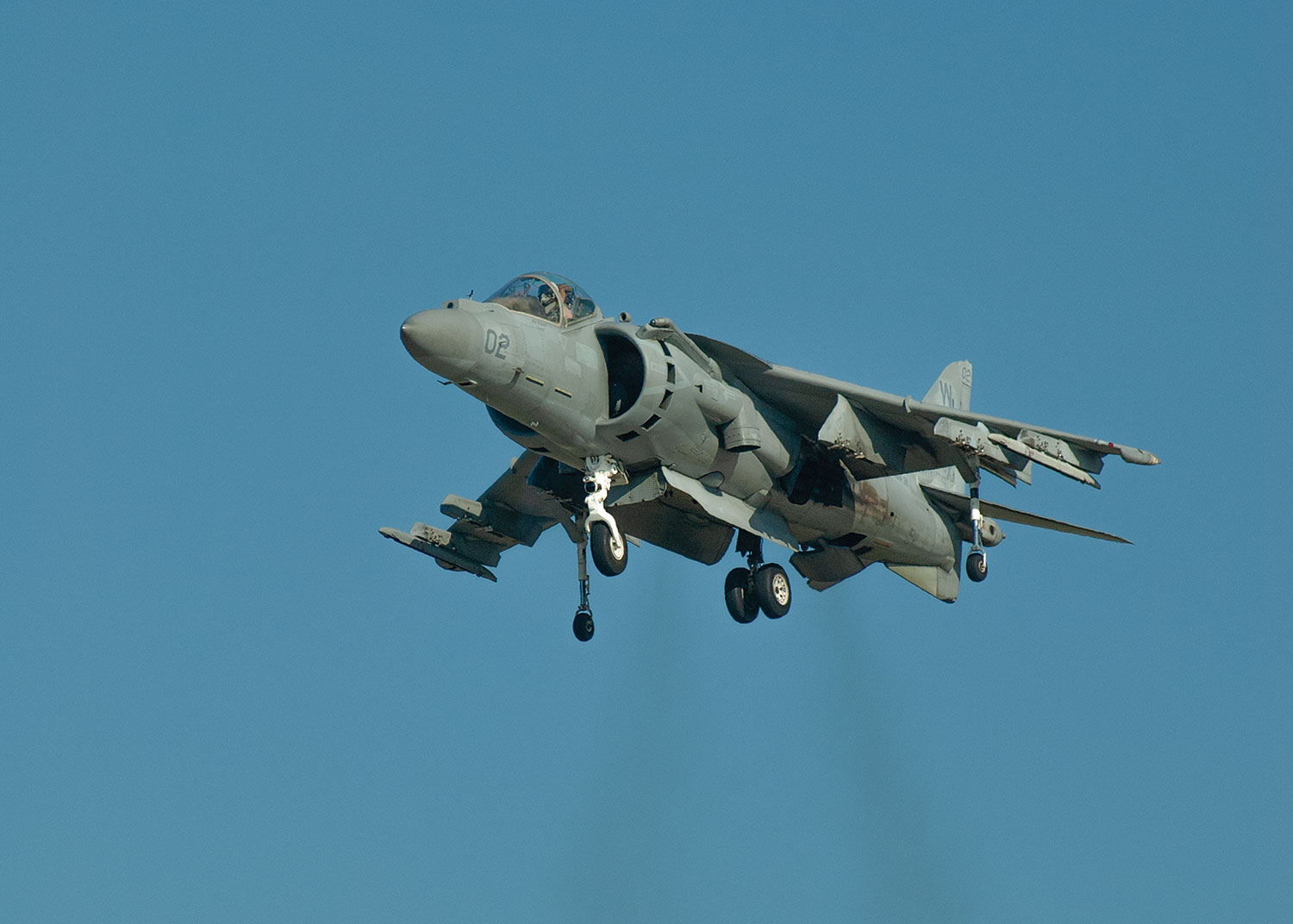


Playing Slow Flight For Keeps

When you absolutely, positively want to delay your landing for slower traffic ahead of you, use hover mode.

Gemini Sparkle

Key Takeaways:

  • Primary flight training in "slow flight" is foundational for safe landings and maximum-performance takeoffs, and extends to an operational technique called "hover mode."
  • "Hover mode" allows pilots to significantly slow down their aircraft in the traffic pattern to manage conflicts with slower traffic or congested airspace, preventing the need for go-arounds or extended patterns.
  • Effective and safe use of "hover mode" requires consistent practice of slow flight, understanding the region of reversed command, and maintaining a safe minimum airspeed (e.g., 1.3 VSO).
  • Executing "hover mode" involves a controlled reduction in power and airspeed, extending gear and partial flaps, and using pitch and power to maintain a stable, slow descent while avoiding steep turns due to increased stall speeds.
See a mistake? Contact us.

If your primary training was like mine, you spent many of your earlier flight hours going slow. Hanging-on-the-prop slow, as your CFI struggled to teach you things like managing pitch and power, the region of reversed command, stall buffets and other warnings, and stalls/recoveries themselves. If you’re lucky, someone also trained you in spins along the way. Much of this training typically is lumped into a “slo flt” entry in your logbook’s remarks section.

Once you and your instructor started seriously working on landings, the reason for slow-flight training became clearer. Knowing how the airplane will react when it’s slow is one of the keys to making consistently good landings. It’s also important when conducting maximum-performance takeoffs, like soft- and short-field work.


But during our primary training, we’re also cautioned against getting too slow. Hopefully, we’re taught from an early stage that the wing’s angle of attack, not the airplane’s airspeed, is what determines when and how we stall. With that in mind, we may occasionally find ourselves wondering about other ways we can use our slow-flight skills. 

Hover Mode

One reason we fly airplanes is to go fast. But there are many times in our everyday operations when we want to go slow. Landing, of course, is one of them, but there are others.

Perhaps the most common reason to slow down is when we just are not in a hurry to get somewhere and want to take our time and enjoy the scenery. Or we may want to get a good look at something on the ground, although we too often want to circle over it and end up over-banking and risk a stall, commonly called a “moose turn.”

But I want to focus on using slow flight as an operational expedient. As one example, let’s say you’re in a relatively fast airplane approaching to land when it becomes obvious the traffic ahead of you poses a potential conflict. It could be because the tower cleared the slower traffic to land in front of you, which is common, or it could be you’ve stumbled on a training facility, and everyone is going around the pattern at 70 knots. It also could be you’re flying too darn fast for the traffic situation. Whatever—you need to tap your airplane’s ability to “hover.”

Of course, your airplane isn’t likely to be able to remain over a specific location like a helicopter, unless the winds are honking and you’re comfortable with the stall warning system bleeping at you. (If the winds are strong enough, you can literally fly backward. But how will you get down?)

Slowing down for traffic is something we all should be able to do. After all, no one with a clue goes zooming around a traffic pattern at their cruise speed, Piper Cub and Aeronca drivers perhaps excluded. But when the mix of aircraft types wanting to use the same runway gets lopsided toward several slow ones instead of your fast one, that’s when you need to improvise.

Before You Hover: Practice

It’s a bit of an understatement to suggest that practicing slow flight should be on the agenda if you plan to use your airplane’s hover mode. It’s probably been a minute since you hung your airplane on its prop, so to speak, and you may not be aware of one thing or another, or may have forgotten something else. Grab your instructor and go fly.

You’ll start to practice slow flight, of course, the way you always have, by doing a clearing turn. Once settled on the desired heading, reduce power and allow the airplane to slow, all while maintaining altitude. Trim comes in handy here, as you’ll recall. So does a strong leg on the rudder, to counteract P-factor and torque, among other characteristics. As the airplane decelerates, you’ll need to add power to maintain altitude. In an airplane equipped with cowl flaps, open them to ensure adequate engine cooling.

How much power you need to add—and how high you’ll need to pitch the airplane—depends on the airplane and what you’re trying to do. If this is a slow-flight demonstration, and you want to experience a steady stall warning, you’ll likely need a good bit of both pitch and power. When you get to the point where the airplane is trembling a bit, nibbling at the stall break and still maintaining altitude, you’re done.

Recovering from this configuration back to straight-and-level flight depends on how slow you are. As outlined in the sidebar on the opposite page, if you’re in the region of reversed command and still maintaining altitude, the easiest way to recover is to relax back pressure and accept the descent rate, which might be healthy, and allow the airplane to accelerate back to the “front side” of the power curve. As you do, be sure to milk the flaps back up as airspeed builds back into the green arc, as well as retract the landing gear if it’s extended.

Minimum Speed In Hover Mode

The foregoing description of a slow flight demonstration is training. In a for-real hover mode situation, we’d strongly advise against getting that slow. Instead, think of it as a demonstration of how slow you can go if you need to.

Meanwhile, if the need to use hover mode arises, you’ll do much the same things as you just practiced. One thing we’d strongly suggest, however, is choosing an airspeed at which you want to do this. Our goal here is to slow down and not crowd the slower aircraft ahead of us to the point where we have to go around, either out of prudence or because ATC tells us to.

In my Debonair, the published VSO (stall speed in the landing configuration at gross weight) is 53 knots indicated. Multiply that by the 1.3 factor recommended for final approach and we get 68.9. The Debonair’s recommended liftoff speed is 70 knots indicated, and that’s what I use as the airspeed floor for my hover-mode approaches, putting me slightly faster than 1.3 VSO. Your mileage may vary—there are lots of airplanes whose 1.3 VSO approach speed recommendation will be less than 70 knots, so plan accordingly. But 70 knots is as slow as I want to go in the pattern. If that doesn’t work for the traffic levels and speeds you’re encountering, maybe go somewhere else.

Doing It

Somewhere on downwind, when it’s apparent I need to go into hover mode, the first thing I do is reduce power and slowly increase back pressure to maintain altitude as the airplane decelerates. If I’m doing it right, no one on board notices that we’re flying more slowly than usual. By this time, I should be well below landing gear extension speed and go ahead to drop the gear. That results in further deceleration, typically to somewhere in the white arc, where I can extend the wing flaps to an initial approach setting, 10 degrees in the Deb. Depending on how slow the aircraft in front of me appears, I can also add more flaps. I try to not use full flaps on the downwind at any time, but adding another 10 degrees or so absolutely keeps the airplane stable.

By the time all this is done, I’m past the intended runway’s numbers and beginning the descent. This actually is one of the keys to hover mode: allowing the airplane to descend. The other key here is to not enter a steep bank while maneuvering in the pattern. That happens to be the next thing I’ll do: turn base. Gently, of course, but in all cases in a relatively shallow bank, no more than 30 degrees.

The bank angle/load factor chart on the opposite pages tells us why. I want to keep a healthy margin below the stall speed/critical angle of attack in the turn. Thirty degrees of bank gives about a 10 percent increase in stall speed per that chart, which with a 53-knot VSO, translates to 58 knots indicated. Importantly, that chart presumes a constant altitude. At 70 knots, I’m well above that, and descending. As important, the airplane feels stable and solid. In a pinch, full power is readily available and the flaps will come up with one switch movement. I can easily climb out and accelerate if the need arises, worrying about the gear later, another single switch movement.

Once stable in configuration and on-speed, flying the rest of the pattern at 70 knots is a piece of cake. If I need to extend my downwind, I can level out by retracting some or all of the flaps and/or just adding a bit of power. Remembering and applying the pitch and power settings for your airplane in these configurations means a reduced workload and greater confidence/predictability.

After turning final, some power adjustments likely will be needed, just as with any other approach. When I have the runway made, I’ll drop the last bit of flaps and prepare for the flare. All of this, of course, presumes the slower traffic ahead is either off the runway or about to be, and that I’m cleared to land at a towered facility.

Do Try This At Home

None of this is rocket surgery. If you can handle a slow-flight session, you can do this in the real world. As I use hover mode, though I’m flying slower than normal in the pattern, it’s likely I’m actually saving time by not needing to extend my downwind.

Hover mode can come in handy in other ways, like when using a shorter runway than you’re accustomed. A variation would be a so-called “carrier landing,” useful for black-hole night approaches, where pitch and power are jostled to put the airplane in its nose-up landing attitude and descend all the way to the runway. That’s a variation on using the region of reversed command, and fodder for another article.

Ready to Sell Your Aircraft?

List your airplane on AircraftForSale.com and reach qualified buyers.

List Your Aircraft
AircraftForSale Logo | FLYING Logo
Pilot in aircraft
Sign-up for newsletters & special offers!

Get the latest stories & special offers delivered directly to your inbox.

SUBSCRIBE