











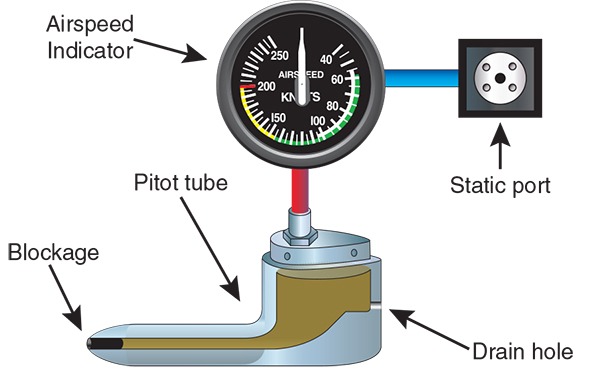


To sense airspeed, the vast majority of airplanes use a pitot tube. Oncoming air enters the tube and is routed to the airspeed indicator or the air/data sensor. That’s where the air’s pressure is measured and compared with ambient or static, then translated into knots or some other measurement and displayed on the instrument panel. The pitot tube itself is mounted somewhere on the airplane’s exterior. As such, it’s exposed to the elements, whether the airplane is airborne or parked.
The basic device was invented by Henri Pitot in the 1700s. In non-aviation applications, its principle of measuring pressure can be used with other fluids, not just flowing air. Like any similar system, if the pitot tube is blocked, it won’t work. And a blocked pitot tube or system poses a significant challenge for pilots of all airplanes. The best examples of what can happen and how pilots might respond comes from two well-documented events.

