Register

Pilot Proficiency

Coded Departure Routes

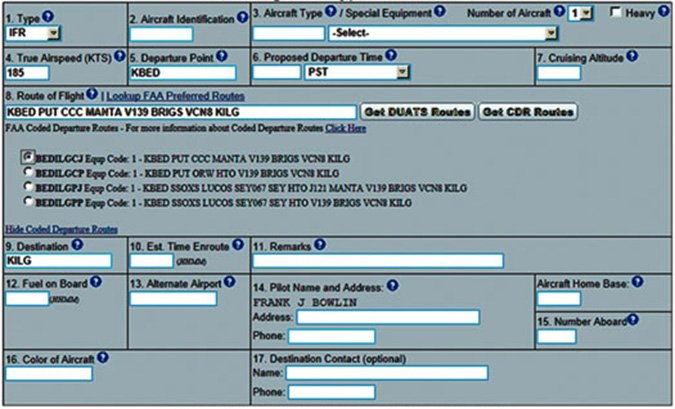
Pilots want ways to mitigate bad weather. The Coded Departure Route (CDR) is one of the least-known such tools in GA, although its been available since 2007. The AIM tells us, CDRs provide air traffic control a rapid means to reroute departing aircraft when the filed route is constrained by either weather or congestion. So, if youd rather not wait, a CDR might be for you.
Read More »

What to Brief

The main article covers a lot of things to consider for your various briefings. Here, though, is a view of the items you might want to brief for each phase of your flight.

Read More »

Weather Planning

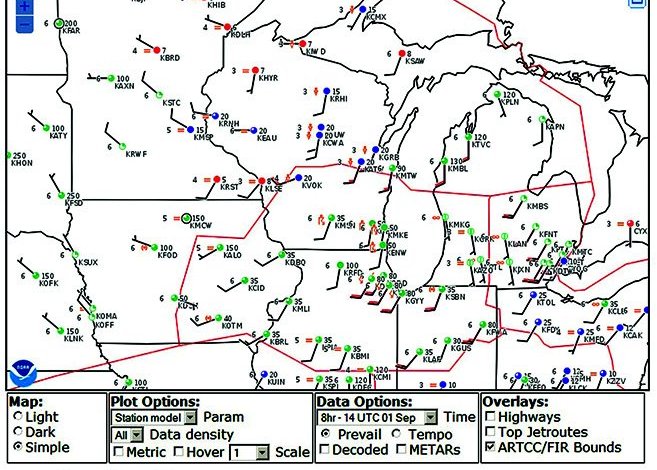
Preflight weather planning has long consisted of calling an FAA Flight Service Station. Years ago, you might have even visited one. But, using the Internet, you can now draw on the same resources that meteorologists use. While the 2000s brought weather data to the cockpit, were now getting some Internet tools to the cockpit via dedicated datalink. Although we cant yet cheaply surf the web at cruise, we connect to the Internet at the FBO, on the ramp and in the plane on the ground, using phones and tablets with WiFi and cellular data.

Read More »

Tips for Weather Planning

Remember that web sites outside the FAA and NWS domains should be considered supplementary tools to be used in combination with a weather briefing through official sources.

Read More »

More Required Reports

Last months clinic began a detailed look at the reports we are required to give ATC or FSS during an IFR flight. Specifically, we began looking at the reports other than the position reports required by 14 CFR 91.183(a), which well cover separately. The remaining reports come from three sources: 14 CFR 91.183 (paragraphs b and c), 14 CFR 91.187, and AIM 5-3-3.

Read More »

Checking Departure Procedures

For you instrument-rated pilots, and even you VFR-only fliers, how often do you look up the published departure procedure for a given airport before taking off into clear blue skies — or maybe not-so-clear skies? The answer should be every single time. Over the years a number of fatal accidents have been attributed to controlled […]

Read More »

Gear Up: Competence vs. Expertise

“Let’s get one thing straight. There is a big difference between a pilot and an aviator. A pilot is a technician. An aviator is an artist in love with flight.” So said Elrey Borge Jeppesen. As I try to migrate from pilot to aviator, I’ve discovered, or I should say rediscovered, an important truth. It […]

Read More »

Sky Kings: Loss of Control — Our Greatest Nemesis

It was a setup for loss of control. Martha and I were brand-new VFR-only pilots and, while returning from California to Indiana, had decided to scud–run through Tennessee to hurry our way home. The ceilings had pressed us down below the tops of tall antennas, and we were circling tightly over a small town while […]

Read More »

Prevent Structural Damage

In March 2011 a pilot flying a Beechcraft B35 Bonanza near Whidbey Island, Washington, heard strange noises that he described as thumps coming from his airplane as he maneuvered to avoid a restricted area. The pilot reported that his airspeed was 165 knots, which is in the yellow arc of the airspeed indicator. Once on […]

Read More »

Aftermath: The Only One to Fly

On a Thursday in March 2013, the 500-hour pilot of a Mooney M20E arrived at Angel Fire, a ski resort east of Taos in the Sangre de Cristo Mountains of New Mexico. With him were his girlfriend, his sister and his sister’s 13-year-old daughter. They came from San Antonio, stayed with a cousin of the […]

Read More »
Pilot in aircraft
Sign-up for newsletters & special offers!

Get the latest stories & special offers delivered directly to your inbox.

SUBSCRIBE