Register

Pilot Proficiency

On the Record: Piper PA-18-150

The following is an excerpt from official NTSB summaries of general aviation accidents in the United States. NTSB investigators either traveled in support of this investigation or conducted a significant amount of investigative work without any travel, and used data obtained from various sources to prepare this aircraft accident report. Piper PA-18-150 Chuglak, Alaska/Injuries: 2 […]

Read More »

Unusual Attitudes: In the Beginning …

In the beginning — well, the beginning of my airplane love affair — you could get your medical/student pilot certificate from the doctor if you were 16 years old, warm, breathing, had most of your important appendages and $30, preferably in cash. For some fledgling aviators, that’s as far as it went — which is […]

Read More »

Simulation Technology Is Gaining Traction Outside Aviation

I could see the cecum quite clearly and the obviously inflamed appendix sticking straight out of it. This had to be the easiest appendectomy of my surgical career. With a grasper in my left hand and a Maryland dissector in my right, I knew just where to look for the appendiceal artery. Geoff Bates held […]

Read More »

Aftermath: Scud Run

The pilot, 65, had 33,000 hours. He had retired six years earlier as a 777 captain after a 36-year career in airline flying. He was a CFI-I and ATP 
with ratings in a slew of Boeing and Lockheed types, and was an air-frame and power-plant mechanic to boot. He and some family members had flown […]

Read More »

Jumpseat: Managing the Abnormal

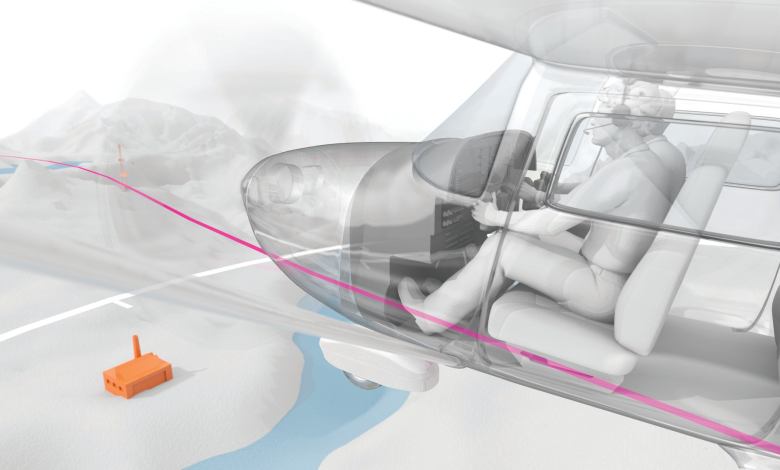
The vast majority of my flights are routine and mundane — certainly positive attributes from a safety perspective. But on some occasions, circumstances arise that require a little extra attention. These circumstances are not always entirely covered by a checklist. Such was the case on one particular trip returning home from London, a city I […]

Read More »

Prepare for the Check Ride, Part 2

In spite of our best efforts, the weather is still a problem. Though we have better access to weather-focused graphics, both through aviation sources as well as those for the general public, confusion reigns when it comes to interpreting that data and displaying that knowledge on a check ride. In other words, everyone knows about […]

Read More »

Using Spherics

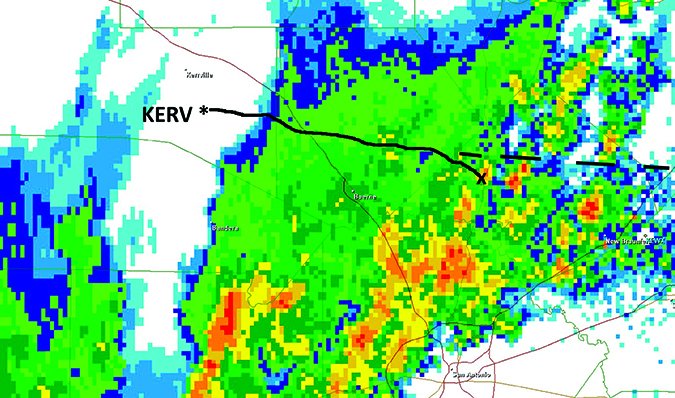
Both spherics and NEXRAD have blind spots and neither is infallible. Spherics devices can have false negatives because they dont see those static discharges until they happen. While most cells with dangerous opposing currents also produce significant static, nature is inherently unpredictable and the static discharges can lag. Of course, the delays in getting NEXRAD images to the cockpit can lead to significant errors. Plus, radar only seeing precipitation, not turbulence, can cause difficulty interpreting the image.

Read More »

Master the Skills Needed to Safely Fly Alone

Early on in every pilot’s lifetime there’s a moment when he or she is faced with the yin and yang of flying alone. Viewing the majesty of the sun as it disappears below the horizon from a vantage point that no one else shares is a reason many of us learned to fly. Then there […]

Read More »
Pilot in aircraft
Sign-up for newsletters & special offers!

Get the latest stories & special offers delivered directly to your inbox.

SUBSCRIBE