











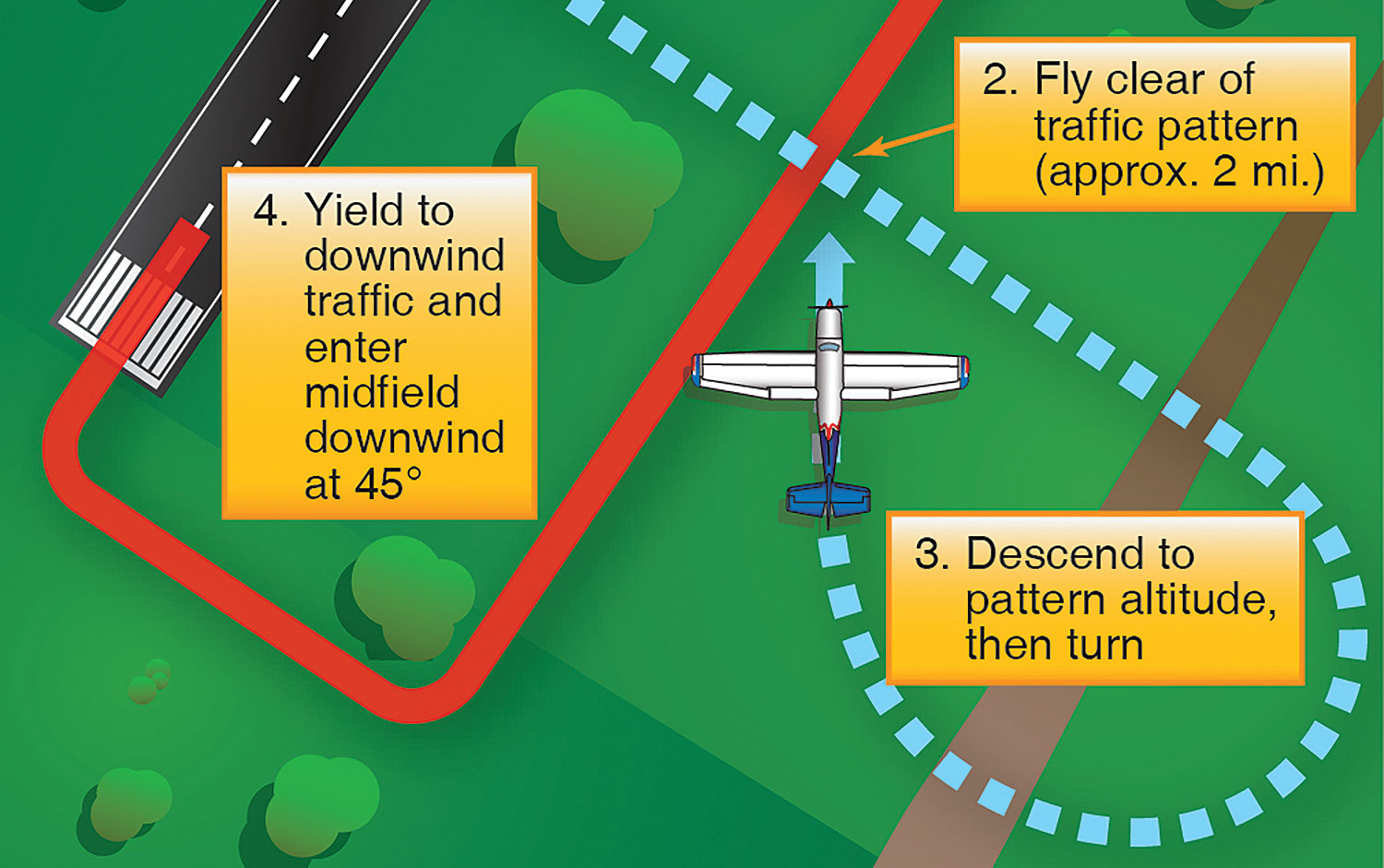


Thanks for following up on the traffic pattern entry debate spurred by the FAA’s guidance in its Airplane Flying Handbook (“Traffic Pattern Entries,” February 2024). Special thanks to Jerrold Seckler for following up with the FAA and nailing down their position.
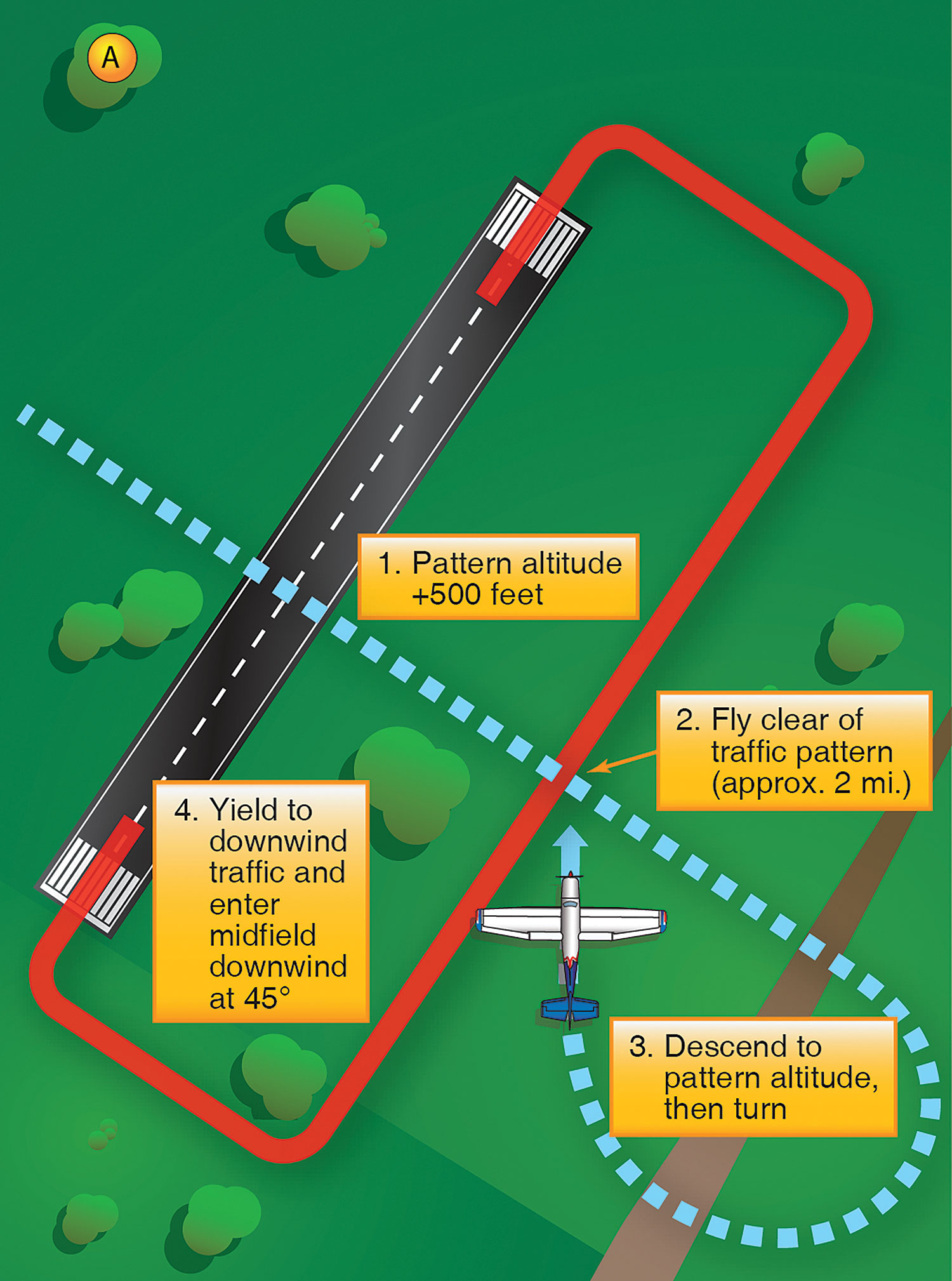 It seems to me that the FAA’s recommended procedure is the best answer to a complicated question. But it also should be remembered that the guidance relies on intentionally placing aircraft only 500 feet apart on the downwind. So, the correct altitude is important. Also important is gauging your distance from the pattern before the 270-degree right turn. And then there’s the possible lack of experience even making descending right turns.

