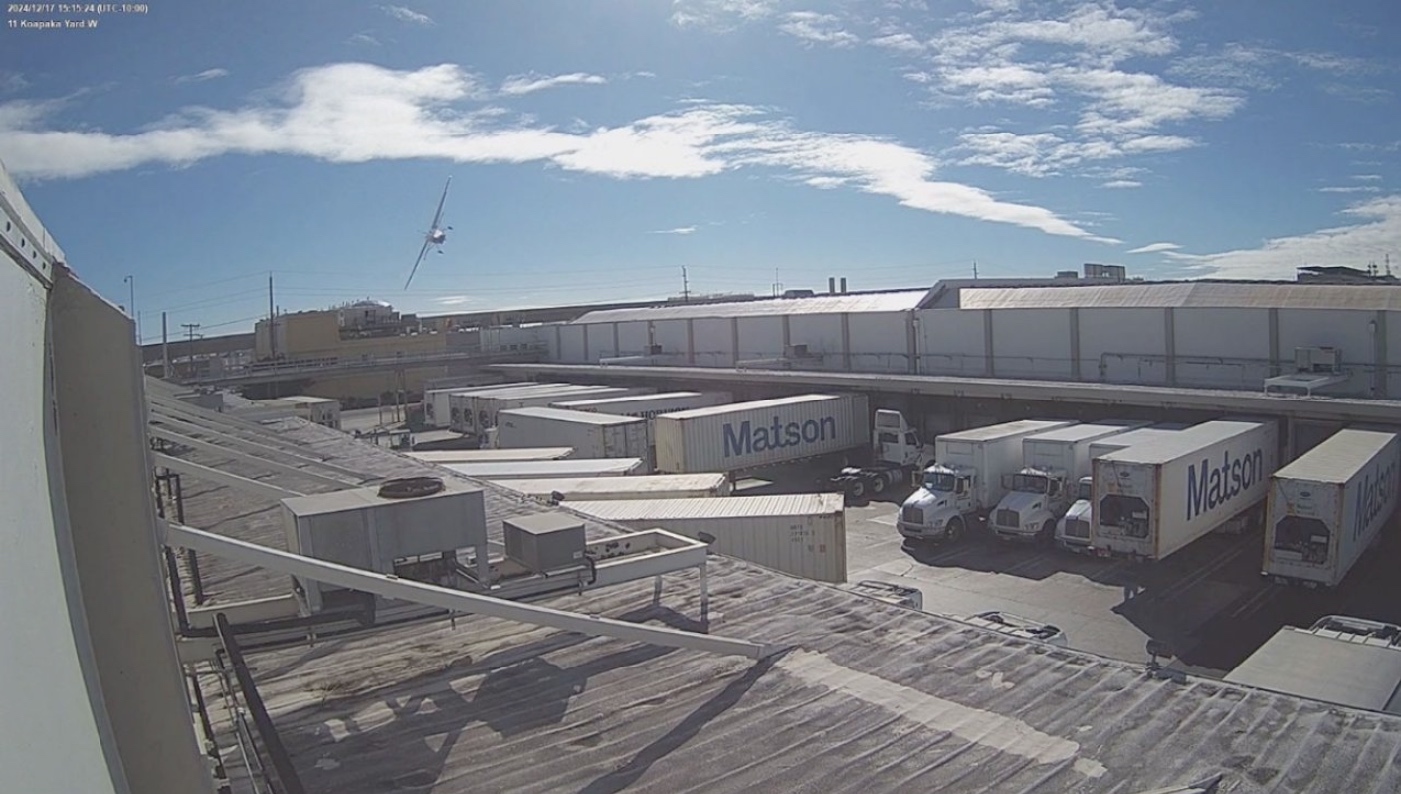
NTSB final report finds poor maintenance procedures led to flap malfunction in crash of Hawaiian Cessna Grand Caravan in 2024. Video image above shows the airplane in steep left bank before impact. [Credit: NTSB]
Key Takeaways:
An NTSB final report determined that improper maintenance led to the fatal crash of a Kamaka Air Cessna 208B Grand Caravan during a December 2024 training flight in Honolulu, Hawaii.
The accident was triggered by an in-flight fracture of the left flap interconnect rod caused by improper cable tension and misrigging, resulting in an asymmetrical flap setting and an uncommanded, unrecoverable roll after takeoff.
Investigators cited systemic organizational failures as contributing factors, including the operator's failure to follow its FAA-approved maintenance manual, inadequate mechanic training and supervision, and performing rushed, incomplete flap functional checks during a previous motor replacement.
The National Transportation Safety Board has cited improper maintenance as a causal factor in the crash of a Cessna 208B that killed two pilots during a training flight in Hawaii in December 2024.
According to the NTSB final report released Friday, the pilot of the Grand Caravan reported a control system issue shortly after takeoff.
CREATE A FREE ACCOUNT
Sign up to keep reading
Create a free account to continue. Already a member? Sign in below.
Meg Godlewski has been an aviation journalist for more than 24 years and a CFI for more than 20 years. If she is not flying or teaching aviation, she is writing about it. Meg is a founding member of the Pilot Proficiency Center at EAA AirVenture and excels at the application of simulation technology to flatten the learning curve. Follow Meg on Twitter @2Lewski.