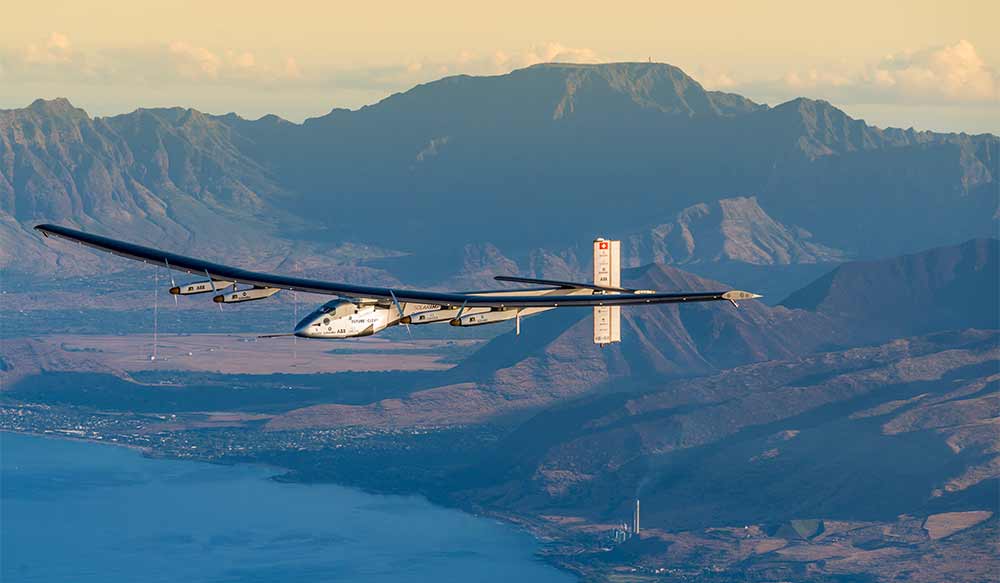
Nova: The Impossible Flight

Nova’s PBS documentary about the Solar Impulse II aircraft airs on January 31. PBS
Gemini Sparkle

Key Takeaways:

  • The Solar Impulse II, a solar-powered aircraft, successfully completed an unprecedented around-the-world flight, a feat critics deemed impossible.
  • The project, spanning 13 years, relied on groundbreaking technologies including 17,000 ultrathin solar cells, high-capacity lithium-ion batteries, and lightweight carbon-fiber wings.
  • Piloted by Bertrand Piccard and Andre Borschberg, the journey set a world record for the longest solo flight leg (five days non-stop between Japan and Hawaii) despite challenging conditions and a mid-flight battery issue.
See a mistake? Contact us.

Critics thought flying a solar-powered aircraft around the world was impossible, but Nova’s PBS documentary premiering January 31 chronicles the successful adventure from beginning to end. The Solar Impulse II began its around-the-world flight on March 9, 2015, following 13 years of work by aerospace engineers, meteorologists and flight controllers who designed, built and flew the airplane. The aircraft carried no fuel, only an array of solar panels used to charge the on-board lithium-ion polymer batteries using the rays of the sun.

Carrying pilots Bertrand Piccard, an explorer and psychiatrist, and Andre Borschberg, an MIT engineer and former Swiss Air Force fighter pilot, Solar Impulse II took off from Abu Dhabi in the unpressurized, unheated aircraft on an adventure that demanded near-perfect weather along the entire route. In addition to completing the flight and returning to Abu Dhabi following 23 days of flying, the crew set a new world solo flight record for their longest stage length, five days of non-stop flight between Japan and Hawaii, a trek that destroyed the batteries and caused a lengthy delay.

Creating the aircraft was no small task, even when matched to the flight itself. The team used a number of ground-breaking technologies including ultrathin solar cells, high-capacity batteries and massive, but light carbon-fiber wings. The aircraft captured sunlight through 17,000 solar cells, each as thin as a human hair, and stored the energy in the batteries later used to power the Solar Impulse II’s four 17-hp motors during hours of darkness.

The PBS show tomorrow night (check local listings),”puts viewers in the cockpit for the adventure of a lifetime,” said Paula S. Aspell, Nova’s senior executive producer.

Rob Mark

Rob Mark is an award-winning journalist, business jet pilot, flight instructor, and blogger.

Ready to Sell Your Aircraft?

List your airplane on AircraftForSale.com and reach qualified buyers.

List Your Aircraft
AircraftForSale Logo | FLYING Logo
Pilot in aircraft
Sign-up for newsletters & special offers!

Get the latest stories & special offers delivered directly to your inbox.

SUBSCRIBE