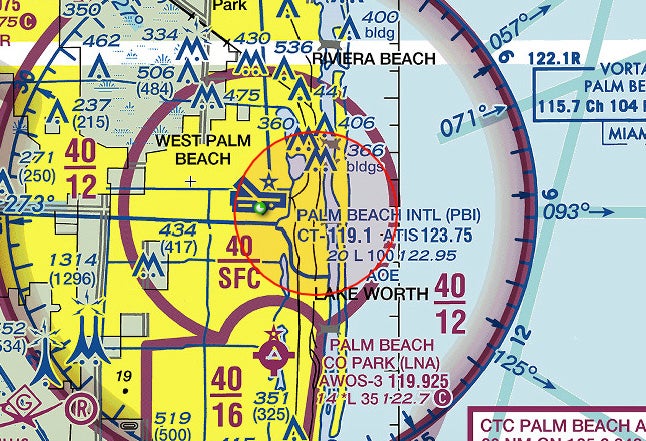
A presidential TFR surrounding Donald Trump's Mar-a-Lago residence in Palm Beach, Florida, would create a no-fly zone within a 10-nm radius, effectively shutting down all GA traffic in the immediate area.[Credit: FAA/ file photo]
Key Takeaways:
Presidential and VIP Temporary Flight Restrictions (TFRs) establish a moving bubble of protective airspace around the President, significantly impacting general aviation (GA) operations.
These TFRs typically feature 30 nm outer and 10 nm inner rings, enforcing restrictions on GA flights below 18,000 feet and often shutting down local airports.
Pilots are mandated to check NOTAMs for VIP TFRs, which are announced one to two days in advance, and may need to follow specific procedures like advance form submission or using designated "gateway" airports with screening.
The article notes an expected increase in Presidential TFRs around Florida's Palm Beach area, requiring pilots to stay informed about potential new local approval processes.
“When the president comes to town, we stay on the ground.”
This witticism is often written on the whiteboard in the lobby of FBOs whenever the president of the United States or another VIP comes to town, because the president and VIPs travel in a moving bubble of protective airspace commonly known as a temporary flight restriction (TFR).
CREATE A FREE ACCOUNT
Sign up to keep reading
Create a free account to continue. Already a member? Sign in below.
Meg Godlewski has been an aviation journalist for more than 24 years and a CFI for more than 20 years. If she is not flying or teaching aviation, she is writing about it. Meg is a founding member of the Pilot Proficiency Center at EAA AirVenture and excels at the application of simulation technology to flatten the learning curve. Follow Meg on Twitter @2Lewski.