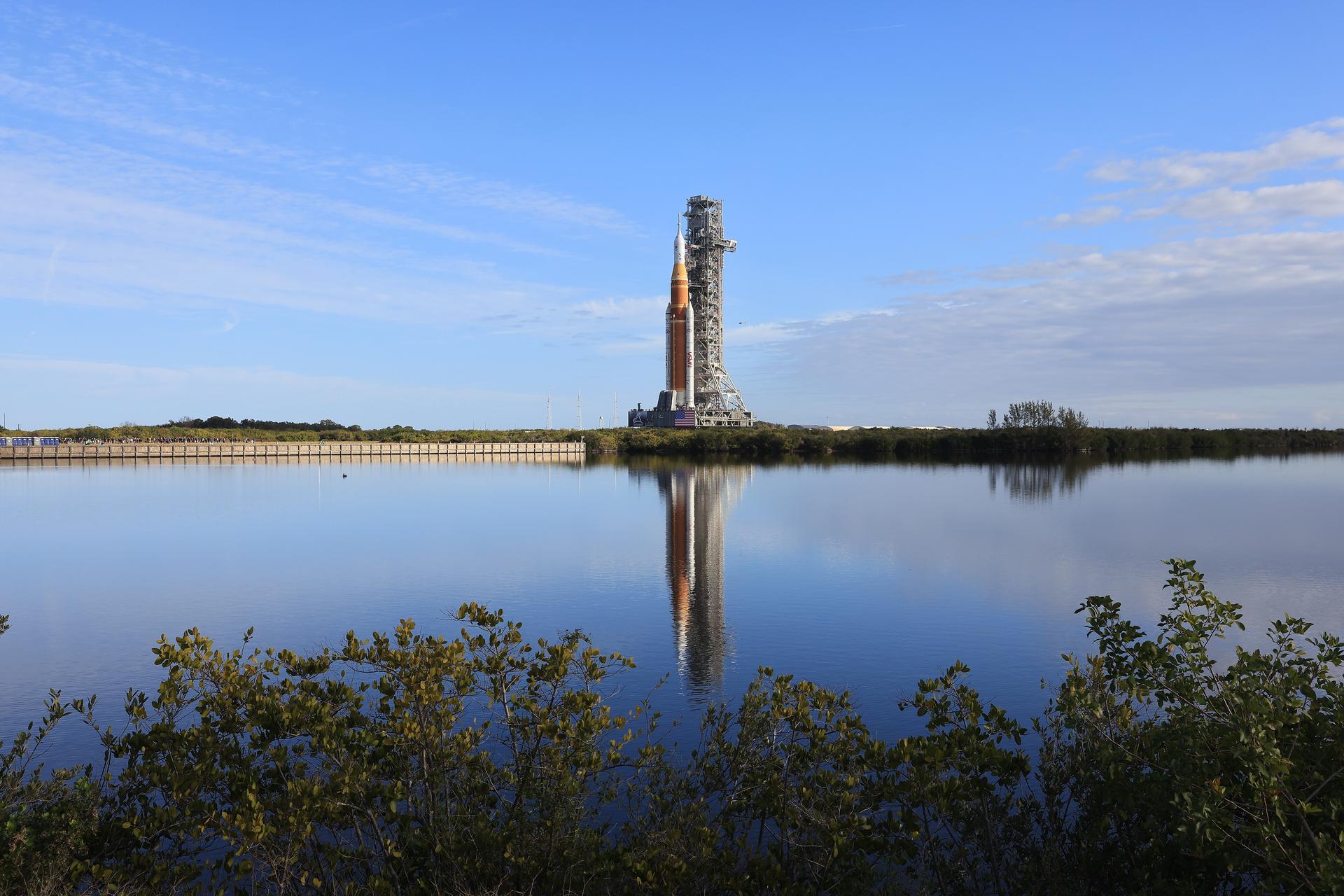
NASA rolls its Space Launch System (SLS) rocket and Orion capsule between the vehicle assembly building (VAB) and pad at Kennedy Space Center in Florida using the crawler-transporter 2, the heaviest self-powered land vehicle on Earth. [Credit: NASA/Kim Shiflett]
Key Takeaways:
NASA plans to launch the Artemis II crewed 10-day test flight around the moon in April, aiming to validate systems and profiles for future lunar landing missions.
Officials acknowledge significant risks, estimating the mission's chance of failure is closer to 1 in 2 due to its novelty and status as a test flight beyond low-Earth orbit.
Despite crew concerns regarding the Orion heat shield (after higher-than-expected erosion on Artemis I) and other systems, NASA will modify the reentry profile for Artemis II and is confident in proceeding without further full wet dress rehearsals.
NASA on Thursday said it intends to attempt the launch of a historic, 10-day mission around the moon and back in April, following slips from launch windows in February and March.
Officials also acknowledged the mission—as with any journey beyond low-Earth orbit—may risk the lives of four crewmembers.
CREATE A FREE ACCOUNT
Sign up to keep reading
Create a free account to continue. Already a member? Sign in below.
Jack is a staff writer covering advanced air mobility, including everything from drones to unmanned aircraft systems to space travel—and a whole lot more. He spent close to two years reporting on drone delivery for FreightWaves, covering the biggest news and developments in the space and connecting with industry executives and experts. Jack is also a basketball aficionado, a frequent traveler and a lover of all things logistics.