












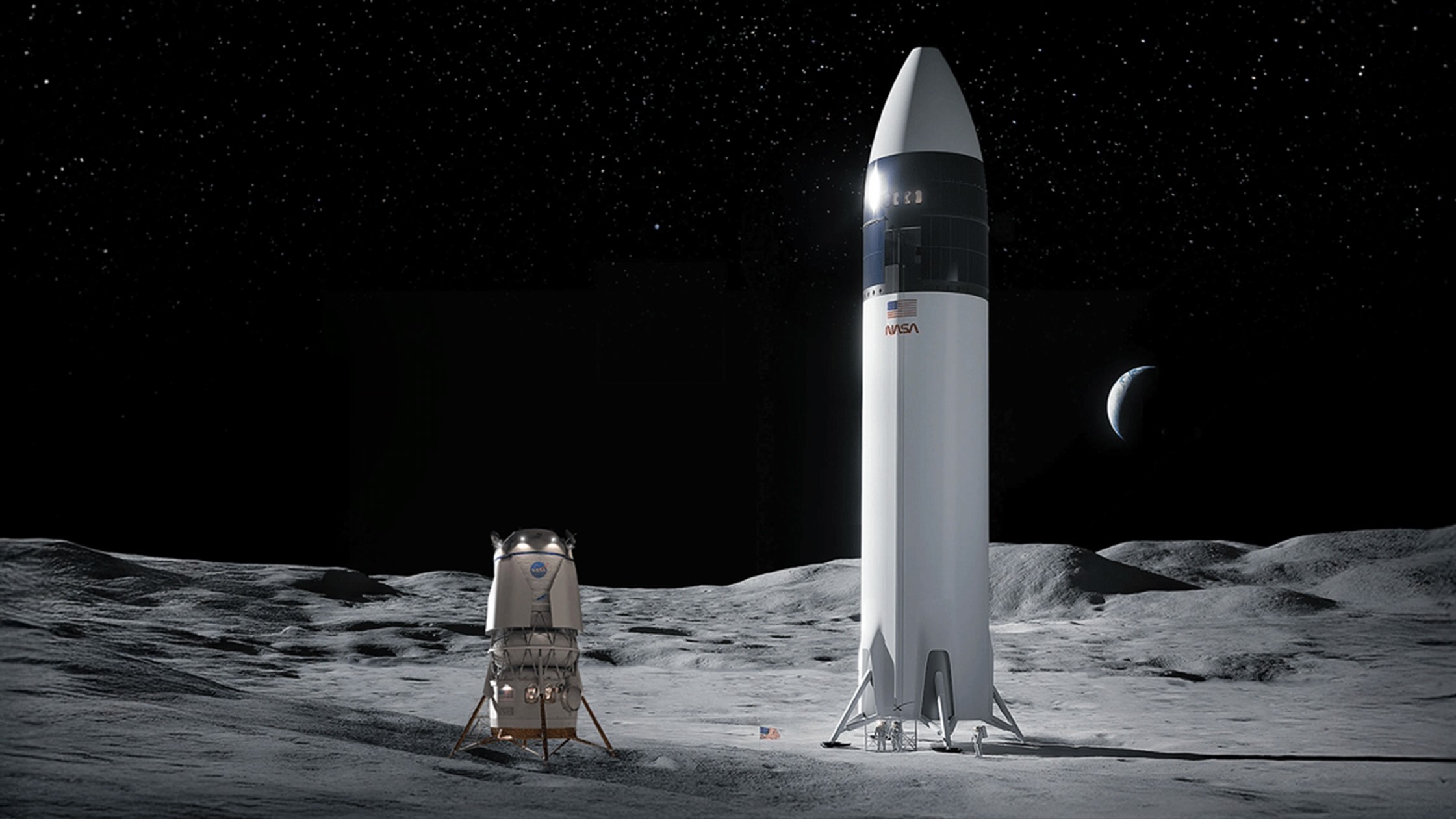


NASA earlier this month overhauled its Artemis moon mission program, announcing plans to attempt not just one but two crewed lunar landings in 2028. However, should the astronauts become stranded on the moon, the space agency has no way to bring them home, according to an audit by its Office of the Inspector General (OIG).
Published Tuesday, the 50-page report revealed that NASA has “ruled out” the development of crew rescue capabilities for the early crewed Artemis missions. In other words, “should the astronauts encounter a life-threatening emergency in space or on the lunar surface, NASA does not have the capability to rescue the stranded crew,” the OIG audit reads.

Artemis aims to return Americans to the moon for the first time in more than half a century and create a sustained lunar presence.
NASA’s Space Launch System (SLS) rocket and Orion crew capsule completed the uncrewed Artemis I mission around the moon in 2022. As soon as April, the space agency hopes to launch Artemis II, which will represent the inaugural crewed flight of SLS and Orion. The 10-day mission around the moon and back is intended to serve as a dress rehearsal for future missions that are more complex.
Before attempting landings in 2028, NASA in mid-2027 expects to begin testing human landing systems (HLS)—the vehicles that will descend to the lunar surface with crew, serve as temporary habitats for the astronauts to live and work, and ascend back to lunar orbit. NASA in 2019 awarded firm-fixed-price HLS contracts to SpaceX, which is building a vehicle based on its gargantuan Starship rocket, and Blue Origin.
Since then, NASA has allocated nearly $7 billion toward HLS development and expects to spend more than $18 billion over the next five years. The contracts allow SpaceX and Blue Origin to manage their projects with reduced NASA review, though the space agency uses several mechanisms to keep tabs on them.
Per the OIG, NASA has done an admirable job of managing its contracts and collaborations with commercial partners, keeping costs reasonable. But it faces delays in HLS delivery and doesn’t yet have a contingency plan should one of the vehicles malfunction.
“Given NASA’s significant financial investment and the high stakes of returning astronauts to the Moon’s surface, it is essential the agency maintains sufficient awareness into the risks associated with these new technologies and the authority to require system and operational changes to ensure the safety of the crew,” the report concluded.
Though SpaceX’s HLS was awarded a contract to fly the first Artemis lunar landing, U.S. Transportation Secretary Sean Duffy said in October—while serving as interim NASA administrator—that he would reopen the contract to Blue Origin and others. The companies in November shared updated lunar landing architectures that are intended to accelerate their development timelines.
NASA Administrator Jared Isaacman has indicated that he intends to follow through on Duffy’s directive.
Investigating NASA
The OIG interviewed officials with NASA’s HLS program, SpaceX, and Blue Origin and reviewed risk assessments, contract files, and other data.
It found that the space agency is “proactively taking measures to mitigate and prevent hazards associated with the landers.”
“However, despite these efforts, and considering the lunar landers carry the highest probability of crew loss, gaps still exist in the agency’s risk reduction methodology,” the audit reads.
The OIG determined that Artemis astronauts will one day “likely encounter a life-threatening emergency in space.” But without a rescue capability, if the HLS shuts down on the lunar surface or fails to dock with Orion in orbit, “the crew will be lost,” it said.
The audit also found that NASA’s ability to adequately conduct crew survival analyses—reports that evaluate how personnel respond to contingencies and identify safety gaps—is limited by a lack of resources and “functional constraints.”
For one, it worries that SpaceX and Blue Origin’s landers will be too advanced to address potential risks by the time the analyses are complete, which is expected to be late in the design cycle. The analyses also don’t study simultaneous contingencies or issues lasting multiple days, which the OIG recommended NASA investigate further.
The report did find Starship HLS to be “in compliance” with the 1 in 30 loss of crew threshold for Artemis missions. But it noted that space shuttle program personnel at the time believed they were operating on a 1 in 100 threshold—in reality, it was 1 in 10.
The OIG lauded NASA’s requirement for SpaceX and Blue Origin to conduct lunar ascents during uncrewed, pre-landing demonstrations. However, those missions “will not be in configurations fully representative of their planned crewed vehicles,” it said, because they do not require rendezvous or docking with Orion.
NASA is also forgoing demonstrations of the HLS Environmental Control and Life Support Systems (ECLSS), airlocks, elevators, and other crew systems. That means the demonstration vehicles will be lighter and require fewer propellant tanker flights to fuel up, which the OIG worries is not representative of the actual lunar landing mission.
Due to “risk, cost, and schedule” considerations, NASA is further skipping an opportunity to study the performance of the ECLSS in the presence of lunar dust, which can clog filters and stick to seals. It will instead conduct two ground tests in 2026. But as the OIG noted, Orion’s heat shield issues were not caught until the vehicle actually flew.
Another key finding is that SpaceX could request to waive a requirement for its HLS to include manual controls.
Most spacecraft contain manual controls in case automated guidance systems fail. During 2023’s Boeing Starliner flight test crewmembers had to take the reins to maintain the spacecraft’s position and altitude as it approached the International Space Station (ISS). Astronauts engaged manual backup controls during all seven planned Apollo lunar landings.
The OIG called manual controls “essential” to crew survival. But its tracking of SpaceX’s readiness of the system has shown a “worsening trend,” leading it to believe the company could propose a solely automated system. “Key decisions,” it said, also remain for Blue Origin’s manual control design.
The OIG recommended that NASA review risk assessments of manual control waivers issued for Commercial Crew missions to the ISS with SpaceX’s Dragon capsule. But it warned that the Starship HLS will “not have the same level of proven flight heritage” as Dragon, which has flown 12 different astronaut crews to the orbital laboratory.
The report further determined that “technical and integration challenges…have the potential to further impact lander costs and delivery schedules.”
NASA in response acknowledged that SpaceX and Blue Origin “have experienced delays” with their lander programs but said it is “actively working with both partners to accelerate lander development.”

